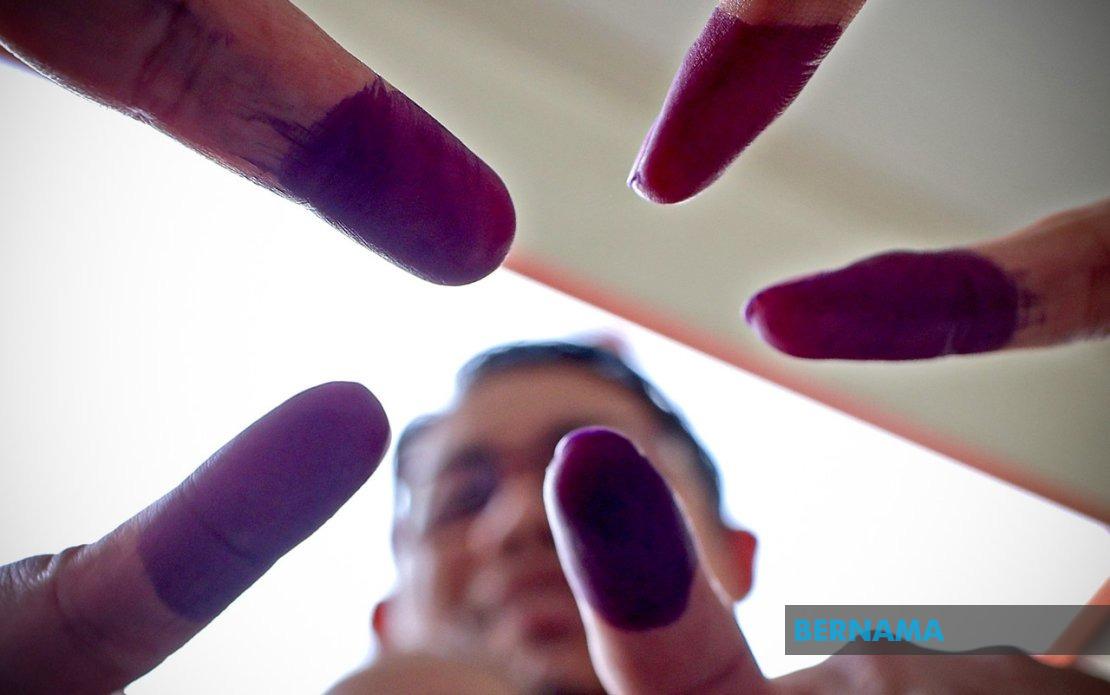
The 16th Johor state election scheduled for July 11 may ultimately be decided by voters who have yet to firmly commit to any political camp. The influx of first-time voters registering through the Undi18 scheme and automatic voter registration has transformed electoral demographics across the state, creating a constituency of young and undecided electors whose allegiances remain fluid and contingent on campaign messaging and candidate credibility.
Political analysts in Johor have begun framing this youthful cohort as genuine kingmakers in marginal constituencies where victory margins have historically been narrow. According to Election Commission data, more than 1.29 million registered voters in Johor are below the age of 40, a figure that breaks down into 587,888 aged 30 to 39, 544,657 aged 21 to 29, and 165,386 aged 18 to 20. This substantial bloc represents a departure from traditional voting patterns where older, more ideologically entrenched populations shaped electoral outcomes.
The significance of this demographic shift lies not merely in numerical strength but in the voting behaviour these younger electors exhibit. Associate Prof Dr Mohd Yusri Ibrahim, research chief at the Ilham Centre, observed that first-time voters distributed across constituencies have acquired disproportionate influence in marginal seats where contest outcomes remain genuinely uncertain. Unlike predecessors shaped by decades of partisan alignment, these newer voters lack deep ideological mooring to established parties and instead evaluate candidates and platforms through pragmatic lenses focused on tangible solutions to everyday problems.
Campaign strategies must therefore evolve to address this transformed electoral reality. Mohd Yusri emphasised that parties cannot deploy uniform messaging across all voter segments, recognising that urban youths primarily access political information through digital platforms whilst rural older voters remain responsive to traditional grassroots engagement. This strategic complexity demands simultaneous excellence across multiple channels rather than reliance on a single communication methodology.
Dr Mohammad Tawfik Yaakub from Universiti Malaya's Department of Political Science elaborated on this analytical framework, characterising voters aged 18 to 39 as the election's most consequential bloc. These individuals, numbering approximately 1.2 million in Johor, approach electoral choice through performance-based evaluation rather than ancestral party loyalty. They assess candidates based on demonstrated capability, track record of solving community problems, and credibility in articulating realistic policy responses to challenges confronting their generation.
The divide between urban and rural younger voters merits particular attention. Urban voters navigate environments saturated with national news narratives and social media discourse, exposing them to diverse political perspectives and alternative candidate evaluations. Conversely, rural younger voters remain anchored within localised networks where candidate personality, perceived capacity to deliver community benefits, and long-standing relationships with established figures continue shaping political preference. These contextual differences require political parties to calibrate messaging intensity and content according to specific geographic and demographic segments.
While social media platforms can generate electoral momentum and shift conversation terrain rapidly, Tawfik cautioned that digital engagement without corresponding grassroots infrastructure proves insufficient for converting online support into actual votes. Parties demonstrating strength in social media communication but weakness in ground organisation frequently discover their digital advantage fails to translate into electoral victories. Conversely, effective campaign organisations coupling robust digital presence with mobilised community networks occupy considerably stronger competitive positions.
The personality and novelty factor affecting Johor voters warrants careful interpretation. Tawfik noted increased receptiveness to new political faces representing fresh alternatives to established figures, yet emphasised that youth alone cannot substitute for demonstrated competence and administrative capability. Voters increasingly demand that candidates supplement generational novelty with substantive evidence of problem-solving ability and policy sophistication. The mere fact of being younger than incumbent officeholders provides insufficient foundation for electoral success without accompanying credentials.
Economic anxiety appears positioned to exercise outsized influence on voting behaviour in this election cycle. Tawfik identified wage stagnation, commodity price inflation, housing affordability constraints, and employment uncertainty as bread-and-butter concerns likely weighing more heavily than traditional political ideological appeals. Parties successfully articulating credible economic strategies addressing these material hardships should expect competitive advantages over those relying primarily on symbolic politics or cultural messaging that fails to acknowledge voters' lived financial pressures.
Voter turnout itself has emerged as an unpredictable variable that could significantly alter electoral outcomes. The interaction between turnout levels among younger voters, the specific voting choices of fence-sitting constituencies, and parties' demonstrated capacity to convince electorates that they possess workable solutions to cost-of-living pressures will jointly determine which candidates and parties ultimately prevail. Analysts stress that economic concerns may supersede political slogans and ideological appeals as determinative factors shaping electoral preferences across Johor's constituencies.
The electoral environment confronting Johor's political parties thus demands sophisticated recognition that traditional voting blocs have fragmented and new criteria for candidate and party evaluation have emerged. Strategic success requires simultaneous investment in digital platforms reaching urban youth, grassroots machinery mobilising community networks in rural areas, and policy platforms addressing material concerns affecting household budgets. Political organisations that fail to adapt messaging and organisational strategies to accommodate these transformed voter expectations should anticipate difficulty in capturing support among the 1.29 million Johor voters under 40 whose electoral choices remain genuinely contested.

