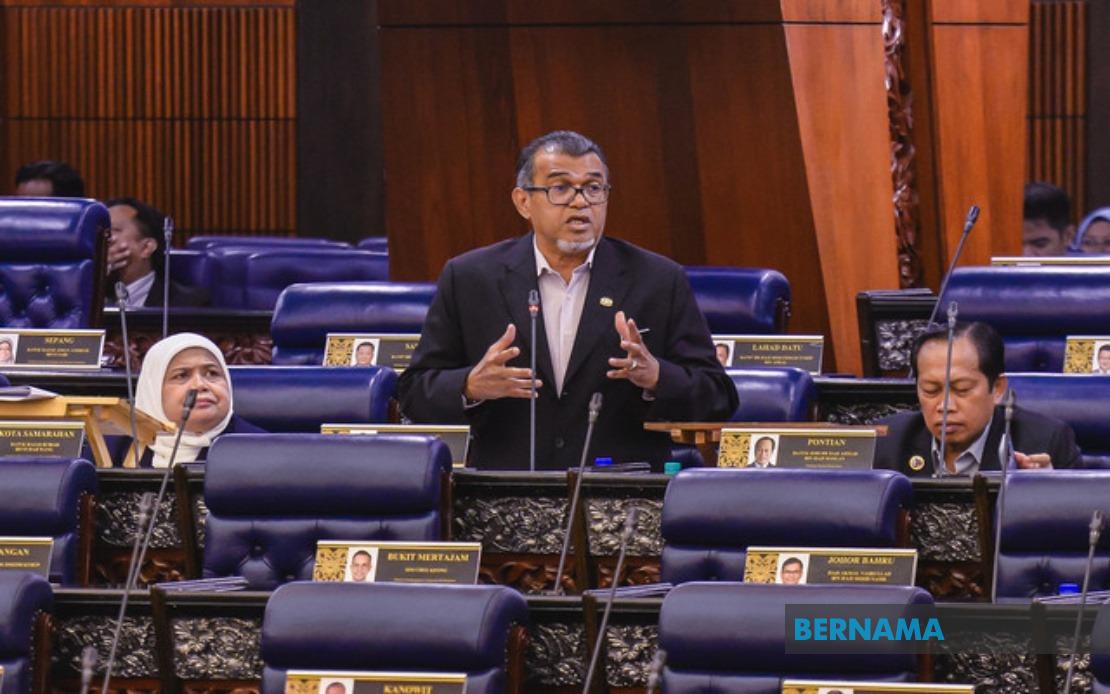
Malaysia's road safety crisis is heavily concentrated among younger drivers, with nearly seven in ten accidents involving people in their late teens and thirties, according to figures presented by Deputy Transport Minister Datuk Hasbi Habibollah in Parliament. The stark statistics underscore a persistent vulnerability among younger road users that has remained consistent across multiple years, highlighting a critical gap in road safety interventions targeting this demographic.
The breakdown of last year's accident data reveals a troubling concentration in the youngest age brackets. Drivers and road users aged 16 to 20 accounted for 6,157 cases, making them the single most accident-prone group tracked by authorities. The pattern continues downward through successive age cohorts, with those aged 21 to 25 involved in 5,978 accidents, followed by 4,716 incidents among 26-to-30-year-olds, and 3,640 cases for those aged 31 to 35. This progression suggests that inexperience and behavioural factors remain concentrated in the early driving years, though the problem extends well into the early career phase.
When combined, these four age brackets represent the overwhelming majority of the nation's road accident burden. The 69.4 per cent figure that Datuk Hasbi cited encompasses not only active drivers but also passengers and pedestrians, reflecting the broad reach of accidents involving younger individuals across different road user categories. This inclusive measure suggests that young people's involvement in accidents extends beyond their own driving behaviour to encompass decisions about who they travel with and how they position themselves on the road.
The government's framing of elderly drivers as a separate policy concern—explored through questions about mandatory health screening for those aged 70 and above—contrasts sharply with the empirical reality that older road users represent a proportionally minor segment of the accident statistics. The deputy minister noted that elderly individuals appear in accident data not necessarily as drivers but frequently as passengers, and that their numbers remain relatively small overall. This distinction is important for calibrating policy responses to address the genuine public safety challenge rather than pursuing interventions based on age stereotyping.
When asked about imposing mandatory health examinations for senior drivers renewing their licences, Datuk Hasbi cited research from the Malaysian Institute of Road Safety Research suggesting that age-based screening alone would not demonstrably reduce accident rates. International comparative evidence similarly fails to show that universal health requirements targeted at older drivers yield significant safety improvements. The ministry's cautious approach here reflects recognition that legislative measures must be grounded in evidence rather than demographic assumptions.
Beyond age demographics, the deputy minister identified three principal contributors to Malaysia's road accident toll: heavy vehicle involvement, alcohol-impaired driving, and reckless behaviour. These factors operate across multiple age groups but appear particularly pronounced among younger road users. Heavy vehicles pose inherent risks due to braking distances and manoeuvrability constraints, yet their operation and involvement in accidents with smaller vehicles create compounding dangers. Drunk driving represents a behavioural choice with documented fatal consequences, while reckless driving—encompassing speeding, dangerous overtaking, and inattentive behaviour—emerges from attitude and judgment gaps that younger, less experienced operators may struggle to overcome.
The policy consideration regarding elderly drivers hinges on a different principle: the ministry acknowledges that chronological age does not uniformly predict driving capacity. Individual variation in health, reflexes, and cognitive function increases significantly with age, but many seniors maintain competence and safety consciousness throughout their driving lives. Restricting driving privileges solely on age grounds risks imposing unnecessary mobility constraints on a population whose independence and quality of life depend substantially on private transport access, particularly in Malaysian contexts where public transit remains inadequate outside major urban centres.
Current licensing arrangements require medical examinations through the JPJL8 and JPJL8A forms for all new applications and renewals of vocational licences—covering goods vehicles and public service vehicles—regardless of the applicant's age. This targeted approach focuses mandatory screening on professional operators whose vehicles and passengers face heightened risk exposure, a risk-proportionate strategy that the ministry appears to prefer over blanket age-based requirements for all drivers.
For Malaysian policymakers and road safety advocates, the data presents a clear imperative: interventions must prioritise the 16-to-40 age cohort where accidents concentrate. Awareness campaigns, enforcement targeting young driver behaviour, graduated licensing systems with restrictions on novice operators, and education around drunk driving and recklessness deserve proportional resource allocation. The comparative safety record of older drivers, despite natural declines in some capacities, suggests that enforcement and behavioural change efforts achieve greater returns when directed toward young people's demonstrated risk factors.
The regional implications extend across Southeast Asia, where similar patterns of youth-concentrated road accidents plague Malaysia's neighbours. Indonesia, Thailand, and the Philippines all grapple with high accident tolls among young drivers, suggesting that developmental factors—inexperience, peer influence, incomplete risk assessment—transcend national boundaries. Malaysia's policy discussions around evidence-based screening and risk-targeted interventions offer instructive models for regional counterparts wrestling with road safety crises.
Implementing effective change will require sustained focus on driver behaviour and risk attitudes rather than demographic proxies. Enhanced enforcement against speeding and drunk driving, particularly targeting younger operators, combined with improved vehicle safety standards for heavy vehicles, represents a more promising pathway than age-based restrictions that lack empirical support. The deputy minister's parliamentary statement effectively repositions the road safety debate away from senior driver concerns toward the genuine epicentre of Malaysia's accident problem.

