The inaugural Minister's Cup debate competition, launched alongside the 7th International Sustainable Energy Summit (ISES) 2026, has given Malaysian students a meaningful forum to engage with one of the country's most pressing policy challenges: how to balance renewable energy exports with domestic electricity needs. Held in Kuala Lumpur, the event brought together twenty undergraduates from local universities to articulate competing perspectives on Malaysia's energy future, signalling a government commitment to cultivating informed public discourse around the energy transition.
At the heart of the competition was a motion posed entirely in Malay, reflecting the bilingual nature of Malaysian policy discourse: "Should Malaysia expand exports of renewable energy-based electricity to neighbouring countries while meeting domestic demand?" The question itself encapsulates a genuine tension in Malaysia's energy planning. As the region's renewable energy resources expand and neighbouring countries seek alternatives to coal and natural gas imports, Malaysia faces genuine strategic and economic choices about resource allocation. The debate format allowed students to grapple with trade-offs between immediate domestic needs and longer-term regional integration and export revenue.
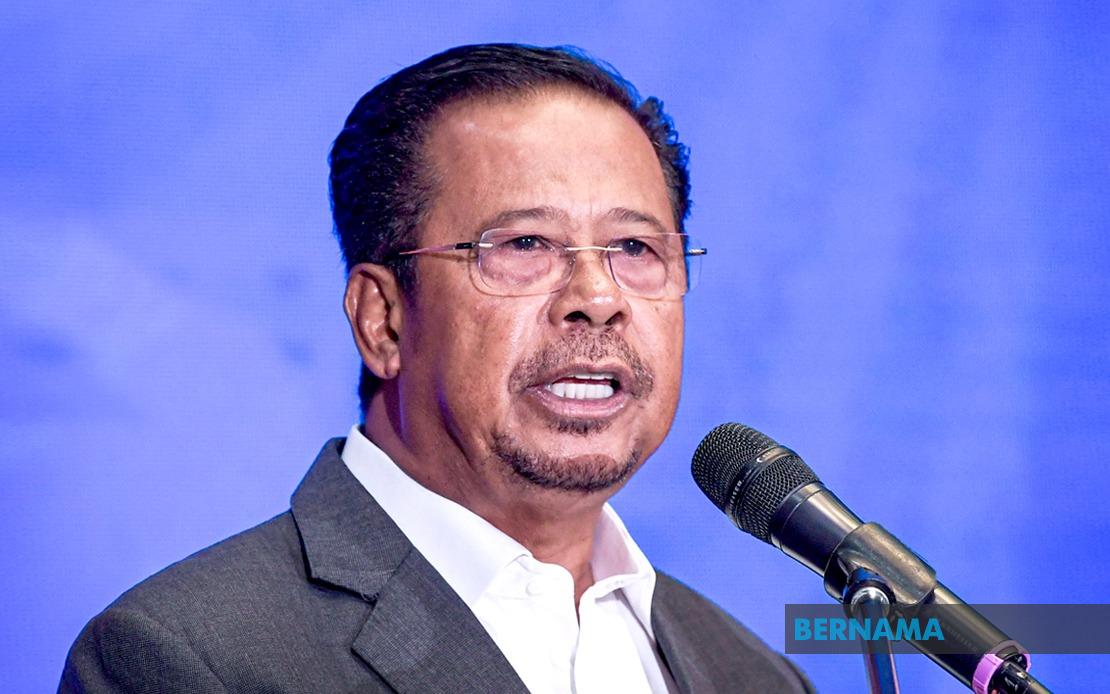
Deputy Minister of Energy Transition and Water Transformation Datuk Seri Abdul Rahman Mohamad presided over the awards ceremony, presenting the championship trophy to the Government team and honouring the Best Debater. His presence underscored the seriousness with which the administration views youth engagement on energy policy. The event also drew Tan Sri Dr Wan Ahmad Dahlan Abdul Aziz, the Chief Secretary to the Government and chairman of the Sustainable Energy Development Authority Malaysia (SEDA), demonstrating high-level institutional backing for initiatives aimed at building energy literacy among younger Malaysians.
The decision to frame this as a flagship programme under the Malaysia Energy Literacy Programme (MELP) reflects a strategic recognition that public support for energy transitions depends on widespread understanding of complex technical and policy issues. Energy debates are rarely settled by technical merit alone; they succeed when diverse stakeholders understand the tradeoffs and believe the decision-making process is legitimate. By involving students in formal debate structures, MELP seeks to create a generation capable of contributing to and defending energy policy choices.
Izzad Zalman Abdul Kader, SEDA's Strategic Communications director, articulated the underlying philosophy explicitly: debate serves as a pedagogical tool to deepen energy literacy while empowering young people to scrutinise government policy constructively. This represents a departure from top-down approaches to policy communication, instead creating space for younger Malaysians to develop informed critical perspectives. The recognition that citizens should "challenge government policies or put forward their views" is particularly significant in a Southeast Asian context where such platforms remain relatively uncommon.
Muhammad Uwais Mohd Hazril Munir @ Umar, the twenty-year-old Best Debater from Universiti Malaya's Faculty of Law, articulated the pedagogical value of debate itself: it renders complex technical issues comprehensible to non-specialist audiences by presenting multiple sides of contested questions. This insight captures why governments increasingly turn to structured debate as a governance tool. Renewable energy policy requires balancing environmental goals, energy security, economic development, and regional cooperation—all considerations that resist simple technical resolution. Public deliberation through debate helps citizens understand not just the facts but the values at stake.
Across Southeast Asia, energy transitions are intensifying debates about resource sovereignty, economic development, and environmental responsibility. Malaysia's position as both a potential renewable energy exporter and an energy-importing region creates distinct policy challenges. The country possesses significant solar potential and hydroelectric resources, yet faces growing domestic electricity demand from industrial expansion and population growth. Neighbouring countries including Singapore, Thailand, and Vietnam are simultaneously pursuing aggressive renewable energy targets, creating both competitive and cooperative dynamics in the region's energy markets.
The involvement of multiple government agencies—MELP, SEDA, and the Energy Transition ministry—signals bureaucratic coordination around energy literacy as a strategic priority. This institutional architecture suggests the government recognises that energy policy legitimacy depends not just on technical soundness but on public comprehension and acceptance. The 7th International Sustainable Energy Summit provides a regional platform where Malaysian student voices can contribute to broader Southeast Asian conversations about energy futures.
Afiq Athmar Mohamed, a twenty-one-year-old economics student from Universiti Malaya, emphasised that such competitions generate momentum across multiple domains simultaneously: education, public awareness, and policy discourse. His observation that the programme raises awareness across age groups points to a multiplier effect: students who engage seriously with energy policy become informed advocates within their families and peer networks, gradually shifting the baseline of public understanding. This grassroots approach to building energy literacy complements top-down policy communication strategies.
The specific debate motion—framed around renewable energy exports—touches on a genuinely underdeveloped dimension of Malaysian energy planning. Regional electricity interconnection and trade remain limited compared to gas and oil trade, despite enormous potential for efficiency gains and cost reduction. Students debating this question must grapple with questions about infrastructure investment, grid management, political relationships with neighbouring countries, and the sequencing of Malaysia's own energy transition. These are not hypothetical academic exercises but live policy questions that government agencies are actively considering.
The formatting of the motion in Malay, while the English-language summary appeared in international media, reflects Malaysia's positioning as a bridge between the English-speaking international development community and its own Malay-speaking constituencies. This bilingual approach to energy debate acknowledges that policy legitimacy requires communication in languages that resonate with diverse Malaysian audiences, not just in the international language of development discourse.
Looking forward, the Minister's Cup debate competition represents an emerging model for how governments in developing economies can build policy capacity and legitimacy simultaneously. By investing in student debate infrastructure, Malaysia cultivates a generation capable of understanding energy transitions while signalling to international observers that the country takes inclusive, deliberative approaches to complex policy challenges. Whether expanded energy exports ultimately occur will depend on technical feasibility, regional negotiations, and economic calculations—but the conversation itself has been democratised through this initiative.

