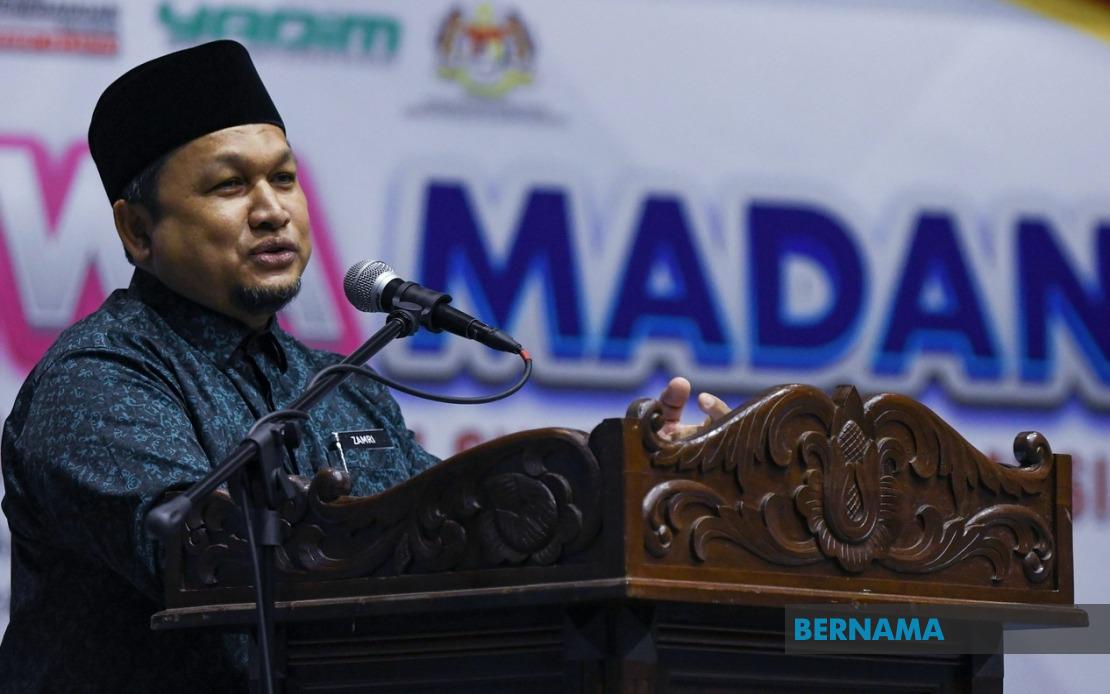
The Malaysian government's move to establish formal accreditation requirements for religious speakers active on digital platforms has won backing from Yayasan Dakwah Islamiah Malaysia (YADIM), the state's principal Islamic foundation. The initiative represents an escalating effort by authorities to manage the proliferation of unverified religious content in the online space, where social media has emerged as the dominant channel for Islamic teachings and religious guidance across the country.
Zamri Zainal Abidin, who leads YADIM as chief executive officer, framed the accreditation framework as a necessary safeguard rather than a restrictive measure. He emphasised that the proposal aims to maintain the integrity of Islamic knowledge disseminated through digital channels while protecting the public from distorted or inaccurate religious information. This distinction matters significantly in the Malaysian context, where concerns about unregulated online dakwah have grown alongside youth engagement with social media as a primary source of religious learning.
The absence of formal verification mechanisms has created vulnerabilities in the online religious space. Without established standards, individuals lacking genuine Islamic credentials can present themselves as qualified preachers or teachers, a phenomenon that has become increasingly common across popular platforms. This democratisation of religious instruction has dual implications: while it has lowered barriers to accessing Islamic knowledge, it has simultaneously enabled the spread of teachings that may diverge from orthodox Islamic scholarship or exploit believers' trust.
Young Malaysians represent a particularly vulnerable audience in this dynamic. Digital natives who turn to social media for religious guidance often lack the frameworks to distinguish between qualified scholars and self-proclaimed preachers. As Zamri noted, sustained exposure to unreliable religious content risks eroding confidence in formal religious institutions and creating confusion about authentic Islamic teachings. The credibility challenge extends beyond individual believers to affect the broader religious establishment's standing in society.
YADIM's endorsement carries institutional weight given its position as the government's designated dakwah organisation under the Prime Minister's Department. By signalling support for the accreditation initiative, YADIM effectively aligned itself with a regulatory approach that seeks to harmonise digital religious communication with existing professional standards. This positioning matters for implementation, as YADIM potentially positions itself as a partner in any rollout of verification mechanisms.
The foundation has already implemented comparable credentialing practices internally. YADIM-trained preachers, including those within the Daie Muda programme, undergo accreditation through the Federal Territories Mufti Department. This existing practice demonstrates that the organisation views formal verification not as an obstacle to dakwah activities but as a means of enhancing their legitimacy and credibility. The model suggests that accreditation can coexist with robust religious teaching and outreach.
The government proposal, recently announced by Minister in the Prime Minister's Department (Religious Affairs) Dr Zulkifli Hasan, reflects broader regional trends toward digital governance of religious content. Across Southeast Asia, authorities grapple with the challenge of maintaining religious authority and preventing the spread of extremist or heterodox teachings in spaces where traditional institutional oversight has limited reach. Malaysia's approach represents an attempt to extend established religious governance into digital territories where enforcement historically proves difficult.
Implementing such a framework will require careful calibration. Regulators must distinguish between accreditation that verifies genuine Islamic scholarship and measures that suppress legitimate diversity of opinion within Islamic jurisprudence. The success of any accreditation system depends on its perceived legitimacy among both religious scholars and the broader Muslim public. Excessive restrictions risk undermining buy-in, while insufficient standards fail to address the original credibility concerns.
The economic and social dimensions of unregulated online dakwah deserve consideration alongside religious authenticity concerns. Unverified preachers sometimes profit through financial appeals or endorsements that exploit believers' spiritual aspirations. Establishing verification mechanisms could protect vulnerable populations, particularly elderly and less digitally literate Malaysians who may struggle to assess online preachers' legitimacy. Conversely, accreditation requirements might disproportionately affect grassroots religious teachers lacking access to formal institutional channels.
The proposal also intersects with questions about content moderation and platform responsibility. While accreditation addresses the preacher's credentials, separate mechanisms are needed to identify and contain actively harmful content. Social media platforms operating in Malaysia will likely face pressure to prioritise accredited sources or implement filtering based on preacher verification status, raising questions about their role in enforcing religious standards.
Implementing the accreditation framework will require coordination among religious authorities, including federal and state mufti departments, to establish consistent standards and prevent jurisdictional confusion. The Federal Territories model that YADIM referenced cannot simply scale nationwide without addressing differences in Islamic jurisprudence interpretation across Malaysian states. Building consensus on accreditation criteria represents a significant administrative and scholarly challenge.
Looking forward, the accreditation initiative reflects a broader government strategy to maintain religious institutional authority in an era of decentralised digital communication. By establishing formal credentialing for online preachers, authorities seek to channel digital dakwah through approved channels while discouraging the spread of unverified or heterodox teachings. Whether this approach successfully balances religious integrity with religious freedom will significantly influence its effectiveness and public acceptance.

