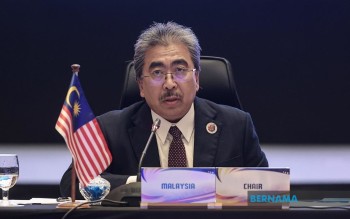
The World Trade Organization stands at a critical juncture and must fundamentally reshape how it operates to maintain its influence in an increasingly complex international landscape, according to Malaysian Investment, Trade and Industry Minister Datuk Seri Johari Abdul Ghani. Speaking at the 39th Asia-Pacific Roundtable in Kuala Lumpur, Johari emphasized that the multilateral institution requires substantial adaptation to address the realities confronting modern economies, where traditional free-market principles no longer dominate policymaking decisions.
When the WTO was established in 1995, the organization embodied a consensus that removing trade barriers and liberalizing market access would naturally lead to economic growth and foster international stability. That foundational logic, which shaped decades of trade negotiations and agreements, reflected a particular historical moment when globalization appeared to be an inevitable and universally beneficial force. Today's geopolitical and economic environment bears little resemblance to those assumptions, requiring the institution to reconsider its core mission and mechanisms.
The strategic calculus informing trade policy has undergone profound transformation across the globe. Whereas ministers once debated tariff reductions and market opening schedules, contemporary policymakers increasingly prioritize resilience against external shocks, technological sovereignty, and protection of critical supply chains. The COVID-19 pandemic starkly illustrated vulnerabilities in globally dispersed production networks, while heightened great power competition has prompted governments to view certain industries and technologies as essential to national security rather than purely commercial assets. This reorientation away from maximum openness toward selective protectionism represents a philosophical watershed that the WTO has struggled to accommodate.
Johari articulated the central dilemma confronting the organization: unless it evolves substantially, the WTO faces genuine risk of progressive irrelevance as member countries pursue their strategic interests through bilateral agreements, regional blocs, and alternative institutions outside the multilateral framework. The divergence between what the WTO was designed to do and what member states now demand has created mounting tension. Countries increasingly justify protective measures on security grounds, subsidize strategic industries, and implement industrial policies that would have been unthinkable under strict WTO orthodoxy, yet the organization possesses limited authority to effectively address such practices.
The minister stressed that paradoxically, the case for robust multilateral trade rules has arguably strengthened rather than weakened, even as adherence to those rules has become more contentious. In an environment of intensifying strategic rivalry between major powers, credible international institutions capable of reducing uncertainty and managing disputes are more essential than ever. Without functioning multilateral mechanisms, economic tensions risk escalating into broader geopolitical conflict, threatening regional stability and prosperity. The WTO's potential contribution to global security architecture should not be underestimated, provided it can evolve beyond its current operational constraints.
Addressing discriminatory trade practices represents another critical challenge requiring urgent attention. The proliferation of coercive economic measures, from selective tariffs to investment restrictions justified on national security grounds, creates an increasingly opaque and unpredictable trading environment that disadvantages smaller and more trade-dependent economies. Malaysia, as an open economy heavily reliant on international commerce, has particular stakes in establishing clearer rules governing what constitutes acceptable versus prohibited state intervention. The WTO must develop mechanisms to distinguish legitimate security concerns from protectionist measures masquerading as security policy.
Malaysia's position reflects broader Southeast Asian interests in maintaining a stable, rules-based trading system that constrains unilateral action by larger powers. ASEAN economies depend critically on access to major markets and freedom of navigation for commerce, making the health of the multilateral system directly consequential for regional prosperity. However, the region also increasingly recognizes that blanket opposition to strategic autonomy and supply chain diversification ignores legitimate security considerations that modern economies face.
Johari's remarks, delivered at the flagship conference organized by the Institute of Strategic and International Studies on behalf of the ASEAN Institutes of Strategic & International Studies network, carry weight beyond Malaysia's individual position. They reflect emerging consensus among Southeast Asian policymakers that the WTO requires substantial reform to address how modern states balance openness with security, competition with cooperation, and individual strategic interests with collective stability. The conference, themed "Accelerating Agency and Action" and convening policymakers, diplomats, military officials, academics, and business leaders through early July, provided an appropriate forum for raising these systemic questions.
The minister reaffirmed Malaysia's commitment to the multilateral trading system while acknowledging the urgent necessity for evolution. This formulation captures the dilemma facing many developing and middle-income countries: they benefit from stable rules protecting their interests against arbitrary action by powerful states, yet they also increasingly pursue their own strategic priorities through means that stretch or circumvent existing WTO disciplines. Resolving this tension requires genuine institutional innovation rather than peripheral adjustments to the existing framework.
Moving forward, WTO reform must address the gap between institutional design and contemporary economic realities. This includes developing clearer protocols for evaluating security exceptions, establishing mechanisms to address industrial subsidies that distort competition, and creating dispute settlement procedures that function effectively when major powers are involved. Without such adaptation, the risk exists that the organization becomes increasingly marginalized as its member states construct alternative arrangements outside its framework, ultimately diminishing its capacity to prevent economic tensions from escalating into geopolitical conflict.

