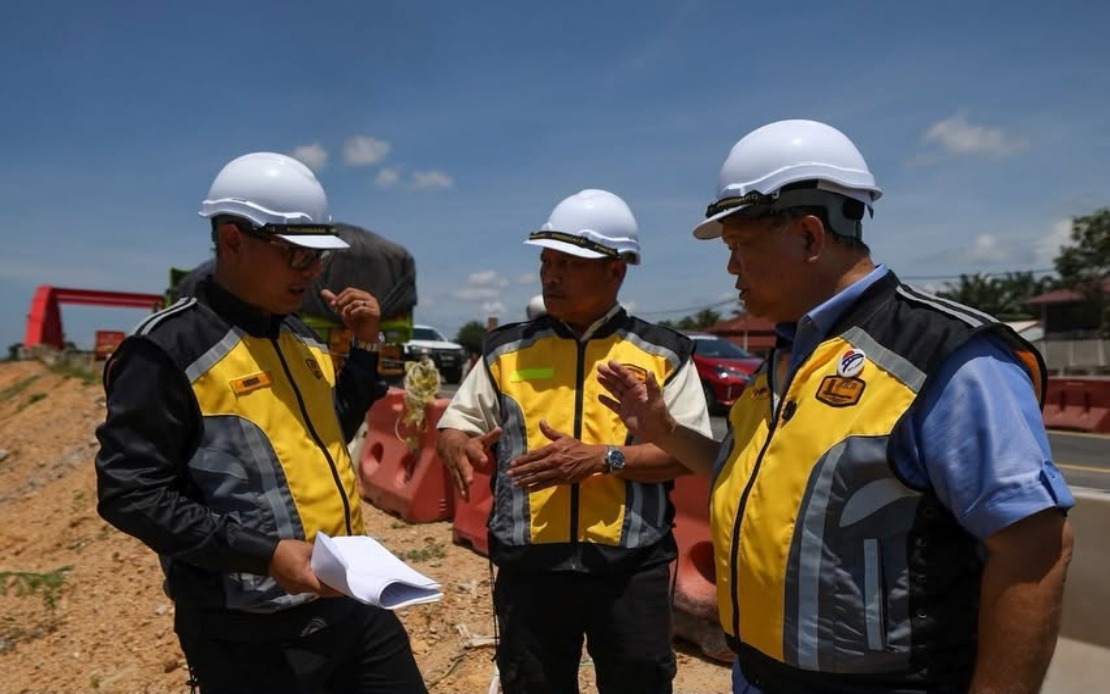
The Sungai Durian Bridge Replacement Project in Kuala Krai faces fresh pressure to meet its construction timeline after the Ministry of Works intervened with a direct order to the contractor tasked with delivering the infrastructure initiative. Works Minister Datuk Seri Alexander Nanta Linggi made an unannounced trip to the project site on July 17 to assess progress firsthand, prompted by persistent schedule slippage that has already necessitated six separate Extensions of Time during the construction phase.
The minister's intervention reflects growing frustration within the government over the project's trajectory. Despite multiple deadline adjustments granted to accommodate unforeseen complications, the construction remains unable to stay within revised schedules, suggesting systemic issues that extend beyond isolated technical challenges. This pattern of repeated delays raises questions about the adequacy of initial project planning and the contractor's capacity to manage the scope effectively within the current framework.
Nanta attributed some of the scheduling difficulties to installation work on borepiles, which has been complicated by the presence of existing utility pipelines in the construction zone. This type of constraint is not uncommon in Malaysian infrastructure projects, where historical utility networks often lack complete documentation or clear geographic mapping. The discovery and subsequent rerouting around these pipelines can substantially disrupt construction sequences and create cascading delays across dependent work packages. Additionally, challenges related to the temporary support structure for the steel bridge component have further strained the project's ability to maintain progress.
The minister emphasised that despite these technical complications, continued delays are no longer acceptable to the government or the public. His statement conveyed an unmistakable message that the contractor must now prioritise schedule recovery, moving beyond explanations and toward tangible acceleration. This signals a shift from passive acceptance of extension requests to active enforcement of performance expectations, a stance that may have significant implications for how future infrastructure contracts are managed within the ministry.
In response to the directive, the contractor has been instructed to deploy additional labour and resources to the construction site to compress the schedule and complete tasks more rapidly. The ministry and the Public Works Department will also intensify their oversight of the project, shifting from routine monitoring to a more interventionist supervision model. This enhanced scrutiny may help identify bottlenecks and technical obstacles more quickly, enabling faster problem-solving and maintaining momentum toward completion.
The Sungai Durian project holds particular significance for residents of Kuala Krai and surrounding communities who depend on improved connectivity and transportation infrastructure. The repeated delays have tested public patience and raised concerns about the reliability of government-contractor partnerships in delivering infrastructure on time. For Kelantan and the broader Klang Valley region, the successful and timely completion of such projects is essential for economic development and quality-of-life improvements.
The situation also reflects broader challenges within Malaysia's construction industry, where project delays have become increasingly common across both public and private sectors. Factors contributing to these delays include labour shortages, supply chain disruptions, escalating material costs, and inadequate preliminary site investigation. The Sungai Durian project exemplifies how even well-identified obstacles such as utility pipelines can derail carefully planned timelines if contingency planning proves insufficient during the design phase.
Nanta's personal visit to the site and public statement underscore the ministry's commitment to holding contractors accountable for performance. In a sector where excuses can often accumulate faster than project progress, this more assertive approach represents a necessary correction. The minister explicitly rejected any further tolerance for implementation weaknesses and tied the Public Works Department's ongoing involvement to achieving completion according to the revised schedule.
Looking forward, the success of this intervention will depend on whether the additional resources and intensified oversight genuinely address the underlying causes of delay or merely apply surface-level pressure. If the borepile and support structure issues have been thoroughly resolved through the enhanced contractor commitment and government support, the project may yet recover sufficient schedule margin to satisfy both ministerial expectations and public needs. However, if these represent deeper design or site condition problems, continued friction between contractual obligations and physical reality may still impede timely delivery.

