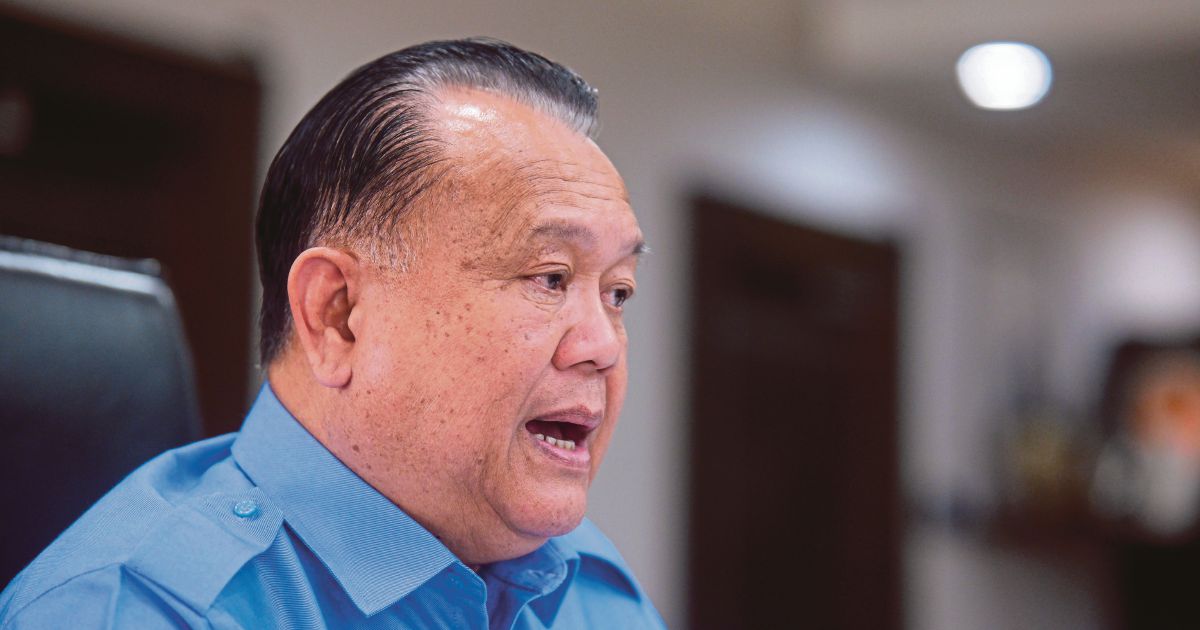
Datuk Seri Alexander Nanta Linggi, Malaysia's Works Minister, has signalled a significant strategic retreat from federal politics by declaring his intention to forego defending his Kapit parliamentary seat in the next general election. The move marks a deliberate repositioning of the seasoned Sarawak politician's career trajectory, as he pivots toward contesting at the state assembly level—a decision that underscores shifting power dynamics within the peninsula's political landscape and raises questions about future leadership directions in the East Malaysian state.
The Kapit constituency, located in the heart of Sarawak's Rajang Division, has been Nanta Linggi's political stronghold for consecutive electoral cycles. His announcement to step back from parliamentary politics represents more than a routine career adjustment; it reflects broader considerations about resource allocation, electoral strategy, and the evolving nature of competitive advantage within Sarawak's complex political environment. For a minister of his standing to voluntarily relinquish a federal seat suggests careful calculation regarding where influence and power can be most effectively exercised moving forward.
Nanta Linggi's tenure as Works Minister has positioned him at the centre of infrastructure development decisions across the nation. The portfolio carries significant weight, particularly for Sarawak, where connectivity projects and developmental initiatives remain critical to economic growth and social integration. His shift toward state-level politics may indicate a recognition that consolidating power and influence at the state assembly could prove more strategically advantageous than maintaining his current federal position, especially given Sarawak's historical emphasis on state autonomy and the substantial powers exercised by the state government under the Malaysian Federation framework.
The decision carries implications for coalition dynamics at the federal level. Nanta Linggi's departure from parliamentary contestation creates a vacant seat within his political party's allocation and potentially reshuffles representation from Sarawak in the Dewan Rakyat. Such transitions often prompt broader reviews of candidate selection and party strategy, particularly for ruling coalitions seeking to maintain parliamentary majorities. His exit may facilitate the advancement of other party figures or provide opportunities for coalition partners to strengthen their representation in the Kapit area through alternative arrangements.
At the state assembly level, his candidacy would position him within Sarawak's 82-member legislature, where fierce competition persists between the Gabungan Parti Sarawak coalition and the Democratic Action Party, which has gained significant traction in recent electoral contests. State assembly politics in Sarawak has proven increasingly competitive, with local issues dominating voter considerations more sharply than federal concerns. Nanta Linggi's decision to contest at this level suggests confidence in his ability to navigate these intensified local contests while leveraging his ministerial profile and federal connections.
Sarawak's political architecture has undergone notable transformation over the past decade. The state government maintains substantial revenue from natural resources and possesses considerable autonomy in policy matters ranging from land administration to education. For ambitious politicians, state assembly membership can represent a more direct avenue to executive power within the state cabinet structure, where portfolio allocations control significant budgets and development priorities. Nanta Linggi's repositioning aligns with this reality, potentially accelerating his pathway to enhanced influence within state-level decision-making mechanisms.
The Works Ministry portfolio, which oversees major infrastructure frameworks including highways, airports, and urban development projects, requires active federal parliamentary engagement. Nanta Linggi's departure from Kapit necessitates consideration of ministerial continuity and whether his replacement will be drawn from the same party faction or represents a broader coalition rebalancing. Such transitions invariably create short-term disruptions in ministry functioning as new leadership establishes priorities and builds operational relationships with departmental bureaucracy.
Political observers in Malaysia have long noted that state-level politics in Sarawak frequently provides more competitive contests and higher stakes than corresponding federal constituencies. The demographic composition of state assembly seats, the local importance of development projects, and the intensified community engagement required at state level create different political dynamics compared to parliamentary elections. For experienced politicians like Nanta Linggi, this shift represents an acknowledgment that future electoral viability and political relevance increasingly depend on success at subnational levels, particularly in states like Sarawak where economic and administrative power remains substantially concentrated.
The broader context of this decision reflects Malaysia's evolving federalism, where state governments have progressively asserted greater autonomy and attracted political talent seeking meaningful positions. Sarawak's unique constitutional status, arising from its 1963 entry into the Malaysian Federation, reinforces this dynamic, granting the state government exceptional powers over resource management and policy implementation. Nanta Linggi's move toward state assembly politics acknowledges these realities while positioning himself for potential advancement within Sarawak's executive governance structures.
As the nation moves toward GE16, Nanta Linggi's repositioning exemplifies broader patterns within Malaysian politics where career progression increasingly involves vertical movement between federal and state levels. His decision opens pathways for younger party members to contest federal seats while preserving his political profile and influence through state-level representation. The announcement provides clarity for party strategists planning candidate selection and resource allocation for the coming general election, allowing for timely succession planning within both federal and state political frameworks.

