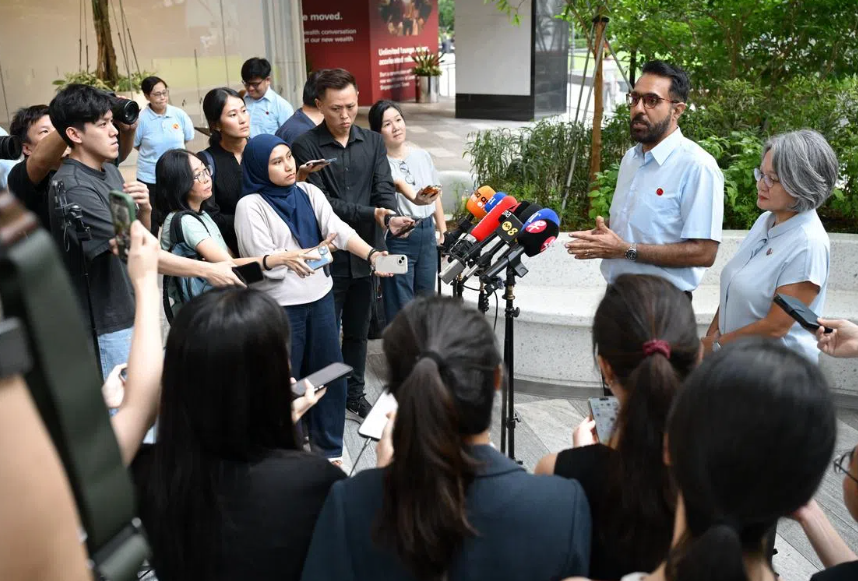
Singapore's Workers Party has decisively rallied behind leader Pritam Singh following what observers regard as the most serious challenge to his leadership since he assumed control of the opposition party in 2018. After spending close to six hours in meetings on June 28 that tested his position, Singh emerged visibly composed, claiming the party had demonstrated substantial unity through its voting results. The two-part vote—first addressing concerns about his fitness to lead, then conducting the biennial party election—ultimately confirmed Singh's continued leadership despite a criminal conviction that has complicated his political standing.
The immediate trigger for Sunday's extraordinary gatherings came from cadre members unhappy with how Singh handled his own misconduct following the 2021 Raeesah Khan fabrication scandal. The former Sengkang GRC MP had fabricated an account of police mistreatment involving a sexual assault victim and presented it as fact in Parliament. When Khan's falsehood unravelled, Singh was implicated in Parliament's Committee of Privileges investigation for his role in allowing her deception to persist. This subsequently led to his conviction for lying to Parliament, a verdict that Singapore's High Court upheld in December 2025 after an appeal, establishing a permanent criminal record against the opposition chief.
The political consequences for Singh were swift and severe. Parliament passed a motion declaring him unsuitable to hold the position of Leader of the Opposition, and Prime Minister Lawrence Wong formally removed him from that role. Dissident cadres seized on this moment of vulnerability, believing they had a genuine opportunity to challenge his continued leadership of the party itself. They compiled a petition triggering the special cadres conference specifically to hold Singh accountable for his conduct and to lobby for an alternative candidate who might restore public confidence in the Workers Party's moral standing.
Yet the inquisition anticipated by Singh's critics failed to materialise with the force they had envisioned. While party sources confirm that Singh underwent questioning during the proceedings, the atmosphere proved far more collegial than opponents had hoped. Several cadres who spoke during the sessions actually voiced support for him, defusing the confrontational mood. Importantly, despite active efforts to recruit a challenger right up to the week of the conferences, no credible alternative candidate stepped forward. The absence of a rival effectively made the ballot a referendum on Singh's leadership rather than a genuine contest, leaving his opponents without a focal point for dissent.
The voting figures tell a decisive story: 82 of the 106 cadre members present voted for Singh to remain as party leader, with Singh himself declining to vote. This supermajority outcome in the first confidence vote preceded his unopposed election as secretary-general in the subsequent leadership ballot, mirroring the pattern that has characterised every party election since 2018. The result brought closure to an era of uncertainty that had shadowed the Workers Party since the Khan revelations nearly four years ago, finally allowing the party to move beyond internal recriminations about how the scandal was managed.
The party's handling of Singh's punishment appears deliberately calibrated to balance accountability with solidarity. An internal disciplinary panel determined that Singh had indeed breached the party constitution, but the party's leadership body issued only a formal letter of reprimand—a sanction that political observers have characterised as relatively lenient for conduct that led to a parliamentary conviction. The Workers Party thereby acknowledged wrongdoing without imposing measures that would have severely weakened Singh's authority. This calculated approach likely contributed to cadre members' willingness to forgive and restore full confidence in him.
The show of unified support extends beyond rank-and-file cadres to party elders. Low Thia Khiang, the architect of modern Workers Party structure and former party chief, publicly affirmed his continuing support for Singh ahead of Sunday's votes. Low's endorsement carries significant institutional weight within the party, signalling to potentially wavering members that the party's senior statesman had no reservation about Singh's continued leadership. This backing from the party's founding generation effectively neutralised arguments that Singh's conviction had forfeited his legitimacy among those who built the Workers Party's current position.
Party chair Sylvia Lim, speaking to reporters after the elections, framed the outcome as an opportunity for institutional renewal rather than dwelling on the scandal. She acknowledged her own 23-year tenure in the role and emphasised that the party was actively conscious of the need for leadership succession planning. Her comments suggested that with Singh's position now secured and the Khan matter definitively settled internally, the Workers Party could redirect its energies toward grooming the next generation of leaders and consolidating its parliamentary work. The party's recent expansion, including winning two Non-Constituency Member of Parliament seats in the May 2025 general election, provides evidence of growing electoral viability despite the conviction controversy.
Yet the cadres' loyalty also raises uncomfortable questions about the priority the Workers Party has assigned to principles versus political survival. Critics note that Singh was asked directly how he would respond to those describing the party as being run by a "convicted liar," and his response—directing questioners to his website and reiterating his parliamentary statements—appeared to sidestep rather than substantively address the reputational challenge. The party has chosen to operate as if the matter is resolved through internal party processes and electoral performance, even though external observers continue viewing his conviction as a legitimate obstacle to his leadership.
The Workers Party's position is undergirded by a particular electoral calculation. Many party supporters likely view Singh's legal troubles through a political lens rather than a principled one, particularly given that the Workers Party achieved electoral gains in May 2025 even after Singh's lower court conviction. The party operates as Singapore's primary opposition force against the People's Action Party, and this underdog status historically has meant that opposition voters prioritise growth and parliamentary voice over strict accountability measures. The party's expansion into new constituencies despite the scandal suggests that public opinion has indeed largely moved beyond the conviction as a disqualifying factor.
As the Workers Party consolidates behind Singh and pivots toward parliamentary work and internal renewal, Malaysian observers monitoring Singapore's opposition dynamics should note the implications for regional opposition politics. The case demonstrates how opposition parties can absorb significant reputational damage if they maintain party discipline and demonstrate electoral viability. It also illustrates the asymmetry opposition movements face: while the ruling party's supporters may demand accountability, opposition members often calcify around their leadership to preserve collective gains. This pattern—prioritising unity over internal accountability—occurs across Southeast Asian opposition movements and reflects the perpetual tension between principle and pragmatism in anti-establishment politics.
The Workers Party's challenge ahead involves proving that this consolidation behind Singh enhances rather than undermines its credibility as a future alternative government. Party chair Lim's focus on leadership renewal suggests the party recognises the need to build a generation of leaders with standing independent of Singh's controversial tenure. Whether cadre solidarity translates into broader middle-ground voter support—a crucial demographic for expanding beyond the Workers Party's current electoral foothold—will ultimately determine whether internal unity proves strategically wise or merely postpones a reckoning with public opinion.

