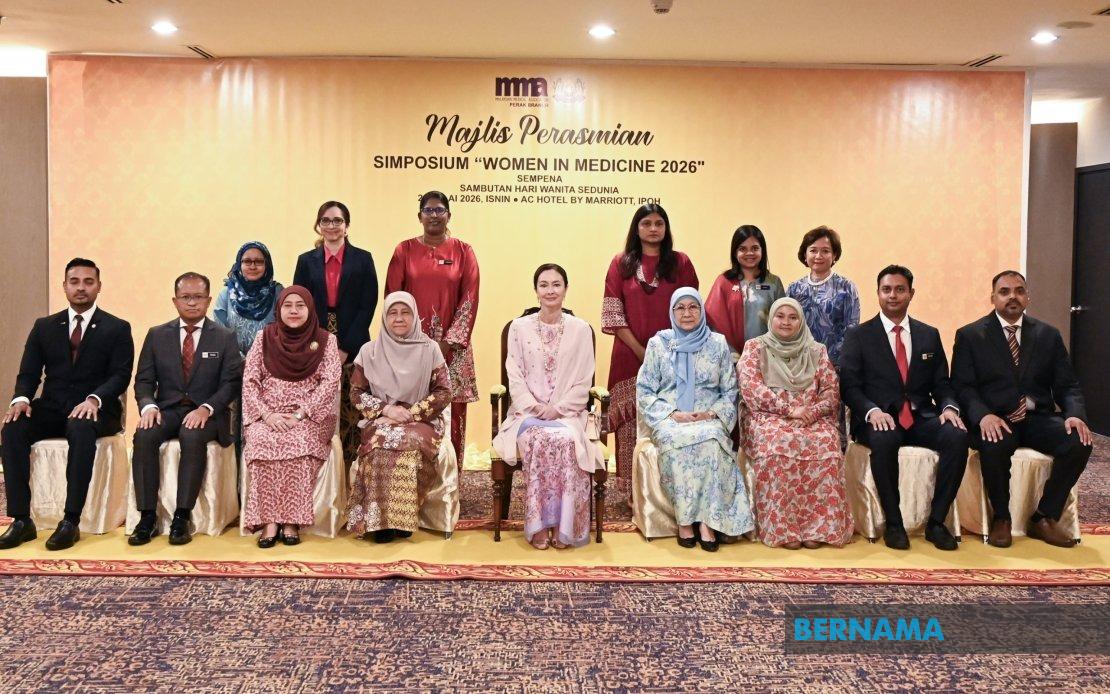
The Perak Malaysian Medical Association has made a compelling case for expanding women's representation in healthcare leadership, arguing that female physicians and administrators bring critical qualities that the profession desperately needs as it confronts a rapidly evolving landscape. Speaking at the Women in Medicine 2026 Symposium in Ipoh this week, Dr Monesh Pillai, the association's chairman, contended that women's presence at senior levels introduces broader perspectives, stronger empathy, and approaches that prioritise patient welfare—attributes increasingly vital as the sector grapples with interconnected crises.
The healthcare system across Malaysia faces mounting pressures from multiple directions simultaneously. Mental health disorders have surged, driven partly by economic uncertainty and pandemic aftereffects. Non-communicable diseases such as diabetes and hypertension continue rising, straining resources already stretched by an ageing population requiring chronic disease management. Simultaneously, healthcare institutions are scrambling to implement digital technologies and navigate the implications of artificial intelligence, which promises efficiencies but raises ethical and workforce concerns. These overlapping challenges demand not incremental adjustments but fundamental rethinking of how healthcare delivery is organised and managed.
Dr Pillai's assertion that such multifaceted problems require innovative and forward-thinking leadership carries particular weight in the Southeast Asian context. Malaysia, like its neighbours, faces a healthcare system designed largely for acute infectious diseases but now compelled to manage chronic conditions, preventive care, and complex social determinants of health. The traditional hierarchical, disease-focused model struggles under this burden. Women leaders, research consistently shows, tend toward collaborative decision-making and consider broader systemic impacts—approaches arguably better suited to the preventive, integrated care models now regarded as optimal practice internationally.
Yet the data reveals a concerning gap between rhetoric and reality. Women comprise roughly half of medical school graduates in Malaysia, yet occupy far fewer than half of senior leadership positions in hospitals, medical associations, and health policy bodies. This represents both an equity issue and, more pragmatically, a waste of talent and capability during a period when healthcare systems are under unprecedented strain. The argument that appointing women to leadership roles benefits only women themselves misses the central point: it benefits patients, communities, and the entire healthcare enterprise.
The symposium, held in conjunction with International Women's Day and graced by Tuanku Zara Salim, the Raja Permaisuri of Perak, highlighted this year's theme of rights, equality, and empowerment. Dr John Emmanuel, the organising committee chairman, reframed empowerment beyond mere opportunity creation, defining it instead as ensuring women possess genuine space to lead and shape institutions. This distinction matters. Tokenism—placing women in visible but powerless positions—has plagued many institutions and ultimately discredits both the women involved and the organisations claiming progress.
The medical profession's particular responsibility extends beyond conventional governance concerns. Healthcare professionals wield significant influence over community wellbeing and public health priorities. When women doctors and administrators occupy influential positions, they help ensure that women's and children's health concerns receive appropriate attention, that maternal mortality receives proper resources, and that gender-specific health challenges are addressed comprehensively. Sunway Velocity Medical Centre's Dr Sangeetha Siniah, presenting on immune and allergic health in women and children, exemplified how specialist expertise in previously marginalised areas gains prominence when women lead.
Moreover, the medical field's transformation extends far beyond doctors. Nurses comprise the largest healthcare workforce in Malaysia, and nursing leadership remains disproportionately female yet often lacks meaningful input into hospital and ministry-level decision-making. Pharmacists, allied health professionals, administrators, and researchers all contribute essential expertise. The WIM 2026 Symposium's explicit recognition of women across these diverse roles represents a significant departure from outdated notions that leadership means physician leadership alone. As healthcare systems become increasingly complex and interdisciplinary, this broader definition becomes not merely inclusive but organisationally essential.
Monash University Malaysia's President and Pro Vice-Chancellor Datuk Dr Adeeba Kamarulzaman brought additional perspective through her presentation on women leading change from clinical settings to global health policy. This trajectory—from direct patient care to systemic influence—exemplifies what becomes possible when institutions actively develop and promote female talent. Her own career arc, scaling from clinical medicine to vice-chancellor roles, demonstrates that women's advancement benefits not only medicine but educational institutions and research ecosystems fundamental to healthcare innovation.
For Malaysian policymakers and health administrators, the symposium's implicit message deserves serious consideration. The ministry of health, state health departments, and major hospital groups possess substantial recruitment and promotion authority. Deliberate strategies to identify, mentor, and advance female medical professionals into leadership roles would cost little yet potentially yield significant returns. Creating transparent promotion criteria, establishing mentorship programmes linking senior and junior women physicians, and ensuring gender diversity on recruitment panels represent practical steps many developed healthcare systems have implemented successfully.
The broader context matters as well. Regional competitors including Singapore and Australia have already recognised women's leadership as a competitive advantage, attracting top female medical talent through supportive environments and clear advancement pathways. Malaysia risks losing high-performing physicians to brain drain if the profession fails to provide equitable career prospects. Simultaneously, Southeast Asia's emerging economies require healthcare innovations and system redesigns that draw on the fullest possible talent pool. Excluding women from leadership positions is simply inefficient allocation of human capital.
Ultimately, Dr Pillai's case rests on a proposition that extends beyond gender activism: diverse leadership produces better outcomes. For healthcare systems confronting mental health epidemics, chronic disease burdens, and technological disruption, that proposition merits urgent institutional attention. The Perak Medical Association's call for women not merely as participants but as shapers of Malaysia's healthcare future represents both an ethical imperative and pragmatic necessity as the profession navigates one of its most consequential transitions.

