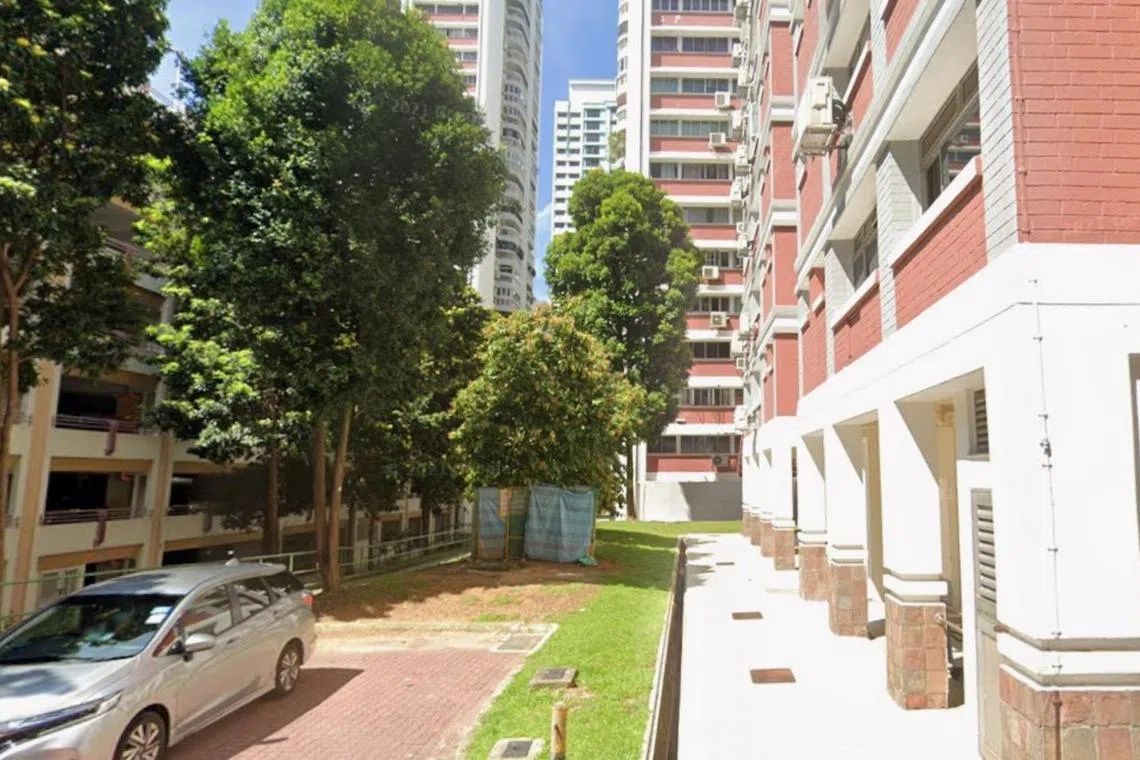
Police in Singapore have arrested a 46-year-old woman on suspicion of grievous hurt involving a weapon following a violent incident at a public housing estate in the Bukit Merah district. The alleged assault, which left a 43-year-old victim requiring hospitalisation, underscores ongoing concerns about sudden violence erupting in residential neighbourhoods, a phenomenon that has increasingly troubled Singapore's otherwise orderly society.
Authorities responded to an emergency call at 7 Kim Tian Place shortly before 7.40pm on Saturday, July 4, when officers were dispatched to the Housing Board block following reports of the knife attack. The rapid police response reflects Singapore's well-coordinated emergency services infrastructure, though the incident itself marks a breach in the precarious calm that typically characterises the city-state's residential areas. Initial reports indicated that the two women knew each other, suggesting the attack was not a random act of violence but rather a confrontation between acquaintances that escalated dramatically.
The victim, aged 43, was conscious when emergency responders arrived at the scene and was promptly transported to Singapore General Hospital for treatment of her injuries. The condition of her wounds and the extent of medical intervention required remained undisclosed in initial police statements, though her consciousness at the time of evacuation suggested the injuries, while serious, may not have been immediately life-threatening. Medical officials at the hospital have not released further details about her hospitalisation or prognosis.
Investigators recovered a knife from the scene, which has been seized as evidence and will likely feature prominently in the prosecution's case against the suspect. The presence of the weapon provides material evidence of premeditation or at minimum an escalation of what may have begun as a verbal dispute. The specific circumstances that prompted the suspect to arm herself or how the knife came to be used against the victim remain subjects of ongoing investigation.
Local Chinese-language media outlet Shin Min Daily reported the discovery of bloodstains at the void deck of the HDB block, a common recreational and communal space in Singapore's public housing estates where residents regularly gather. The visibility of the incident in this public area raises questions about whether witnesses were present and whether their testimonies might assist investigators in reconstructing the sequence of events. Public housing void decks, though ostensibly safer spaces given Singapore's surveillance infrastructure and community presence, nonetheless remain vulnerable to sudden eruptions of violence.
The arrest carries serious legal consequences for the 46-year-old suspect under Singapore's penal code. The charge of causing grievous hurt with a weapon is a substantially more grave offence than simple assault, reflecting the law's recognition of the enhanced danger posed by armed attacks. Conviction on such charges typically results in substantial custodial sentences, potential caning, or both, depending on the severity of injuries inflicted and aggravating circumstances surrounding the incident.
For Malaysian readers, this incident serves as a reminder of the unpredictability of urban violence even in heavily regulated and policed environments. While Singapore maintains one of Asia's lowest crime rates through rigorous law enforcement and surveillance systems, interpersonal violence driven by disputes between known parties remains difficult to eliminate entirely. This mirrors challenges faced in Malaysian urban centres, where personal conflicts occasionally escalate to armed violence despite police presence and community safety measures.
The incident also highlights the role of rapid emergency response and medical care in mitigating the consequences of violent crime. Singapore's integrated system of police, ambulance services, and hospital provision allowed the victim to receive swift treatment, a capacity that varies significantly across Southeast Asia. For Malaysia and the region, such cases underscore the importance of maintaining efficient emergency services capable of responding swiftly to violent incidents in residential areas.
Police investigations into the attack remain active as officers gather statements from witnesses, review any available security footage from the housing block, and establish the precise sequence of events leading to the assault. The relationship between the two women and any history of prior conflict between them will likely prove crucial to understanding what prompted the violence. Investigators must also determine whether any provocation occurred or whether the attack was entirely unprovoked, factors that could influence both criminal culpability and sentencing considerations.
The case underscores a broader pattern in developed Asian cities where sudden violence occasionally pierces the surface of orderly, regulated societies. While Singapore's comprehensive approach to law enforcement has successfully maintained low crime rates compared to regional neighbours, incidents like this demonstrate that no society is entirely immune to interpersonal violence. The swift arrest and ongoing investigation reflect Singapore's capacity to mobilise resources rapidly and pursue accountability, setting standards against which other regional jurisdictions are frequently measured.

