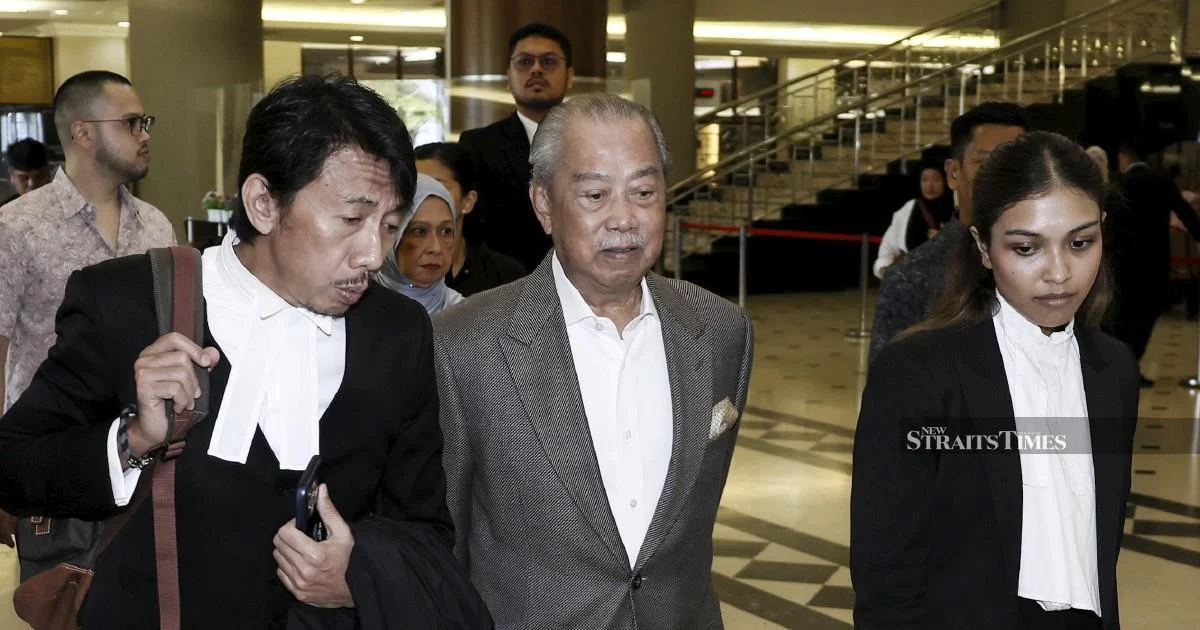
A company director has revealed in High Court proceedings that she prepared five distinct letters representing separate companies, all directed toward the office of then-Prime Minister Tan Sri Muhyiddin Yassin, with the purpose of securing projects awarded through the Jana Wibawa programme. The testimony, delivered in Kuala Lumpur today, marks a significant development in an ongoing investigation into the distribution of contracts under the economic stimulus initiative.
The Jana Wibawa programme, introduced during Muhyiddin Yassin's administration, was structured as an economic stimulus effort targeting small and medium-sized enterprises and cooperative societies. The scheme represented a substantial government commitment aimed at providing financial support and project opportunities to boost economic activity during a challenging period. However, the programme has since become the subject of considerable scrutiny regarding the allocation methodology and the criteria applied when awarding contracts to prospective beneficiaries.
The witness's account introduces questions about the coordination and administrative practices surrounding project applications during that period. According to her testimony, the preparation of multiple letters across different corporate entities suggests a systematic approach rather than isolated submission attempts. The nature of this arrangement—with a single individual preparing communications for multiple unrelated companies—raises pertinent issues about the application process and how various firms accessed the submission pipeline.
The involvement of five separate companies in simultaneous applications through coordinated letter preparation points to potential coordination mechanisms that may have existed outside formal channels. Each letter carried the same destination and similar purpose, yet represented distinct legal entities. This pattern of synchronized submissions raises investigative interest regarding whether there were underlying connections between these ostensibly separate organizations or whether standardized procedures were being followed in application preparation.
The High Court is examining whether proper governance frameworks were maintained during the application and selection phases of the Jana Wibawa programme. Testimony concerning the mechanics of how applications reached government decision-makers forms a crucial component of establishing whether established protocols were followed. The specificity of the witness's account—that she personally drafted five separate communications—provides concrete evidence about administrative practices rather than relying on circumstantial indicators.
For Malaysian stakeholders and the broader regional business community, this testimony illuminates how government project allocation procedures functioned during a significant economic initiative. The Jana Wibawa programme was intended to distribute resources widely, yet the centralized nature of application procedures and the apparent involvement of intermediaries in preparing submissions suggests the system may have concentrated power over distribution decisions. Understanding these mechanisms matters for assessing whether competitive bidding principles were genuinely observed.
The witness's involvement as a letter-preparer introduces an intermediary role in the government contracting process that deserves examination. Whether she acted in an official capacity, as a private consultant, or in some other capacity remains a relevant question affecting interpretation of her testimony. Her familiarity with preparing multiple applications simultaneously indicates either specialized expertise in navigating government submissions or operational familiarity with application procedures that raises questions about standardization and accessibility.
The High Court proceedings are establishing a factual record about operational practices within the Jana Wibawa administration that will inform judgments about whether procedures were transparent, merit-based, and equitable. The testimony about letter preparation methods represents the type of granular detail necessary for courts to reconstruct decision-making processes and determine whether regulations were properly observed. Such procedural analysis often proves as significant as documented financial flows in determining whether government resources were appropriately allocated.
Regional observers and policy analysts have long noted that government stimulus programmes in Southeast Asia occasionally encounter implementation challenges related to equity and transparency. The Jana Wibawa programme serves as a case study in how administrative intermediaries, application procedures, and centralized approval mechanisms interact within economic support schemes. The court proceedings are generating findings applicable beyond the immediate case, offering lessons about institutional safeguards necessary when governments distribute economic benefits rapidly through novel programmes.
The ongoing High Court examination will likely extend beyond the immediate question of letters prepared to encompass broader questions about project selection criteria, decision documentation, and oversight mechanisms. How multiple companies came to engage a single person for application preparation, and whether this arrangement was exceptional or representative of standard practices, directly affects the interpretation of procedural regularity. The witness's testimony opens pathways for investigating whether competitive dynamics were genuinely present or whether particular entities enjoyed systematic advantages in application preparation and submission.
As the proceedings continue, additional testimony regarding the ultimate recipients of Jana Wibawa contracts and the relationship between application procedures and final allocations will be essential. The court must determine whether the involvement of intermediaries in application preparation correlated with contract awards and whether systemic patterns suggest deliberate allocation mechanisms rather than neutral distribution. The witness's account provides investigators with specific names, dates, and procedural details necessary for reconstructing the complete picture of how the programme functioned in practice.

