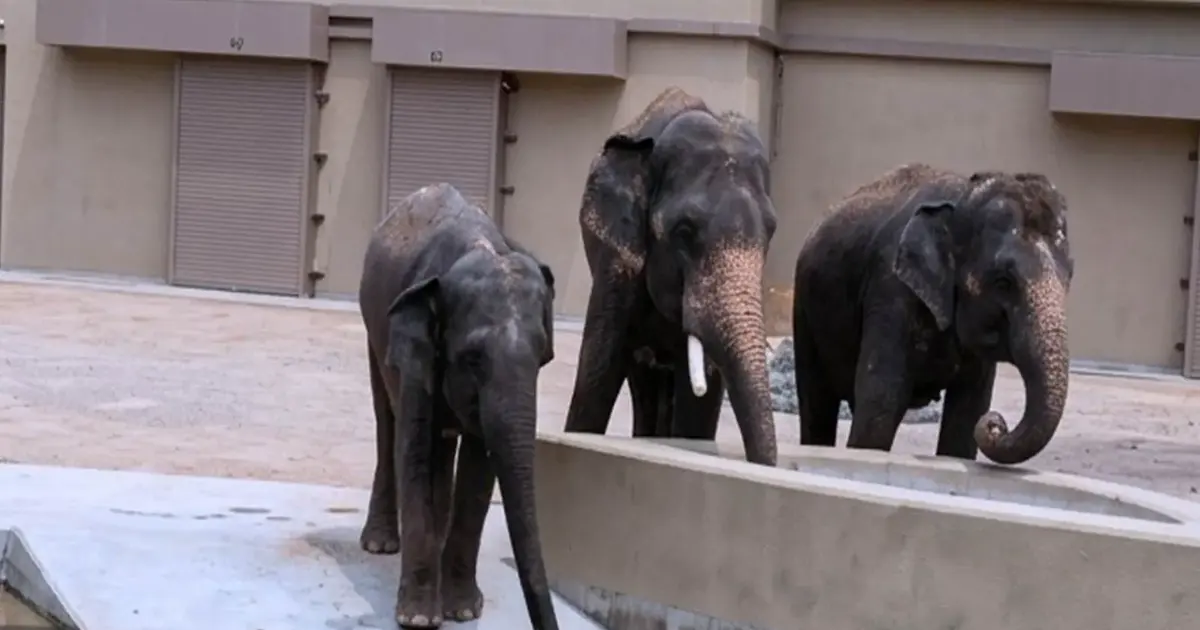
A prominent Malaysian wildlife advocacy organisation has raised serious questions about the financial arrangements surrounding the transfer of elephants to Japan, claiming that RM50 million was distributed to private individuals rather than flowing through official government channels. The allegation, made by NGO leader and lawyer Rajesh Nagarajan, suggests a potential circumvention of standard revenue mechanisms that would typically ensure such large transactions benefit the state directly.
Nagarajan's assertion that the payment did not enter government coffers represents a critical concern in wildlife trade governance, where transparency and proper accounting are essential safeguards against exploitation and misappropriation. The claim implies that intermediaries may have extracted substantial financial benefits from the elephant export arrangement, a practice that raises questions about stewardship of Malaysia's natural resources and whether proper valuation and compensation processes were followed.
The timing of this allegation underscores ongoing international scrutiny of elephant movements and wildlife commerce in Southeast Asia. Japan remains a destination for various wildlife imports, and the movement of elephants—particularly endangered or protected populations—requires adherence to Convention on International Trade in Endangered Species (CITES) regulations and national conservation laws. Any suggestion of irregular financial handling compounds concerns about whether such transfers prioritised conservation standards or served commercial interests.
The NGO leader's explicit call for investigation by the Malaysian Anti-Corruption Commission (MACC) reflects growing civil society engagement in wildlife governance matters that extend beyond purely environmental concerns into financial accountability and public interest protection. This approach recognises that corruption in natural resource management undermines both conservation objectives and state revenue collection, creating a dual loss for Malaysia's development and biodiversity preservation goals.
Context within Malaysia's broader wildlife management framework makes this allegation particularly significant. The country hosts considerable elephant populations, primarily in Sabah and Peninsular Malaysia, where human-wildlife conflict and habitat degradation present ongoing challenges. Revenue from wildlife-related activities, when properly managed, should theoretically support conservation efforts and local communities affected by wildlife presence. If substantial funds are diverted to private parties instead, this directly reduces resources available for elephant protection and conflict mitigation programmes.
The elephant transfer mechanism itself warrants examination. International movements of such animals typically involve veterinary assessments, permits, quarantine procedures, and transport logistics—all legitimate costs. However, these expenses should be transparent and documented, with remaining proceeds properly attributed to government accounts. The allegation that RM50 million bypassed official coffers suggests either hidden intermediary fees, unaccounted consulting charges, or deliberate structures designed to obscure financial flows.
For regional observers, this matter illustrates how wildlife trade arrangements in Southeast Asia sometimes occur within opaque institutional frameworks where proper oversight mechanisms may be weak or circumvented. Malaysia's standing as a biodiversity-rich nation depends partly on demonstrating robust governance of its natural capital. If credible allegations of financial irregularities in wildlife transfers go unexamined, this sends problematic signals about the government's commitment to transparent resource management.
The implications extend to Malaysia's international reputation in conservation circles. Foreign partners, including Japanese counterparts, increasingly expect rigorous due diligence and transparent governance in wildlife transactions. Unresolved questions about fund flows could complicate future arrangements and reflect poorly on Malaysia's stewardship credentials, particularly as the country positions itself as a leader in Southeast Asian conservation efforts.
Rajesh Nagarajan's professional standing as both NGO leader and lawyer adds weight to the allegation, suggesting this is not a casual claim but one rooted in substantive concern. His decision to publicly urge MACC intervention indicates confidence in the seriousness of the matter and perhaps frustration with existing oversight mechanisms failing to catch or address such irregularities independently.
The MACC investigation, should it proceed, would need to examine documentation related to the elephant transfer agreement, trace payment movements, identify recipient individuals and entities, and determine whether competitive procurement processes were followed. Such scrutiny could reveal whether this represents an isolated incident or a systemic pattern in how Malaysia handles high-value wildlife transactions.
Beyond the specific case, this allegation underscores the need for stronger institutional safeguards in wildlife commerce. Malaysia might benefit from establishing dedicated oversight bodies with real-time access to transaction documentation, mandatory competitive bidding for wildlife-related services, and regular auditing of revenue flows. Such measures would simultaneously protect conservation objectives and strengthen public confidence in resource management.
The broader question remains whether Malaysia's wildlife governance structures adequately balance environmental protection with financial accountability. As global attention on wildlife trafficking and illegal trade intensifies, domestic confidence that legitimate wildlife activities are managed transparently and for public benefit becomes increasingly important. Addressing the current allegations comprehensively could thus serve as a stepping stone toward more robust institutional frameworks that protect both Malaysia's natural heritage and its fiscal interests.