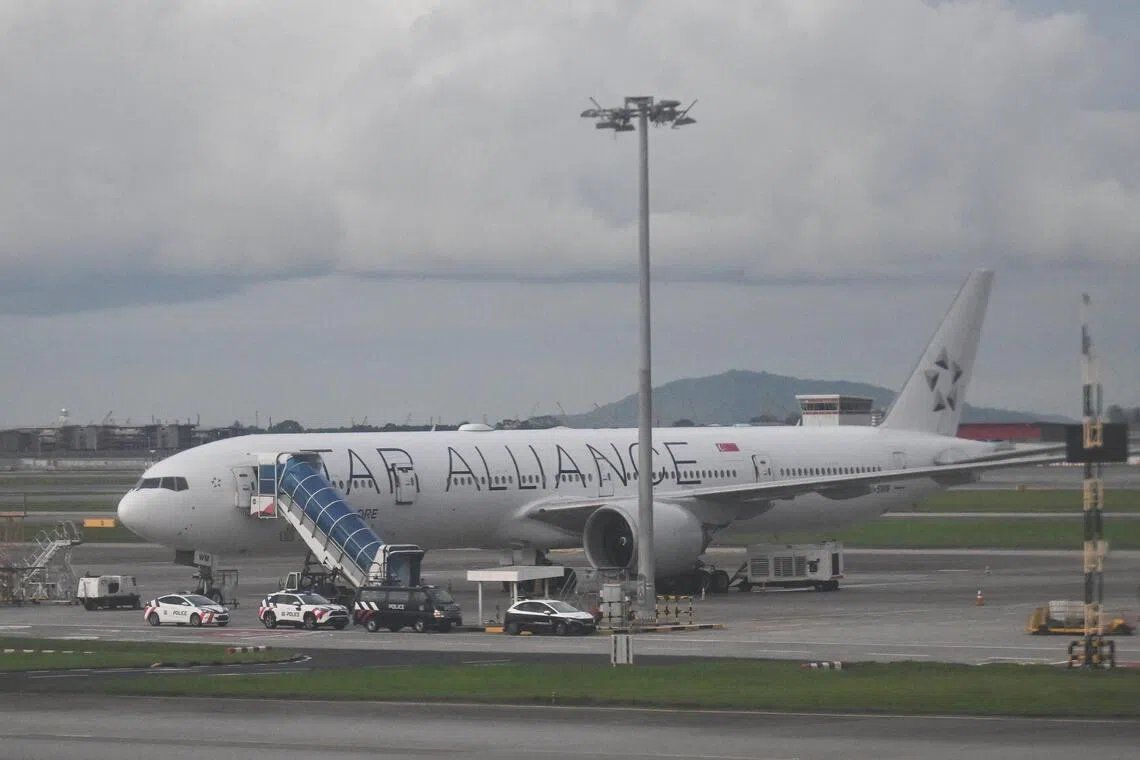
Linda Kitchen, 74, has initiated legal action against Singapore Airlines in Britain's High Court following the death of her husband during one of aviation's most dramatic turbulence incidents. The widow is pursuing compensation to help fund the ongoing specialist medical support she requires for a broken back sustained when Geoffrey Kitchen, a theatre director, collapsed onto her during the catastrophic plunge of Flight SQ321 on May 21, 2024. The couple, married for 52 years, were midway through a six-week holiday spanning Singapore, Indonesia and Australia when the incident occurred over Myanmar.
The scale of the turbulence was extraordinary by any measure. Flight SQ321, carrying 211 passengers and 18 crew members en route from London to Singapore, dropped more than 54 metres in just five seconds—a sudden descent that transformed the cabin into a chaotic scene within moments. The aircraft was executing a routine breakfast service when the severe weather struck, hurling objects and passengers alike across the cabin with violent force. Eyewitness accounts describe the terror of those final seconds before the emergency diversion to Bangkok's Suvarnabhumi Airport was initiated. In total, 79 people sustained injuries ranging from minor to life-threatening, making this one of Singapore Airlines' most serious incidents in recent years.
Geoffrey Kitchen's fate proved tragic. During the violent descent, he fell across Linda with such force that she was crushed into the armrest of her seat. Other passengers immediately assisted in moving him, and a doctor aboard the aircraft initiated cardiopulmonary resuscitation in a desperate attempt to save his life. Despite these efforts, Geoffrey suffered a fatal heart attack during the turbulence, though Linda would not learn of his death until two days after the emergency landing. She spent ten days in Bangkok's hospital before being airlifted back to Bristol, where she remained hospitalised for a further week before discharge to a home requiring significant assistance from caregivers.
The emotional and physical toll on Linda Kitchen has been profound and enduring. "When I got separated from Geoff, I knew he was in a bad way, but nothing prepared me for hearing he had died. It was absolutely devastating," she stated in remarks to British media. The trauma compounded her physical suffering, with the journey back to Britain reduced to a blur of pain and grief. More than two years later, the family continues to grapple with unanswered questions about what occurred and whether preventive measures could have mitigated the disaster. Anthe Korelidou, the specialist aviation lawyer representing Kitchen, emphasises that the family seeks thorough investigation to understand whether additional precautions might have prevented or reduced the injuries sustained.
Kitchen's lawsuit reflects a broader pattern of legal action following the incident. Court papers submitted to the British High Court reveal two claims filed in her name—one on her own behalf and a second representing the estate of Geoffrey Kitchen. Beyond Linda's case, at least six other passengers have launched legal proceedings against Singapore Airlines: Bradley Richards, Jack Jenkins, Hannah Fullerton, Andrew Dawood, Bryan Matthews, and the couple Pauline and Michael Rainey. This coordinated legal action suggests widespread dissatisfaction with the airline's response and a collective determination to obtain accountability and comprehensive answers about what transpired.
Singapore Airlines has sought to address the crisis through compensation offers and apologies, though these gestures have clearly not satisfied all those affected. In 2024, the airline offered passengers with minor injuries US$10,000, while those suffering serious injuries requiring long-term medical care and requesting financial assistance received an advance payment of US$25,000. All passengers received full refunds of their airfares. The airline issued a formal apology, stating: "We sincerely apologise to all passengers and crew members on board Flight SQ321 for their traumatic experience. The safety and well-being of SIA's passengers and staff are our top priority." When queried by The Straits Times on August 29, an SIA spokesperson declined to comment on matters currently before the courts, citing the ongoing legal proceedings.
Investigations into the root cause of the turbulence have produced partial clarity whilst leaving critical questions unresolved. Singapore's Transport Safety Investigation Bureau (TSIB), a department under the Ministry of Transport, determined that storm clouds responsible for the severe turbulence likely evaded detection by the aircraft's onboard weather radar system. This failure to detect the weather phenomenon caught the flight's captain unprepared, leaving insufficient time to initiate protective measures such as reducing speed or securing the cabin. However, the TSIB's conclusions remain inconclusive regarding whether the weather radar itself contained technical malfunctions or whether the storm clouds simply fell outside the system's detection parameters.
This ambiguity around the weather radar's performance is precisely the type of unanswered question that drives the current legal action. For families like the Kitchens, the distinction between system failure and undetectable weather is more than academic—it speaks to whether Singapore Airlines and aircraft manufacturers bear responsibility for upgrading technology to prevent similar tragedies. The TSIB's inability to reach definitive conclusions about the radar's functionality creates a vacuum of accountability that litigation may ultimately address. These legal proceedings will likely explore whether better radar systems were available, whether crew training adequately prepared pilots for undetectable severe weather, and whether the aircraft's design provided sufficient protection for passengers during such extreme events.
For Malaysia and the broader Southeast Asian aviation community, this case carries significant implications. Singapore Airlines operates extensively throughout the region, and its safety standards influence industry practices across regional carriers. The incident and subsequent litigation underscore the importance of rigorous accident investigation, transparent communication with affected parties, and willingness to implement systemic improvements identified through investigative processes. Malaysian aviation authorities and carriers will monitor how this case evolves, particularly regarding findings about weather detection systems and cabin safety protocols during extreme turbulence events.
The broader context of aviation safety in tropical and subtropical regions cannot be overlooked. Southeast Asia's meteorological conditions, characterised by rapid storm development and severe weather patterns, present particular challenges for flight safety. The apparent failure of sophisticated weather radar to detect the storm clouds on Flight SQ321 raises questions about whether current detection technologies adequately serve aircraft operating in this region's airspace. Industry stakeholders across Southeast Asia will watch the investigation's outcome and any regulatory changes that might follow, particularly those affecting aircraft equipped to operate in challenging weather conditions.
Beyond the specific circumstances of the Kitchen family, this litigation represents a broader principle about accountability in aviation. When passengers entrust airlines with their lives, they expect not only compensation when accidents occur but also transparency about causes and commitment to preventing recurrence. Linda Kitchen's pursuit of answers and support reflects this expectation. Her case will likely establish important precedents regarding how airlines respond to severe incidents and what obligations they bear toward injured passengers requiring long-term care. For the aviation industry across Southeast Asia, it serves as a reminder that modern safety systems must continuously evolve to detect and mitigate emerging risks, particularly in regions where severe weather remains an enduring challenge to flight operations.

