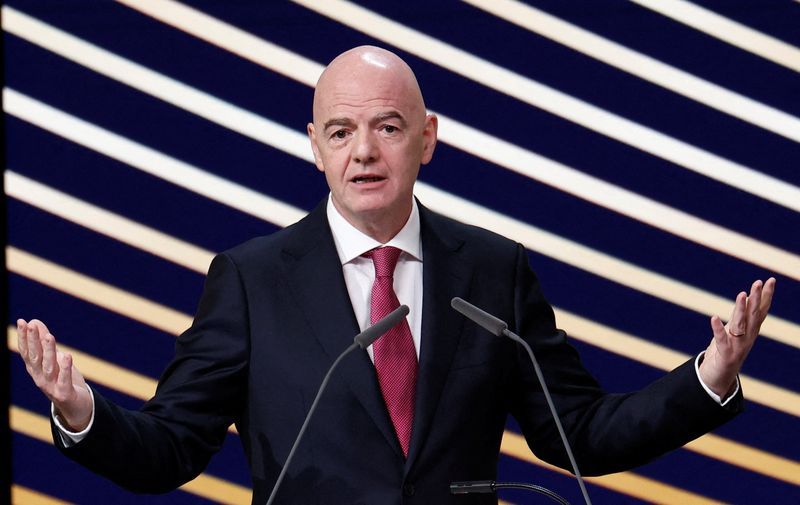
Gianni Infantino's path to a third term as FIFA President has become considerably steeper following a stunning collapse of support among major continental football confederations. The proposal to sell a private equity stake in the World Cup tournament triggered a backlash that exposed deep fractures within global football's governance structure, with Serbia, Sweden, and Wales withdrawing backing and UEFA mounting a comprehensive challenge to his leadership. The election to determine the next FIFA chief for the 2027 through 2031 term will take place in Morocco on March 18, setting the stage for what may become one of the most contested leadership races in the organisation's recent history.
Victor Montagliani, the president of CONCACAF and a Canadian businessman of considerable influence in North American football, has emerged as a serious challenger to Infantino's grip on power. Montagliani's position carries particular weight given that his confederation encompasses the United States, Canada, and Mexico—markets of enormous commercial and political significance to FIFA. While CONCACAF stopped short of the outright rejection that UEFA delivered, rejecting Infantino's private equity proposal demonstrated sufficient distance between the confederation and the incumbent. The 2026 World Cup, scheduled to take place across CONCACAF territory for the first time since 1994, provides Montagliani with a substantial platform and legitimacy heading into the election campaign.
European football's influential voice may consolidate around a single candidate, with Sheikh Salman bin Ibrahim Al Khalifa from Bahrain presenting himself as a potential consensus figure. As a senior vice president on the FIFA Council and president of the Asian Football Confederation, Al Khalifa has built a record of institutional resistance to Infantino's more expansionist projects, notably opposing the expansion of the World Cup to 64 teams. His statement that Infantino's private equity proposal had "exposed fundamental weaknesses in FIFA's consultation and decision-making processes" reflected a careful calculation that challenged the incumbent without burning diplomatic bridges. As a respected figure across multiple confederations, Al Khalifa occupies a middle-ground position that could appeal to federations seeking stability and reform simultaneously.
Aleksander Ceferin, the Slovenian president of UEFA, represents the European confederation's most confrontational stance against Infantino's vision. Ceferin's boycott of the World Cup final last month sent a powerful symbolic message about the deterioration of the relationship between world football's governing body and its wealthiest, most politically influential confederation. UEFA's comprehensive critique of Infantino's leadership style and decision-making processes provided the intellectual foundation for opposition across multiple confederations. However, Ceferin's candidacy faces the complication that his role as UEFA president creates institutional conflicts of interest that some observers believe would complicate his ability to unite global football behind his leadership.
Nasser Al-Khelaifi, president of Paris Saint-Germain and a prominent Qatari sports executive, has attracted quiet but meaningful support from senior European football officials according to recent reporting. Al-Khelaifi's business acumen and long experience navigating the intersection of football and high-level politics provide substantial credentials. His relative distance from the acrimonious disputes that have characterised recent FIFA controversies potentially positions him as a fresh option capable of commanding respect across continental divides. The Qatari executive's background in managing complex international sports partnerships could offer a pathway toward resolving the governance disputes that have consumed Infantino's presidency.
Lise Klaveness, the Norwegian Football Federation president, stands apart as perhaps the most symbolically significant candidate, representing both female leadership in the traditionally male-dominated upper echelons of football administration and a principled stance on governance and ethics. Klaveness emerged as one of the loudest voices opposing Infantino's World Cup privatisation scheme, and her federation previously initiated an ethics complaint regarding FIFA's decision to suspend a ban on United States forward Folarin Balogun following intervention by United States President Donald Trump. The Balogun controversy epitomised concerns about undue political influence over FIFA's decision-making and raised questions about the appropriate boundaries between national governments and international sports governance. Klaveness's candidacy would signal a decisive break from recent administrative practices and a commitment to restoring institutional credibility.
The convergence of these five potential successors reflects genuine ideological and institutional differences about FIFA's future direction. The fundamental question underlying this leadership contest concerns how FIFA should balance commercial interests against governance integrity, whether to expand tournament formats or maintain tradition, and whether the organisation should remain responsive to individual national governments or develop greater institutional independence. Infantino's tenure has been characterised by expansion projects—growing the World Cup, increasing confederation participation in decision-making, and pursuing commercially aggressive partnerships—that have generated both revenue growth and governance backlash in roughly equal measure.
Southeast Asian observers should recognise that the outcome of this election carries direct implications for regional football development. The Asian Football Confederation's voting power within FIFA structures means that the confederation's choice of candidate could prove decisive. Whoever assumes the FIFA presidency in 2027 will determine the shape of world football tournaments throughout the subsequent four-year cycle, including decisions about World Cup hosting arrangements, qualification formats, and the distribution of tournament revenues that filter down to support development programmes across poorer confederations. The composition of the FIFA Council and the priorities established for governance reform will influence how effectively the organisation addresses corruption, doping, and other institutional challenges affecting football throughout Asia.
The election timeline permits extensive campaigning and coalition-building before the Morocco vote. Candidates will need to construct winning coalitions that span the six continental confederations while maintaining credibility with national federations that hold the actual voting power. The rejection of Infantino's privatisation proposal suggests that grassroots sentiment among football administrators favours institutional conservation over radical commercial innovation. Whoever emerges as the consensus anti-Infantino candidate will likely face less opposition than a fractured field of contenders might suggest, indicating that the real contest may unfold not in the formal voting process but in the months of backroom negotiation that will determine which candidate can claim sufficient support to claim victory.

