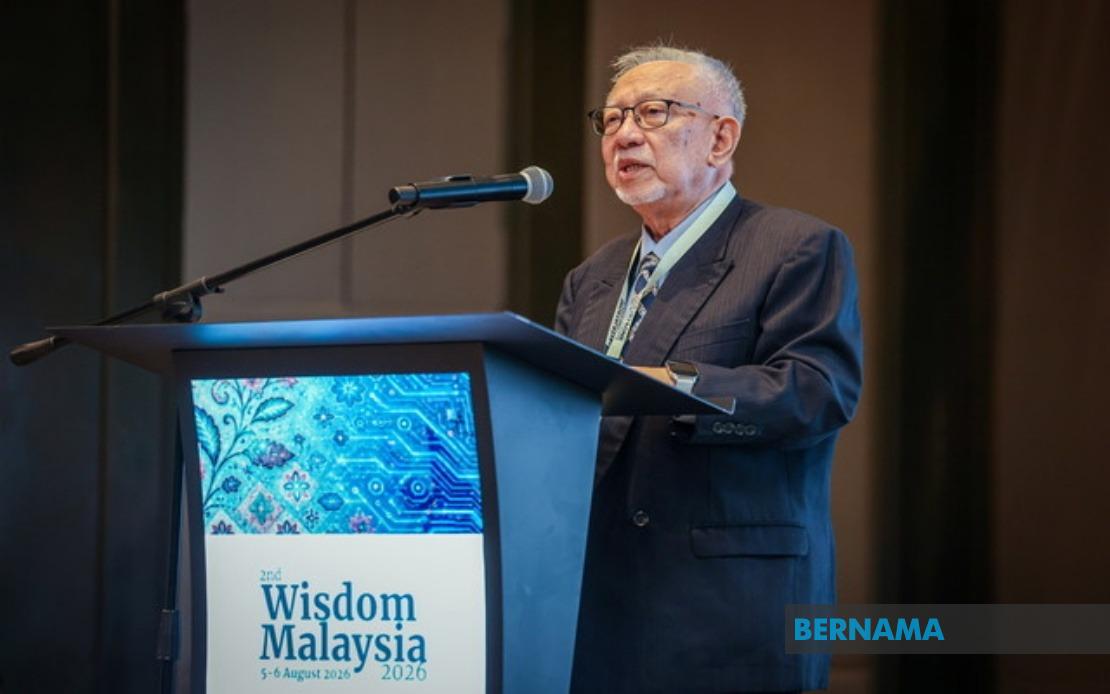
Creating a secure environment for those willing to expose wrongdoing stands as an essential pillar in Malaysia's battle against systemic corruption, according to Datuk Syed Ahmad Idid Syed Abdullah, a retired High Court judge with extensive experience across the Malaysian peninsula and Borneo. Speaking at the 2nd Wisdom Malaysia Conference 2026 in Kuala Lumpur, he articulated a troubling paradox: when governments and institutions respond to whistleblowers with suppression and intimidation rather than serious investigation, they inadvertently guarantee that honest employees will remain silent in the face of abuse of authority.
The absence of credible whistleblower protections transforms organisations into breeding grounds for corruption. When capable civil servants and private sector workers fear professional retaliation, social ostracisation, or legal harassment for reporting irregularities, the natural consequence is a culture of complicity where misconduct flourishes unchecked. This dynamic proves particularly dangerous because it means the crimes that are exposed represent only a fraction of actual wrongdoing—the tip of a much larger iceberg remains submerged. Syed Ahmad Idid contended that nations failing to safeguard those courageous enough to speak truth become increasingly vulnerable to large-scale financial scandals that might have been prevented through early intervention.
He drew a crucial distinction between whistleblowing and defamation, positioning the former as a deliberate, principled act aimed at halting corruption and remedying institutional dysfunction rather than as malicious or careless accusation. This conceptual clarity matters significantly in Malaysia's legal and social context, where whistleblower activities have occasionally been conflated with slander or corporate espionage. By reframing whistleblowing as an instrument of justice, Syed Ahmad Idid sought to elevate its moral and civic standing and encourage both potential whistleblowers and institutional decision-makers to view it constructively rather than defensively.
The financial implications of unchecked corruption remain staggering. Syed Ahmad Idid proposed a thought experiment that carries sobering implications for Malaysia: if authorities successfully recovered all illicit proceeds from corrupt transactions and funds lost through leakages across government ministries and agencies, the resultant capital would represent one of the nation's most substantial untapped resources for public good. Rather than languishing in offshore accounts or financing private luxury, these recovered billions could be redirected toward foundational infrastructure that directly improves citizen welfare and competitive advantage.
His illustration grounded this abstract potential in concrete policy outcomes. Each Malaysian state could receive funding for the construction of at least two general hospitals, addressing critical gaps in healthcare infrastructure that currently burden many regions. Simultaneously, a nationwide rollout could establish between 20 and 50 high-quality educational institutions equipped with superior facilities and resources. Beyond the bricks and mortar, recovered funds could finance comprehensive teacher training programmes, procure modern learning equipment, and implement curriculum improvements that would progressively elevate Malaysia's education system toward international standards in quality and outcomes.
The downstream effects of such investment extend far beyond immediate service delivery. A strengthened education system operates as a multiplier across generations, producing graduates with enhanced critical thinking, technical expertise, and professional competence. This superior human capital base then seeds improvements across national security apparatus—personnel trained within world-class institutions bring heightened capability to defensive and intelligence roles—and in elite athletic development programmes that enhance Malaysia's competitive standing in regional and international sporting competition. In this formulation, corruption recovery transforms into a vehicle for comprehensive national renewal.
Yet this potential remains unrealised as long as the systems and individuals empowered to expose financial crime face intimidation and career jeopardy. Syed Ahmad Idid issued a direct appeal to all stakeholders—politicians, civil service leadership, corporate boards, and citizens—to resist the temptation to rationalise or minimise corrupt conduct. When authority figures offer lenient interpretations of obvious violations or tacitly accept minor infractions as normal practice, they corrode the institutional commitment to integrity that sustained anticorruption efforts require. The challenge extends beyond law enforcement to encompass the entire body politic's willingness to demand and model ethical conduct.
The 2nd Wisdom Malaysia Conference 2026, organised by Kerjaya One PLT, brought together experienced industry practitioners, serving and retired government officials, emerging leaders, and professional managers to exchange hard-won insights on governance, ethics, and institutional effectiveness. Within this forum, Syed Ahmad Idid's warnings about whistleblower vulnerabilities resonated as particularly urgent given Malaysia's recent history of high-profile corruption cases and ongoing efforts to restore public trust in institutions. His argument positions whistleblower protection not as a luxury for advanced democracies but as a foundational requirement for any nation serious about tackling organised financial crime.
For Malaysian policymakers, the implications are direct. Strengthening whistleblower protection mechanisms—through legislative reform ensuring legal safeguards, institutional arrangements that guarantee confidentiality and independence of investigations, and cultural shifts that celebrate rather than stigmatise those who report wrongdoing—constitutes an investment in national integrity with measurable economic returns. The recovered billions that could reshape Malaysia's public infrastructure and services infrastructure remain inaccessible without the informational advantage that protected whistleblowers provide to enforcement agencies.

