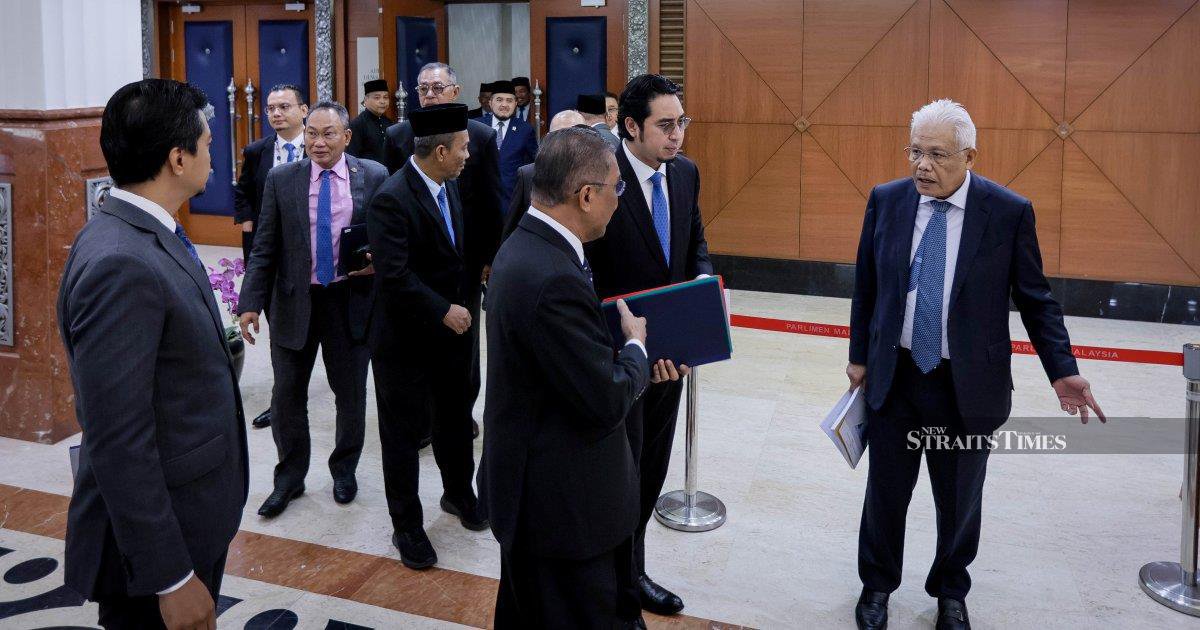
The latest parliamentary walkout by opposition lawmakers, triggered by the Royal Commission of Inquiry findings into Tabung Haji, has once again illuminated a persistent tension in Malaysian politics. When legislators abandon their seats in protest, they invariably create a narrative problem: the same action that proponents celebrate as principled dissent becomes ammunition for critics who see it as grandstanding or obstructionism. This recurring cycle suggests deeper questions about how contemporary Malaysian democracy reconciles the right to protest with expectations of legislative decorum and substantive debate.
Tabung Haji, the pilgrimage fund managing billions in Malaysian Muslim investments, represents precisely the kind of institutional accountability that parliamentary scrutiny is meant to ensure. When a Royal Commission investigates potential mismanagement or governance failures, the resulting report becomes a test of whether parliament can function as a genuine check on executive authority. The opposition's decision to walk out during proceedings related to this inquiry reflects frustration—whether justified or performative—about how the government intends to handle the findings. Yet this framing immediately raises the question of whether leaving the chamber advances scrutiny or merely signals displeasure without substantive engagement.
The contradiction inherent in walkout politics reveals itself most clearly when one observes how political actors evaluate identical tactics through opposing lenses. Government backbenchers and ministers often characterise opposition departures as disruptions that prevent serious legislative work, a form of political theatre designed to generate headlines rather than solutions. They argue that parliamentary effectiveness depends on continuous engagement and debate, and that walkouts represent an abdication of representative duty. Conversely, the opposition contends that walkouts constitute legitimate expression of protest when they believe the government has acted unconscionably or when parliamentary procedures themselves become instruments of suppression rather than deliberation.
This interpretive divide reflects a deeper structural question: what recourse do opposition lawmakers actually possess when they believe they lack meaningful voice within parliament? If procedural rules favour the government majority, if committee structures are controlled by ruling parties, or if time allocation for debate becomes constrained, then walkouts may represent one of few available protest mechanisms. Yet this logic also creates a slippery slope where tactical withdrawal can become routine, potentially draining parliament of its oppositional function entirely. When protests become normalised, they risk losing their capacity to signal genuine alarm about governance failures.
The Tabung Haji case specifically touches on public trust in religious institutions and financial stewardship of Muslim community assets. These are matters that extend far beyond partisan parliamentary competition. Malays and Malaysian Muslims across the political spectrum have legitimate interests in ensuring that the fund's governance meets the highest standards and that any misconduct is properly addressed. From this perspective, the substance of parliamentary response to the Royal Commission report matters more than whether all legislators remain in their seats while discussing it. A walkout that prevents substantive examination of the findings arguably subordinates the public interest to tactical advantage.
Yet the government's own handling of such moments also shapes opposition responses. If lawmakers believe that parliamentary procedures are being manipulated to limit debate, or that the government intends to minimise rather than transparently address the commission's conclusions, then withdrawal from the chamber becomes a form of non-cooperation with what opposition members perceive as predetermined outcomes. The walkout then signals that parliamentary norms themselves have broken down, and that formal debate has become theatre rather than deliberation. This distinction—between walking out because one disagrees with outcomes and walking out because one believes the process itself is compromised—carries significant weight for assessing legitimacy.
Regional comparisons offer some perspective on this dilemma. Many Commonwealth democracies have experienced similar tensions between protest and propriety in parliament. Some have developed conventions that protect opposition space while maintaining procedural dignity. Others have seen escalating cycles of walkouts and counter-walkouts that gradually erode parliamentary effectiveness. The risk in Malaysia is that repeated walkouts, regardless of underlying causes, can contribute to public perception that parliament functions more as a venue for performance than as a serious institution for policy-making and accountability.
The implications for Malaysian democracy are substantial. If parliament becomes primarily a site of protest rather than negotiation and debate, then key constituencies—not least Malaysian Muslims concerned about Tabung Haji—lose a channel for substantive representation. Simultaneously, if opposition voices are systematically excluded from meaningful participation, then walkouts become a rational response to structural marginalisation rather than a tactical choice. Breaking this cycle requires commitment from both government and opposition to parliamentary norms that create space for genuine dissent without reducing the institution to performative gesture.
Looking forward, the question facing Malaysian legislators is whether parliament can develop protocols that acknowledge the legitimacy of protest while protecting the institution's core deliberative function. This might involve clearer conventions about when walkouts are appropriate, stronger protections for opposition speaking time and committee participation, and greater transparency about government positions on matters like the Tabung Haji findings. Without such reforms, parliament risks becoming a venue where the appearance of opposition matters more than the substance of accountability, and where both government and opposition prioritise tactical advantage over public interest in governance and institutional integrity.

