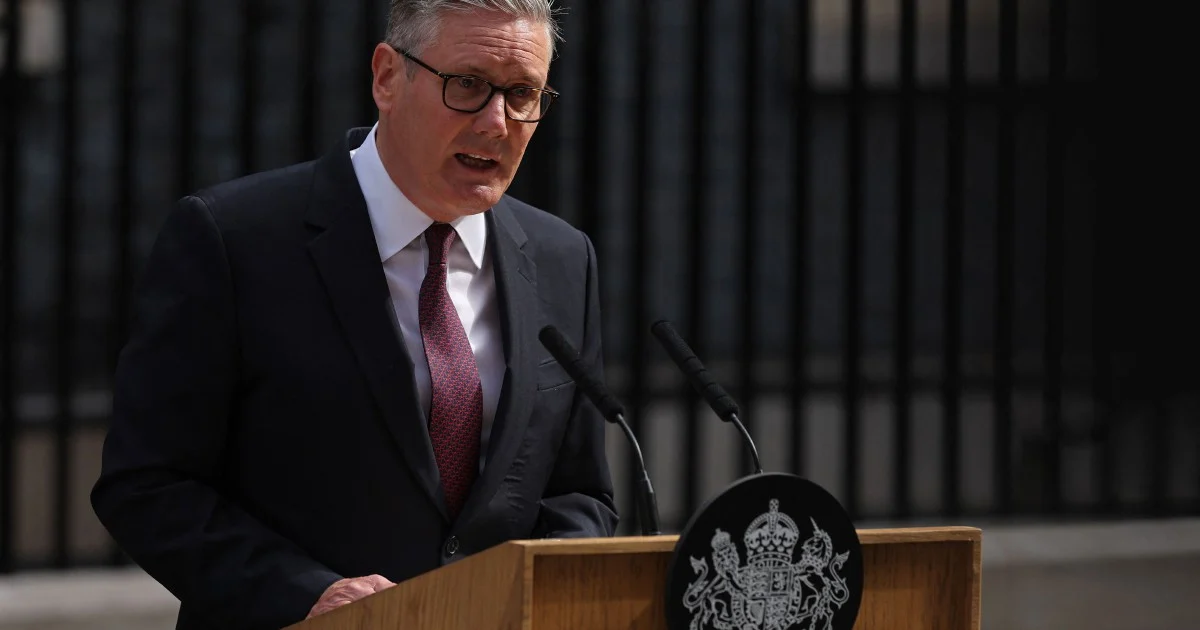
Prime Minister Keir Starmer announced his intention to step down on Monday, initiating a significant transition process within the British government. The timeline he has set aims to ensure the Labour Party selects and installs a new leader before parliament returns in September, preventing an extended period of governmental uncertainty. This resignation will contribute to what has become a remarkably unstable period in British politics, with the nation set to experience its seventh leadership change within just ten years—a pattern that reflects deeper turbulence in Westminster politics and raises questions about institutional stability.
The British Labour Party operates under a formal procedure for selecting its leader, a process that differs substantially from the informal mechanisms that govern Conservative Party transitions. Rather than relying on parliamentary colleagues to narrow the field and reduce candidates through successive rounds, Labour's constitution mandates broader democratic participation. The party membership itself becomes the ultimate arbiter, with every party member entitled to vote in the final leadership election. This commitment to internal democracy reflects Labour's foundational principles, though it also means the selection process necessarily extends over several weeks rather than days.
The mechanism begins with nominations, where candidates must secure support from a defined proportion of Labour Members of Parliament and regional representatives. This threshold ensures that only serious contenders with substantive parliamentary support can advance to the membership ballot stage. The requirement prevents frivolous candidacies from cluttering the process while still allowing for meaningful choice among candidates who have demonstrated genuine backing from their legislative peers. This represents a compromise between pure majority rule and practical governance needs.
Once the nomination phase concludes and candidates secure the necessary endorsements, their campaigns enter a critical phase where they must appeal directly to the broader party membership. Candidates conduct hustings, publish policy proposals, and seek to persuade hundreds of thousands of Labour members scattered across the United Kingdom and abroad. This extended campaign period allows for substantive policy debate and permits the membership to develop informed judgments about which candidate best represents their vision for the party and country. However, the process also extends the period during which Britain's government operates under transitional leadership, potentially hampering decisive policymaking during a critical moment.
The voting itself occurs through an electoral college system that has evolved significantly since Labour's earlier leadership contests. The party employs a ranked-choice voting mechanism where members indicate their preference order, with ballots counted and redistributed according to these rankings if no candidate achieves an outright majority in the initial count. This method encourages coalition-building and rewards candidates capable of appealing beyond their core supporter base. Members typically receive voting access through digital platforms as well as postal ballots, enabling widespread participation across different regions and circumstances.
For Malaysian observers and Southeast Asian political analysts, the contrast with Westminster's other major party deserves scrutiny. The Conservative Party, which previously governed Britain, conducts its leadership selection through a much faster parliamentary procedure. Conservative MPs vote repeatedly, eliminating the lowest-polling candidate each round until two remain, then the broader party membership votes between these final two contenders. This mechanism tends to produce faster outcomes, though it concentrates significant power among parliamentary colleagues. Labour's approach distributes this power more widely, though at the cost of extended procedural timelines.
The speed advantage of such compressed processes becomes apparent when considering governance continuity. Britain's pattern of seven leadership changes in ten years fundamentally undermines long-term policymaking, whether in trade negotiations, climate commitments, or regional security arrangements. For a nation that chairs international forums and maintains permanent diplomatic commitments, such frequent executive transitions create unpredictability that affects bilateral relationships across Asia-Pacific. Malaysian policymakers and business leaders negotiating with Britain must contend with substantial uncertainty about which government principles and personnel will remain consistent from year to year.
Starmer's management of the timeline reflects awareness of these governance concerns. By targeting September's parliamentary return, he aims to minimize the gap between his departure and his successor's formal investiture. This window, encompassing late summer, represents the traditional parliamentary recess period when major legislative business pauses anyway. The strategy reduces—though cannot entirely eliminate—the operational disruptions that occur when the executive branch operates under interim or caretaker arrangements. Nevertheless, the broader pattern persists unchanged: voters and partners cannot rely on governmental continuity across electoral cycles.
The forthcoming Labour leadership election will likely feature multiple candidates, with several cabinet ministers and senior parliamentarians considering their positions. Each will present competing visions regarding economic policy, public sector investment, Britain's international alignment, and social priorities. For Southeast Asian governments and companies with significant British interests, these leadership preferences matter considerably. Different candidates bring varying approaches to trade policy, technology regulation, and Asian engagement strategies that will shape Britain's regional involvement for years following September's decision.
Labour Party members voting in this election will effectively determine not merely the party's direction but also Britain's chief executive and its approach to contemporary global challenges. The membership reflects the party's base across different regions, demographic groups, and ideological strands, from social democrats to more radical progressives. Their choice will indicate whether the party intends to move leftward toward socialist economics, maintain the centrist positioning Starmer has pursued, or pivot toward some intermediate position. These internal party tensions have paralleled similar divisions visible across Europe and the Western world, where traditional centre-left parties grapple with fundamental strategic questions.
The September deadline creates genuine pressure for expeditious selection without sacrificing democratic process. Party officials must balance openness toward diverse candidates against the need to conclude voting quickly enough to allow the new leader proper preparation before parliamentary duties resume. This practical tension reflects broader questions about how democracies manage leadership transitions—whether speed or inclusion should take priority, and how much governmental disruption societies can sustain when they experience frequent changes in executive direction. Britain's experience offers cautionary lessons about the cumulative costs of institutional instability, particularly for nations whose economies and security depend partly on British reliability as a partner.

