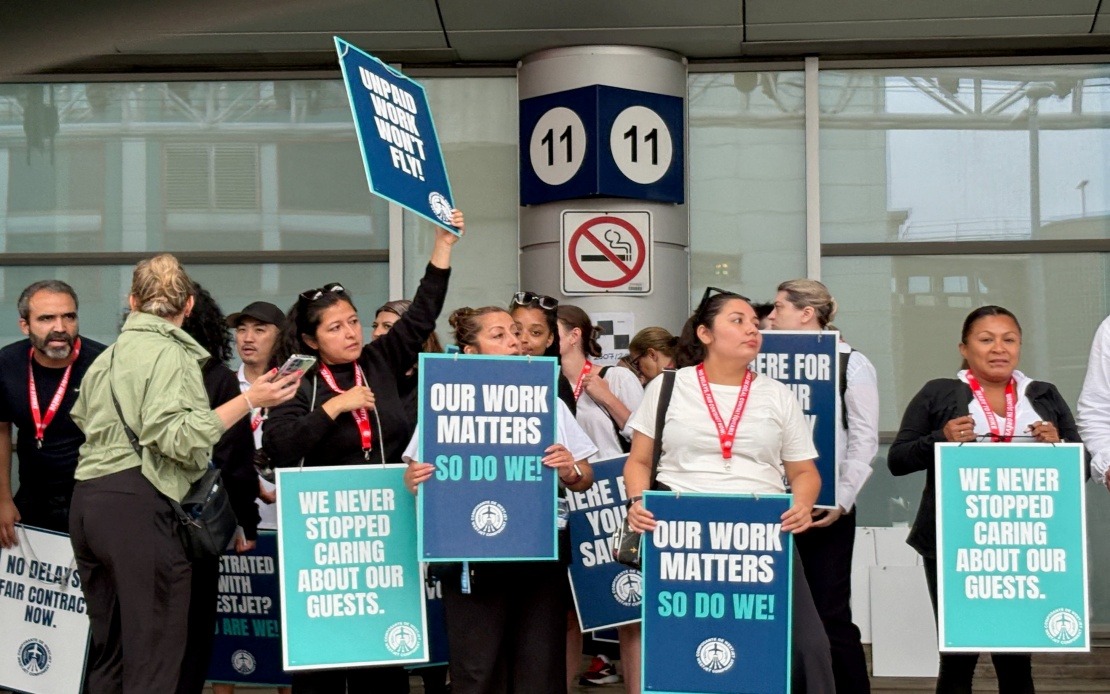
A major labour dispute has crippled Canada's second-largest airline, with more than 4,000 flight attendants at WestJet walking off the job on Sunday in a strike that has upended travel across the country. The work stoppage has already grounded approximately 600 flights per day and left an estimated 250,000 passengers scrambling to rebook travel or seek compensation. The timing of the action is particularly disruptive, falling during a peak travel weekend that coincides with Monday's civic holiday in Canada, one of the busiest periods for leisure and family travel.
The core of the dispute centres on compensation for work performed outside the cabin. Flight attendants are demanding payment for time spent on ground duties before and after flights—tasks that include boarding preparation, safety checks, passenger assistance, and post-flight duties. The union argues this work is essential to airline operations but has historically gone uncompensated or been paid at reduced rates. The Canadian Union of Public Employees, which represents the striking workers, has framed the issue as a matter of fair remuneration for labour that extends well beyond the actual flight time.
WestJet's stance has been rejected by union negotiators, who say the airline had ample opportunity to address their concerns over eleven months of collective bargaining. Union representative Alia Hussain stated bluntly that the workforce would not have resorted to strike action had management taken their grievances seriously from the outset. This language suggests a breakdown in trust between labour and management that extends beyond the specific compensation question, pointing to frustrations over how the airline has approached negotiations and valued its workforce.
The precedent set by competitors has strengthened the flight attendants' negotiating position considerably. Delta Air Lines, one of the world's largest carriers, became the first major airline to introduce compensation for ground work in 2022, establishing that such payments are economically viable. Air Canada, Canada's largest airline, subsequently followed suit in February of this year, agreeing to compensate flight attendants at up to 70 per cent of their hourly rate for the hour preceding takeoff. This development has effectively raised industry expectations and undercut WestJet's potential argument that such arrangements are financially unfeasible or operationally impractical.
Currently, WestJet flight attendants earn between $28.88 and $53.61 per credit hour, a range that reflects seniority and experience within the workforce. Under Air Canada's agreement, which now serves as a benchmark, flight attendants receive compensation of up to 70 per cent of their hourly rate for pre-flight duties. The gap between WestJet's current arrangements and this standard has become the focal point of the dispute. For workers at the lower end of the wage scale, the absence of ground work compensation represents a meaningful reduction in effective hourly earnings, particularly for those assigned to longer turnarounds or complex boarding situations.
Federal Jobs Minister Patty Hajdu weighed in on the dispute, expressing disappointment that the two sides had failed to reach an agreement despite extended negotiation efforts. Her public statement signals government concern about the disruption to the travelling public and the broader economic implications of the strike. In Canada, where the airline industry plays a crucial role in connecting distant communities and supporting tourism and business travel, extended labour actions draw swift political attention. The federal government's interest reflects the cascading impact such strikes have on other sectors, from tourism operators to small businesses dependent on air connectivity.
WestJet's Chief Executive Officer Alexis von Hoensbroech has acknowledged the impact on customers and communities, stating that the airline is disappointed to be in this position. The company has committed to issuing refunds to affected passengers, a costly measure that will compound the financial burden of the strike. The airline is also offering compensation packages to those unable to travel, though such gestures typically prove insufficient to remedy the inconvenience and disruption caused by cancelled flights during peak travel periods. For WestJet, the strike represents millions of dollars in lost revenue, operational costs, and reputational damage at a time when the aviation industry continues to recover from pandemic-related pressures.
The implications of this dispute extend beyond the immediate disruption. Southeast Asian readers should note that similar labour tensions could affect regional airlines and international carriers serving the region. Increasingly, flight attendants and ground crew across Asia-Pacific are demanding compensation parity with counterparts in North America and Europe. The WestJet strike and Air Canada's precedent-setting agreement may encourage unionized workers in Southeast Asia to press for comparable benefits, particularly as cost-of-living pressures mount and workers seek fair compensation for expanded responsibilities.
The strike also raises broader questions about airline business models and labour practices in the post-pandemic era. As carriers seek to restore profitability, they face mounting pressure from workers who have gained greater bargaining power through unionization and demonstrated willingness to walk off the job. The standardization of ground work compensation across the industry may be inevitable, a development that will reshape airline operating costs and potentially affect ticket pricing and route planning decisions. For budget-conscious airlines operating on tight margins, such arrangements represent a structural change in labour cost architecture that cannot easily be reversed once established as an industry norm.

