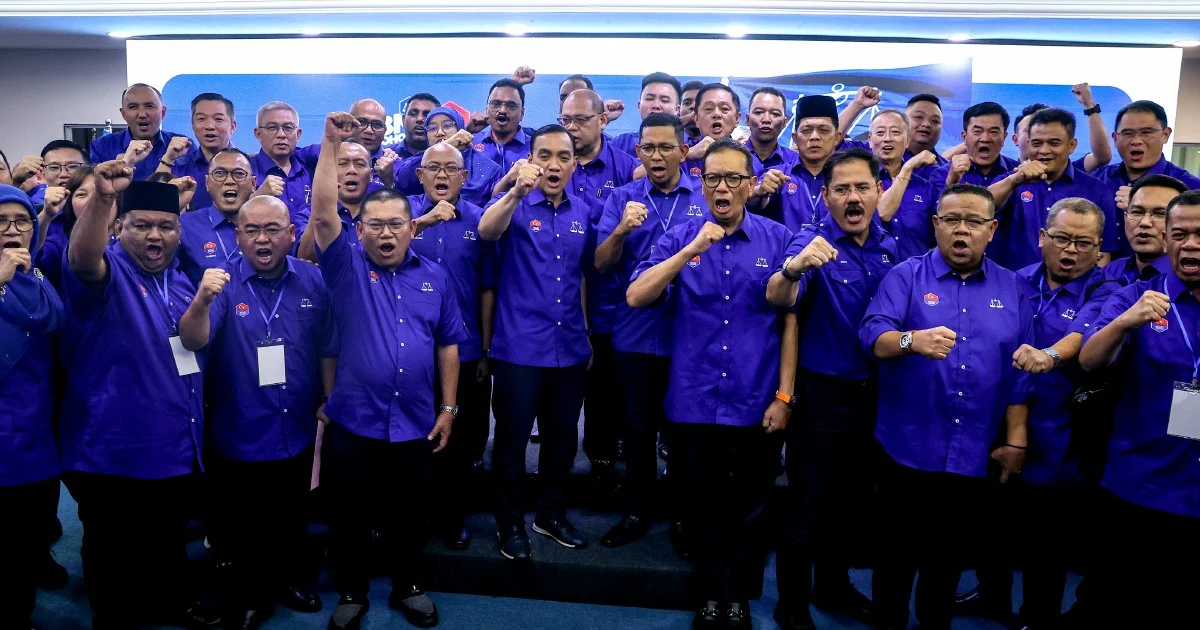
Hopes of a broad coalition that would have united Barisan Nasional, PAS, and Parti Wawasan Negara in the forthcoming Johor state election have been extinguished following the unveiling of BN's full slate of candidates in Johor Baru today. The absence of any Wawasan representatives from the official roster marks the end of weeks of political chatter about possible cooperation between the three parties, suggesting that BN has moved forward with its traditional electoral strategy in the state.
Prior to the announcement, political observers and media outlets had speculated intensely about whether the coalition framework might expand beyond the traditional BN partnership to incorporate Wawasan, a newer political vehicle that has sought to establish itself in Malaysia's competitive landscape. Such an arrangement would have represented a significant realignment in Johor politics, potentially broadening BN's appeal across different voter segments and consolidating the anti-opposition vote. However, the composition of candidates announced suggests that BN leadership has decided against formalising such an alliance for this electoral cycle.
The decision carries implications for how Malaysian political coalitions are likely to take shape heading into subsequent elections. Rather than pursuing broader multi-party frameworks, BN appears committed to leveraging its traditional partner structure while managing its political positioning independently. This approach reflects confidence in BN's existing machinery and candidate quality within the state, though it simultaneously leaves potential allies on the sidelines.
Wawasan's exclusion from the candidate list represents a setback for a party that has been attempting to carve out political space in Malaysia's increasingly competitive environment. The party had apparently entertained hopes of working within a BN framework to gain electoral experience and parliamentary representation. The outcome suggests that either negotiations did not progress to a formal agreement, or that BN concluded the electoral mathematics did not justify incorporating new partners at the candidate level.
The PAS dimension of the earlier speculation also requires examination. While PAS and BN have maintained their long-standing federal alliance, state-level cooperation has been more variable, particularly in Johor where historical tensions and competing interests have sometimes created friction. The absence of any broader three-party arrangement indicates that BN and PAS are likely maintaining their traditional relationship without expanding it to include additional partners in this instance.
From a Malaysian political perspective, the announcement underscores how coalition negotiations remain fluid and subject to late-stage recalibration. Weeks of public discussion about possible arrangements can evaporate once formal candidate-vetting processes commence and party leadership makes final strategic decisions. For voters in Johor, it means the election will feature BN presenting its conventional candidate pool against opposition parties, without the complication of multiple-party coalition dynamics at the state level.
The Johor election carries national significance as the state represents a crucial political battleground that influences broader Malaysian political trends. How BN performs in the state, with this candidate lineup, will send signals about coalition dynamics heading into other electoral contests. A strong showing would validate BN's decision to proceed with its traditional approach, while a weaker-than-expected result might prompt future reconsideration of coalition expansion strategies.
For Parti Wawasan Negara specifically, the exclusion from this electoral opportunity represents a missed chance to gain parliamentary seats and establish an institutional foothold. The party remains dependent on either negotiating entry into existing coalitions or contesting independently—a more difficult path in Malaysia's first-past-the-post electoral system. The outcome may prompt Wawasan to reassess its political strategy and seek alternative pathways to influence or representation.
The timing of the candidate announcement also matters for campaign preparation. With the full BN slate now confirmed, the party can mobilise its machinery and resources behind specific individuals and constituencies, while opposition parties can begin targeting BN's nominated candidates with their own messaging. For voters, knowing BN's complete candidate lineup this early in the electoral cycle provides time to evaluate individual candidates and their platforms.
Looking forward, the Johor election will test whether BN's traditional coalition model remains effective in contemporary Malaysian politics, or whether the landscape is shifting toward new partnership configurations. The result will likely influence how BN approaches similar electoral contests in other states, determining whether this decision to exclude potential partners reflects shrewd political calculation or a missed opportunity for broader coalition building.