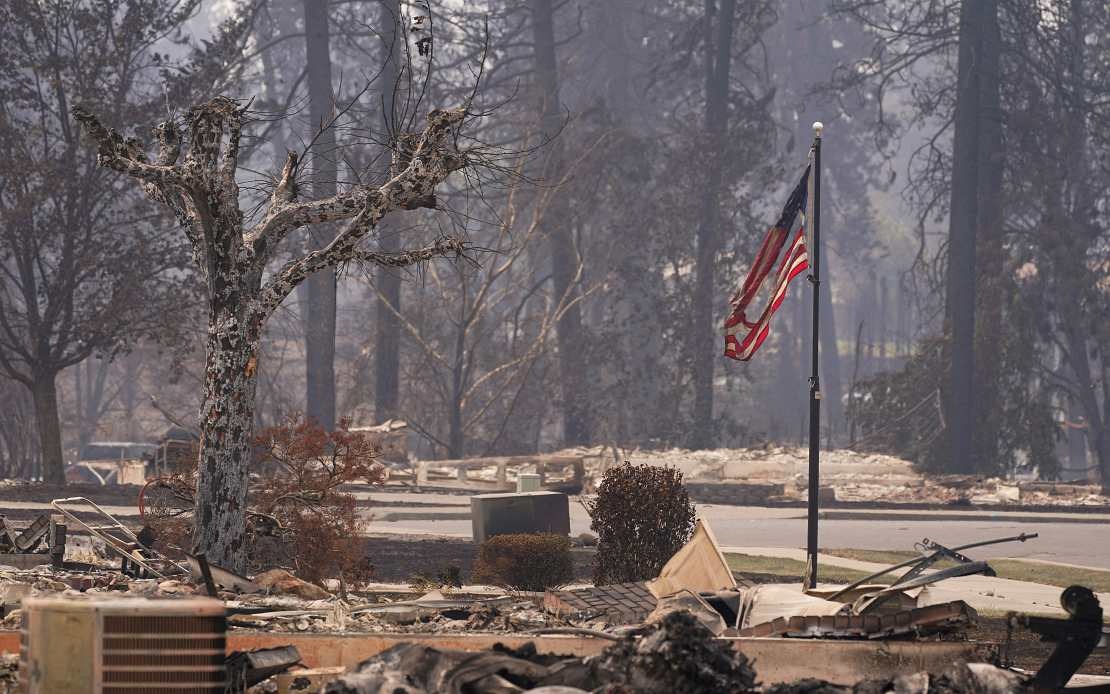
A major disaster is unfolding across Washington state, where an unprecedented evacuation has displaced more than 65,000 people fleeing the path of rampaging wildfires. The American Red Cross confirmed the evacuation figures on Monday as the situation continues to deteriorate across multiple counties, with preliminary damage assessments already documenting the destruction of more than 700 homes, concentrated primarily throughout Spokane County. The scale of the crisis underscores the growing vulnerability of American communities to climate-driven natural disasters and reflects challenges increasingly familiar to fire-prone regions across the world, including parts of Southeast Asia during peak dry seasons.
Authorities moved quickly to identify a culprit in at least one of the blazes ravaging the landscape. Spokane County Sheriff John Nowels announced the arrest of 37-year-old Aaron F. Farinacci, who was taken into custody Monday afternoon on a first-degree arson charge and held on a $1 million bond. Investigators have connected Farinacci to the Old Trails Fire, which represents one of several concurrent conflagrations threatening communities across the region. The arrest highlights how wildfire crises often involve both natural and human-caused ignition points, a reality that complicates firefighting strategies and emergency response protocols.
The geography and scale of the current disaster demand careful coordination among multiple agencies. Data compiled through InciWeb, an interagency fire management system, reveals that the fires ravaging areas near Spokane and Stevens counties have consumed 8,026 acres—equivalent to approximately 3,248 hectares—since Saturday alone. Critically, these particular fires remain at zero percent containment, meaning firefighting teams have yet to establish perimeter control over any significant portion of the affected areas. This metric illustrates the overwhelming pace at which the flames are spreading and consuming landscape faster than crews can establish defensive firebreaks.
However, the Spokane Complex Fire Incident Management Team reported modest progress, noting that improving weather conditions are beginning to favour firefighting operations. As atmospheric conditions stabilize and winds potentially diminish, ground crews and aerial support units have gained the opportunity to mount more effective defense along critical fire lines. Such weather windows, though temporary, prove crucial during large-scale incidents where tactical advantage shifts moment by moment based on atmospheric variables.
Other regions of Washington state confront even more formidable challenges. The Sinlahekin fire has expanded to engulf 85,000 acres—roughly 34,398 hectares—since lightning ignited the blaze on July 26. This fire has mobilized over 820 personnel in sustained suppression efforts, yet it too remains entirely uncontained. Meanwhile, the Little Giant Fire, located northwest of Leavenworth within the Okanogan-Wenatchee National Forest, has already scorched 51,298 acres spanning 20,759 hectares. The cumulative acreage affected across all three major incidents represents territory equivalent to numerous small countries, illustrating the environmental and resource-management dimensions of this crisis.
Governor Bob Ferguson provided a partial accounting of human casualties and status, revealing that authorities have located and verified nearly all residents who requested assistance. However, officials continue attempting to contact fourteen individuals whose whereabouts remain uncertain, though Ferguson clarified these individuals are not classified as missing persons—rather, authorities simply wish to confirm their safety and well-being through direct contact. The distinction matters operationally and psychologically, as it suggests systematic evacuation rather than chaotic flight. As of the governor's statement, no confirmed deaths have been reported, though the ongoing nature of the emergency means this assessment remains preliminary and subject to revision as damage surveys continue.
For Malaysian and Southeast Asian observers, the Washington crisis carries sobering implications about disaster scaling in increasingly warming regions. While Washington's temperate climate and forest composition differ substantially from tropical or equatorial environments, the fundamental dynamics—rapid fire spread, overwhelming civilian displacement, and resource constraints in containment efforts—mirror scenarios that have unfolded across Indonesia, Malaysia, and neighbouring countries during severe dry seasons. The evacuation of 65,000 people represents the kind of mass displacement that regional governments must prepare for as climate volatility intensifies and fire seasons potentially lengthen.
The incident also reflects broader patterns in North American wildfire management. Traditional suppression approaches, dependent on ground crews and aerial resources, face scaling challenges when multiple major fires erupt simultaneously across a single region. Spokane County's response required mobilizing hundreds of personnel and coordinating complex logistics across vast territories—an undertaking that absorbs resources from other jurisdictions and strains mutual aid agreements. Regional governments worldwide, including those in Southeast Asia, can extract valuable lessons from Washington's experience regarding interagency coordination, resource pre-positioning, and community preparedness frameworks.
Looking forward, Washington state faces an extended recovery and rebuilding process that will test infrastructure, housing availability, and social cohesion across affected communities. The 700 destroyed homes represent not merely structures but displaced lives, shattered supply chains, and community disruption extending far beyond the immediate crisis phase. Restoration efforts will likely extend months or years, with insurance claims, rebuilding regulations, and psychological trauma all requiring sustained attention from government agencies and humanitarian organizations.

