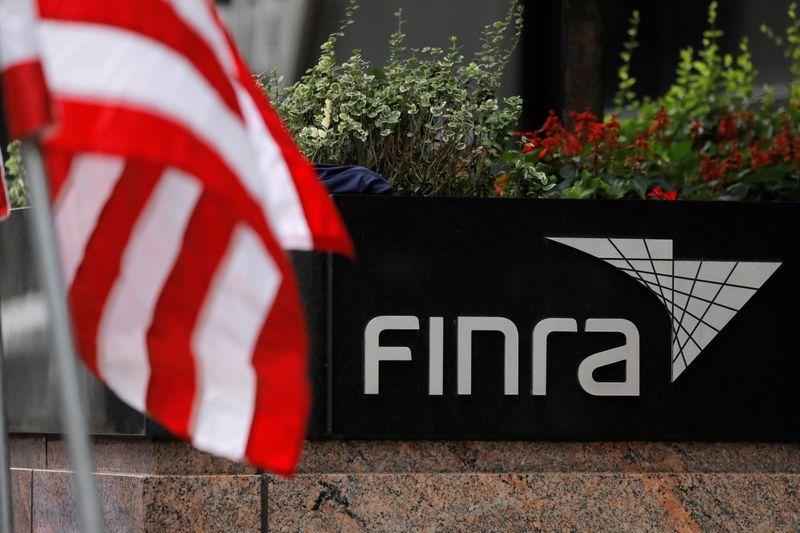
Steven Price's departure from the Financial Industry Regulatory Authority marks a notable crossing of the regulatory-to-private divide, as the former senior vice president of market investigations transitions to fintech dealmaking platform Finalis as chief compliance officer. The move underscores the intensifying competition between traditional Wall Street institutions and emerging technology-driven finance firms that are fundamentally altering how investment banking operates in the digital age.
Price spent six years at FINRA, the self-regulatory organization responsible for overseeing broker-dealers across the United States. During his tenure, he was instrumental in shaping enforcement priorities and directing major investigations into potential securities law violations, including insider trading and market manipulation cases. His departure signals a broader trend of experienced regulatory talent flowing into the private sector, particularly toward platforms attempting to democratize and streamline traditionally complex financial processes.
Among his most significant contributions to FINRA was the development and launch of the National Cause Program, an initiative that marked a pivotal moment in the watchdog's modernization efforts. This program introduced the regulator's first artificial intelligence-driven model designed to centralize, organize and analyze an enormous volume of complaints, tips and referrals of potential misconduct. The system represented FINRA's recognition that traditional manual review processes could no longer keep pace with the scale and complexity of modern securities trading and dealing.
Price's decision to join Finalis reflects the transformative power of artificial intelligence and fintech innovation in reshaping investment banking as an industry. Where Wall Street's largest institutions once relied on sprawling teams to handle analytical and administrative functions, boutique dealmaking platforms now deploy sophisticated AI tools to replicate and even exceed this analytical capacity. The efficiency gains are proving compelling enough to enable experienced bankers to leave megafirms and establish smaller, more agile advisory boutiques that compete effectively for mid-market transactions.
Finalis, headquartered in San Francisco, operates at the intersection of this transformation, providing critical licensing and compliance infrastructure to support independent dealmakers and boutique firms. Since its founding in 2020 by Federico Baradello, a former mergers and acquisitions lawyer at the prominent firm Kirkland & Ellis, the platform has facilitated approximately 34 billion dollars of transactions. The company's model essentially removes barriers to entry for independent dealers who previously lacked the operational and compliance resources to compete with bulge-bracket firms.
Price articulated the appeal of this transition in remarks to Reuters, emphasizing how his regulatory experience equipped him to accelerate operational efficiency in the private sector. He highlighted the opportunity to apply lessons learned during his tenure at FINRA about process optimization, information management and stakeholder coordination. His framing suggests that regulatory expertise, particularly around compliance frameworks and risk identification, translates directly into commercial value for fintech platforms seeking to build trust and operational rigor.
The broader context for this movement involves dramatic shifts in how investment banking dealflows are distributed. Traditionally, large universal banks captured the lion's share of merger and acquisition advisory work, leveraging their capital, distribution networks and institutional relationships. However, the combination of boutique specialization, digital platform infrastructure and AI-powered analytics is eroding this advantage. Specialized boutiques can now undercut incumbents on fees while offering highly focused sector expertise and faster decision-making cycles.
For Malaysian and Southeast Asian observers, Price's move carries implications for how regional financial markets may evolve. As fintech platforms proliferate globally and AI applications become standard across banking infrastructure, Southeast Asian regulators and financial institutions will increasingly face questions about their own regulatory frameworks and competitive positioning. The region's major financial centres, particularly Singapore and Hong Kong, have been active in promoting fintech innovation, but Price's trajectory suggests that traditional regulatory institutions may need to adapt their talent management strategies to retain expertise in an environment where private sector compensation and equity stakes become increasingly competitive.
The FINRA watchdog declined to comment on Price's departure, maintaining institutional silence on what the broader market will likely interpret as a significant loss of enforcement capacity. FINRA's willingness or ability to replace a senior investigator of Price's experience and stature remains unclear, raising questions about whether regulatory bodies in the United States and elsewhere are adequately resourced to oversee an increasingly fragmented and technology-driven financial services landscape.
Price's journey from enforcer to technology enabler embodies a broader narrative about how artificial intelligence and fintech platforms are forcing established institutions to compete on new terms. The movement of regulatory expertise into private platforms that serve as infrastructure for the fintech ecosystem suggests that future compliance may be distributed across many smaller firms using shared technology platforms rather than concentrated within large compliance departments at megabanks. This structural shift could reshape not only how deals are executed but also how regulators themselves must adapt their oversight models to maintain market integrity.
For dealmakers and financial institutions across Asia-Pacific, the fintech model that Finalis represents offers a template: platforms providing operational infrastructure can attract top talent, facilitate growth and compete effectively against incumbent institutions. Whether Southeast Asian financial regulators will embrace or resist this transformation, and how they will maintain oversight effectiveness in a more fragmented market structure, will shape the region's competitive position in global investment banking for years to come.

