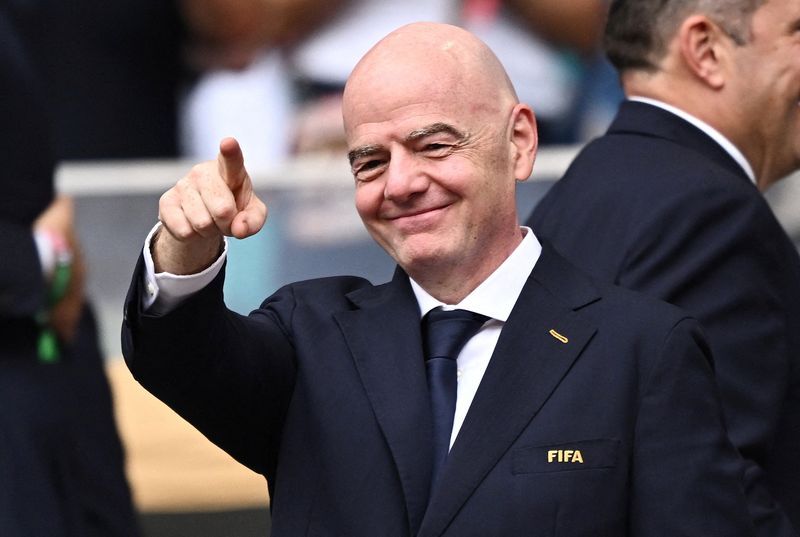
The Football Association of Wales has formally withdrawn its endorsement of FIFA President Gianni Infantino's candidacy for the 2027-2031 term, marking a significant blow to the Swiss administrator's previously assured path to re-election. The decision follows the spectacular implosion of Infantino's flagship initiative to raise up to $4.2 billion by bringing private investors into a new commercial entity controlling major tournaments including the World Cup. The Welsh federation's announcement establishes it as the first national member to publicly abandon the FIFA chief, signalling the beginning of what could become a broader collapse of support among football's global governance structure.
Infantino's commercial rights proposal represented one of the most ambitious financial restructuring efforts in FIFA's modern history. The plan centred on creating a new corporate entity that would oversee the commercial exploitation of FIFA competitions, with private investors acquiring approximately 20% ownership stakes in exchange for substantial capital injection. Had it proceeded, the scheme would have fundamentally altered FIFA's relationship with the private sector and created a new revenue stream independent of traditional tournament broadcasting and sponsorship arrangements. The proposal appeared designed to strengthen FIFA's financial position while potentially funding expanded competitions and infrastructure development across football federations globally.
However, the initiative encountered fierce and coordinated resistance from multiple stakeholder groups. Regional confederations, national associations, and other FIFA constituents raised concerns about governance implications, potential conflicts of interest, and the dilution of football's traditional institutional control over its own commercial affairs. The opposition culminated in the plan's withdrawal on Friday, representing a humiliating reversal for Infantino, who had championed the initiative as essential to football's financial evolution.
Wales' formal statement regarding its withdrawal demonstrated the depth of institutional frustration with Infantino's leadership. The Welsh FA cited failures in governance standards, procedural management, leadership quality, adherence to football values, and stakeholder communication as the primary reasons for withdrawing confidence. The federation's language was notably sharp, suggesting that the failed proposal had become emblematic of broader concerns about Infantino's stewardship of world football rather than merely a disagreement over a single policy initiative. The statement emphasised that putting football's interests first must remain central to FIFA leadership, an implicit suggestion that Infantino's prioritisation of the commercial scheme indicated misaligned priorities.
The timing of Wales' announcement carries particular significance given Infantino's apparent dominance over FIFA's institutional machinery. Since assuming the presidency in 2016 following Sepp Blatter's departure, Infantino secured re-election without opposition in 2017 and 2019, establishing himself as effectively unchallenged within FIFA's power structure. His bid for a fourth consecutive term had seemed virtually assured, a formality rather than a competitive contest. The collapsed commercial rights plan has fundamentally altered this calculus, exposing underlying dissatisfaction among federation leaders that had remained largely dormant during his previous electoral cycles.
European football's governing body UEFA intensified pressure on Infantino shortly after Wales' announcement, with UEFA and the Confederation of North, Central American and Caribbean Association Football both announcing they had lost confidence in his leadership. UEFA, which spearheaded opposition to the commercial rights scheme, took the additional step of issuing a document preservation order preventing FIFA from destroying emails, files, and other data that might become relevant to investigations into the failed initiative. While UEFA stopped short of confirming media reports about potential legal action against FIFA, the preservation order indicated serious intent to scrutinise decision-making processes surrounding the proposal's development and implementation.
The convergence of opposition from multiple confederations represents an unprecedented challenge to Infantino's authority. His previous re-election campaigns faced no organised resistance, permitting him to consolidate power while implementing reforms that enhanced FIFA's commercial revenues and broadened international engagement in football governance. The dramatic reversal of his fortunes within weeks of the commercial rights initiative demonstrates how rapidly institutional confidence can evaporate when major policy initiatives collapse visibly and generate sustained opposition from powerful stakeholders.
For Malaysian and Southeast Asian football stakeholders, the controversy carries important implications. FIFA's regional confederations, including the Asian Football Confederation, must navigate between supporting or opposing Infantino ahead of the presidential congress scheduled for Morocco in March 2025. The outcome of that election will influence FIFA's strategic direction regarding competition expansion, revenue distribution to national federations, and governance reform. A weakened or defeated Infantino could create space for alternative leadership with different priorities regarding Asian football development and investment.
The failed commercial rights initiative also raises broader questions about FIFA's governance structure and decision-making processes. That a proposal championed by the FIFA president could generate such comprehensive stakeholder rejection suggests fundamental communication breakdowns and insufficient consultation with federation leaders before advancing major initiatives. Infantino's apparent miscalculation regarding stakeholder willingness to accept private investment in football's commercial infrastructure reveals potential limitations in his political sensitivity and institutional awareness, qualities typically essential for sustaining leadership in international sport governance.
Experts suggest that despite Infantino's apparent control of FIFA's machinery, the backlash has exposed genuine tensions within the global football community regarding the organisation's direction. National federations and confederations previously content to follow FIFA's strategic initiatives have discovered they possess collective leverage to challenge proposals they consider contrary to football's interests. This realignment of power dynamics within FIFA could substantially complicate Infantino's re-election campaign, transforming what appeared to be an assured coronation into a genuinely competitive contest where his leadership record and vision for football's future face serious scrutiny from organised opposition.
The implications extend beyond FIFA's internal politics to influence global football governance architecture. If Infantino's re-election becomes contested, alternative candidates may emerge with different visions for managing football's commercial development while maintaining institutional independence and stakeholder confidence. Such competition could reshape FIFA's strategic priorities, potentially redirecting resources and attention toward regional federation development and governance reform rather than revenue maximisation schemes that subordinate football's traditional institutional structures to financial engineering.
Wales' withdrawal of support thus represents more than a single federation's lost confidence in one administrator. It signals the emergence of collective stakeholder determination to exercise greater oversight over FIFA's strategic direction. This shift from passive acceptance to active scrutiny of leadership decisions could permanently alter the dynamics through which international sport governance operates, establishing precedents for confederation and federation involvement in evaluating major institutional initiatives before implementation rather than merely ratifying leadership decisions after the fact.

