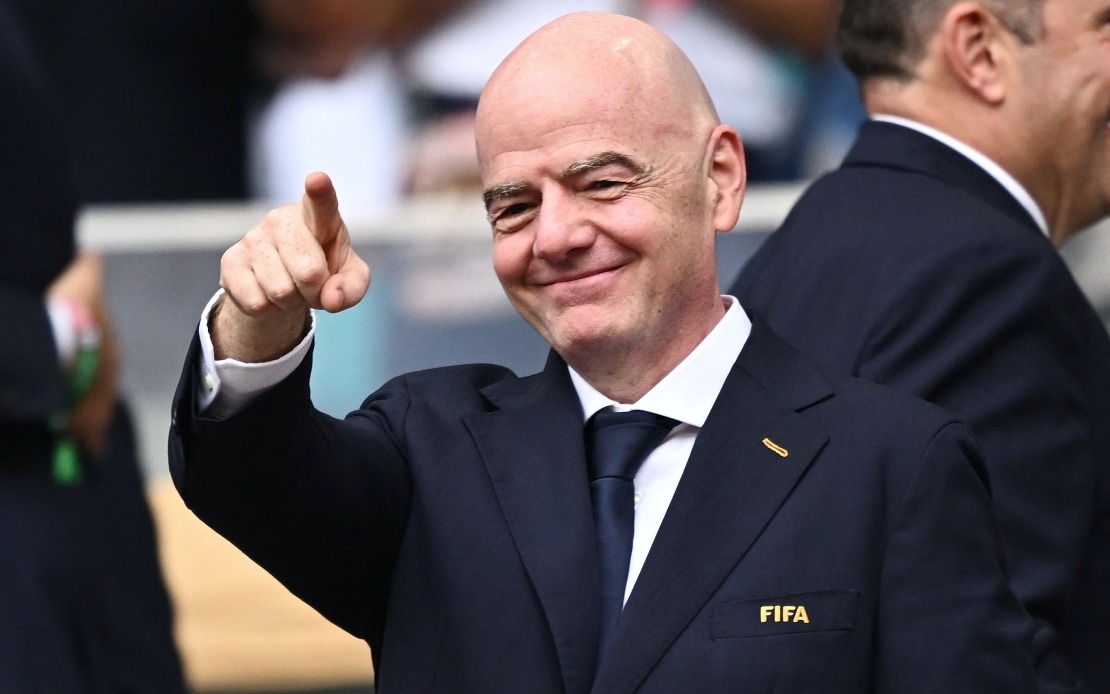
The Football Association of Wales has reversed its position on FIFA president Gianni Infantino, announcing it will no longer support his bid for re-election next year. The dramatic shift reflects growing international dissatisfaction with Infantino's leadership, particularly following his failed attempt to monetise World Cup ownership stakes through private investment. The Welsh governing body's decision, confirmed on Monday, marks a significant blow to a FIFA president whose decade-long tenure now faces unprecedented scrutiny from major football organisations worldwide.
Infantino's proposed Football Forward Enterprise scheme, which would have allowed private investors to purchase shares in World Cup revenue, triggered fierce opposition across the global football community. Three continental confederations explicitly rejected the proposal before the FIFA president shelved it just last week, yet the damage to his credibility appears irreversible. The Welsh FA's statement emphasised that repeated failures in governance standards, decision-making processes, leadership quality, and stakeholder communication had fundamentally undermined confidence in Infantino's ability to guide world football forward.
The collapse of support extends well beyond Wales. England's Football Association, having previously expressed openness to supporting Infantino, has now formally communicated to FIFA headquarters that it no longer backs his leadership. The English FA issued a statement on Saturday confirming it fully aligned with UEFA's position that confidence in the FIFA president had been lost due to the FFE proposal debacle. This represents a particularly significant reversal given England's historical influence within FIFA and European football governance structures.
European Football Union leadership has signalled that no options should be dismissed regarding Infantino's future, a carefully worded statement that leaves space for drastic measures. Under FIFA's constitutional provisions, just 43 associations from among FIFA's total membership of 211 nations could trigger a vote of no confidence. Such a motion would compel the convening of an Extraordinary FIFA Congress where membership could potentially remove Infantino from office. However, orchestrating such a move would require confidence that an actual majority existed to unseat him when the Congress convened.
Confederation leaders from across the Western Hemisphere have also entered the fray. CONCACAF, representing football associations across North America, Central America, and the Caribbean, demanded a comprehensive review of Infantino's leadership over the weekend. Combined with UEFA, these two confederations encompass 96 national associations—representing substantial voting power within FIFA's broader structure. Intriguingly, sources close to CONCACAF's president Victor Montagliani, himself a current FIFA vice-president, have indicated the confederation leader would be willing to challenge Infantino by running for the presidency himself.
Despite the mounting criticism from football's most developed regions, Infantino retains notable support from other quarters. Several African and Asian national associations released statements backing the FIFA president during the weekend crisis. Morocco, Egypt, and Qatar each issued supportive statements, suggesting that Infantino's political coalition, whilst weakened, has not entirely collapsed. This split reflects the complex global fault lines within FIFA, where developing football nations and those with growing commercial interests sometimes perceive the Western confederations differently than entrenched football powers do.
The political ramifications for Southeast Asian football merit consideration. Malaysia and ASEAN nations belong to the Asian Football Confederation, which has not yet formally repositioned regarding Infantino. The outcome of this conflict could influence governance standards across Asian football administration and the distribution of major tournament hosting rights—matters of significant interest to the region. Should Infantino survive the current crisis, his authority would be substantially diminished heading into crucial decisions about future World Cup formats and qualification procedures affecting Asian members.
Infantino's fall from grace, if it materialises, would represent a historic rupture at FIFA. His election in 2016 followed months of institutional crisis under predecessor Sepp Blatter, with Infantino initially heralded as a reformer capable of restoring credibility to world football's governing body. Yet repeated missteps in governance judgement, including the FFE venture, suggest the institutional problems at FIFA may run deeper than any single administrator. The apparent disconnect between FIFA leadership and the confederations it supposedly serves indicates structural tensions requiring resolution regardless of who occupies the presidency.
What distinguishes the current situation from previous FIFA controversies is the coordinated nature of the opposition. Previous reform attempts faced fragmented resistance from competing interests. The withdrawal of support from Wales, England, UEFA, and CONCACAF—representing football's wealthiest and most politically influential regions—creates a unified front that previous FIFA leaders confronted only in isolation. If this momentum maintains, the threshold of 43 associations needed for a no-confidence vote could feasibly be reached, triggering the kind of extraordinary Congress that FIFA members have rarely convened in modern history.
The timeline remains unclear regarding whether such a vote would actually be called before Infantino's scheduled re-election campaign. National associations face political considerations in making such decisions, as challenging a sitting FIFA president carries risks and requires organisational resources. Nevertheless, the extraordinary nature of the current defections, combined with explicit signals that institutional alternatives exist, suggests Infantino cannot assume his continuation in office. His FIFA presidency, once apparently secure despite periodic criticism, now appears genuinely contested in ways that would have seemed inconceivable merely weeks earlier.

