Vietnam's Deputy Prime Minister Nguyen Van Thang has signalled his government's determination to restart meaningful trade negotiations with the United States, meeting with US Trade Representative Jamieson Greer in Washington to reset discussions that have stalled in recent months. The encounter represents Hanoi's strategic effort to break the impasse in talks aimed at securing a final reciprocal trade agreement, with Vietnamese officials projecting willingness to engage transparently on issues that have proven contentious between the two nations. Thang's visit underscores how vital the US relationship has become for Vietnam's export-dependent economy, as the country seeks to maintain its position as a preferred manufacturing alternative to China whilst reassuring American policymakers about its trade practices.
The core tension driving these negotiations centres on American concerns about the flow of goods through Vietnam that originate from other countries, particularly China. US trade officials worry that exporters are deliberately routing merchandise through Vietnamese ports and factories to circumvent tariffs or other trade restrictions, a practice known as transshipment. Hanoi has indicated its readiness to implement stronger controls and enforcement mechanisms to prevent such activity, recognising that failure to address this issue could trigger punitive tariffs that would damage its crucial export sector. The framework agreement reached in October provided a foundation for discussions, but substantive disagreements over implementation and verification have prevented the two sides from concluding a final deal.
The US Trade Representative's office has mounted an aggressive three-pronged investigation into Vietnamese trade practices under Section 301 provisions, examining transshipment vulnerabilities, non-tariff barriers, and intellectual property protection. In April, Vietnam received designation as a "priority foreign country," a designation that carried explicit criticism of its enforcement against online piracy and counterfeit products, as well as perceived deficiencies in border inspection protocols. These investigations carry significant weight because their findings, due for release in November, could provide the legal basis for the Trump administration to impose substantially higher tariffs on Vietnamese imports, a scenario that would prove economically destabilising for a nation where exports account for roughly 100 percent of GDP.
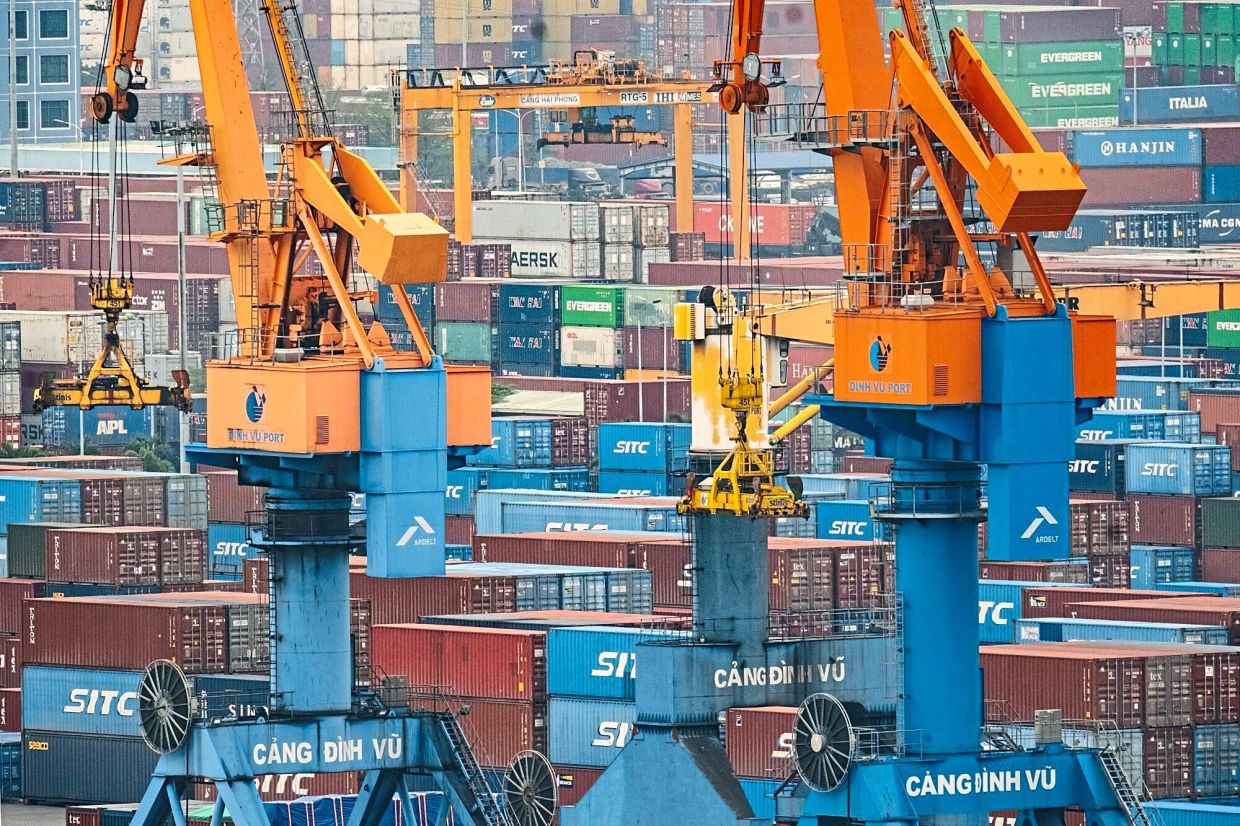
The scale of the US-Vietnam trade relationship makes these negotiations particularly consequential for both economies. Vietnam recorded a trade surplus with the United States exceeding US$114 billion in the first half of 2026, representing the largest bilateral imbalance for Washington among all trading partners, surpassing even China, Mexico, and Taiwan. This dramatic differential reflects Vietnam's transformation into a manufacturing powerhouse, where both domestic and foreign companies produce goods destined for American consumers at costs that undercut most competitors. Paradoxically, Vietnam's own imports from China have increased substantially as manufacturers establish supply chains within the country, importing components and materials that are then incorporated into finished products exported westward, creating a complex and opaque flow of goods that American regulators find difficult to monitor and verify.
Thang's simultaneous outreach to multinational corporations including Qualcomm Inc., Visa Inc., Axon Enterprise Inc., and Caterpillar Inc. reflects a two-pronged diplomatic strategy. By attracting additional foreign direct investment from established American companies, Hanoi hopes to deepen economic interdependence that would make it politically difficult for Washington to impose punitive trade measures. Companies with significant operations in Vietnam would likely lobby their government against tariffs that could disrupt supply chains and increase production costs. This investment initiative also serves domestic objectives, as Vietnam seeks to diversify its economic base and upgrade the technological sophistication of its manufacturing sector beyond low-cost assembly operations.
For Southeast Asia more broadly, the outcome of these US-Vietnam negotiations carries important implications. Vietnam's success in negotiating a favourable agreement could establish a template for other regional economies seeking to manage relations with an increasingly protectionist American administration. Conversely, if the US imposes substantial tariffs on Vietnamese goods, it might signal broader protectionist intentions that could reshape investment flows and supply chain decisions throughout the region. Thailand, Indonesia, and other ASEAN nations are watching closely to understand how the Trump administration applies its reciprocal trade framework and what standards it will demand of trading partners.
The timing of these discussions reflects shifting dynamics in global trade politics. With investigations concluding in November, the window for negotiating a settlement before potential tariff implementation is narrowing considerably. Greer reportedly pressed for rapid conclusion of the negotiations, suggesting the US side wants to avoid a scenario where punitive tariffs are imposed only to be subsequently reversed through a negotiated agreement. Both sides appear motivated to reach accommodation, though significant gaps remain regarding specific commitments Vietnam would make to address American concerns about transshipment and counterfeit goods entering its territory.
Hanoi's approach emphasises transparency and cooperative enforcement rather than confrontation. Vietnamese officials have indicated willingness to strengthen border controls, enhance export documentation requirements, and improve coordination with international trade enforcement bodies. These concessions carry real costs for Vietnamese exporters, who have benefited from regulatory ambiguity and limited enforcement capacity. Yet Vietnamese policymakers recognise that the alternative—punitive tariffs that could reduce demand for Vietnamese exports by double-digit percentages—poses a far more serious threat to economic stability and employment. The Deputy Prime Minister's Washington visit represents an acknowledgement that Hanoi must accept meaningful restrictions on practices that have historically facilitated export growth.
The reciprocal trade agreement framework itself remains novel in its specific application to Vietnam. Unlike traditional bilateral trade deals, which typically involve mutual tariff reductions, Trump administration trade policy seeks to align tariff levels based on what American officials calculate as appropriate reciprocal rates. This approach gives considerable discretion to US trade officials in determining outcomes, and it means Vietnamese negotiators operate from a position of structural weakness. Nevertheless, engagement remains preferable to economic isolation for Hanoi's leadership, and demonstrating good-faith willingness to negotiate may influence American calculations about appropriate tariff rates once investigations conclude.

