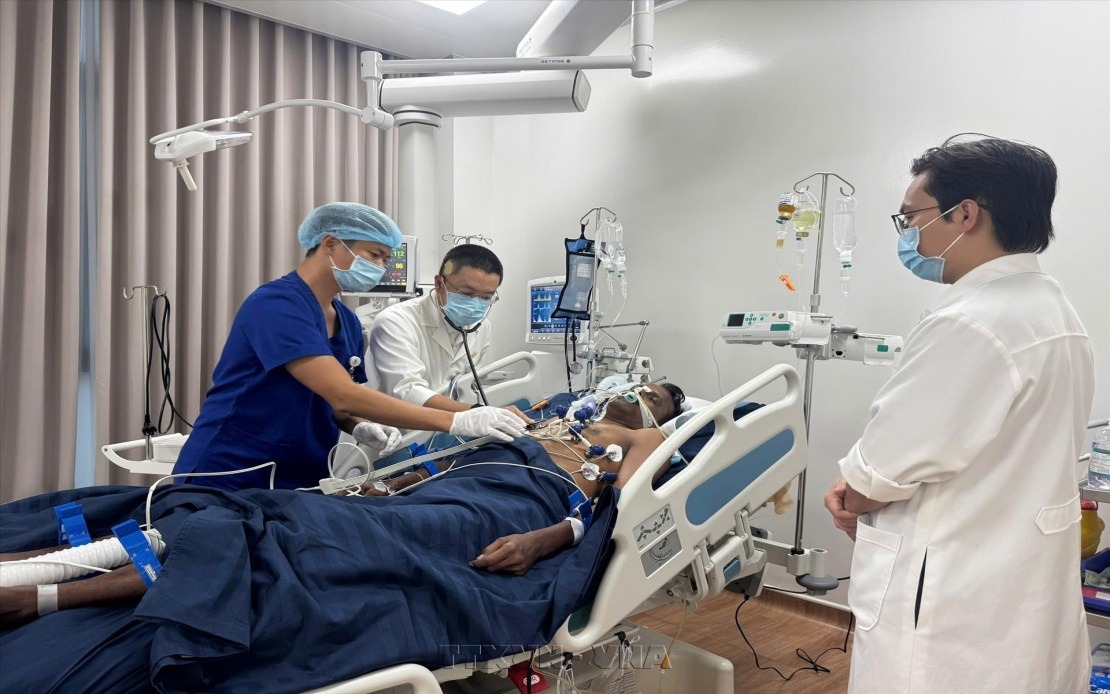
The Phu Quoc Special Zone in Vietnam's Mekong Delta province of An Giang has deployed all available medical and rescue resources to respond to a catastrophic speedboat accident that claimed multiple Indian lives on July 11. The coordinated emergency effort has involved numerous government agencies, hospital systems, and local administration working simultaneously to stabilise survivors, identify victims, and provide immediate financial support to bereaved families and injured passengers.
Response protocols were activated within minutes of the incident being reported. Sun Group International Hospital, the primary medical facility handling casualties, immediately triggered its comprehensive emergency procedures, commonly known as a hospital-wide "code red" response. This activation saw the entire institution mobilise its available personnel, with ambulances and specialist medical teams dispatched urgently to the accident scene while all off-duty staff were recalled to bolster treatment capacity.
The intensity of the emergency medical intervention became evident in the hours following the collision. Two patients arrived in critical condition requiring aggressive resuscitation efforts. Medical teams worked for nearly two hours to stabilise these individuals, eventually achieving success. Both patients regained consciousness within the intensive care unit and their vital signs remained steady, marking a significant achievement given the severity of their initial presentations.
As evening progressed on July 11, the hospital received an additional fifteen conscious victims requiring comprehensive assessment. These patients underwent detailed medical examinations, trauma screening protocols, and specialised treatment regimens aimed at supporting their physical recovery. The staggered arrival of patients allowed medical staff to distribute workload effectively while ensuring no individual received compromised care due to overwhelming volume.
Some patients presented particularly complex medical challenges. Two individuals admitted suffered from severe respiratory failure requiring sustained intensive care monitoring. One has since recovered sufficiently to be cleared for discharge pending final medical checks, while the other's condition was complicated by pre-existing health conditions. Dr. Nguyen Quang Thang, Director of Sun Group International Hospital, noted that coordinated efforts with Cho Ray Hospital in Ho Chi Minh City were underway to provide advanced treatment, with medical teams anticipating continued improvement.
Simultaneously with medical treatment, local authorities focused on delivering material support to affected families. The speedboat operator has agreed to provide immediate compensation totalling 1,000 United States dollars to each family who lost a relative, while each injured passenger will receive 500 United States dollars for medical expenses and recovery support. These payments represent the private sector's recognition of its responsibility in the incident.
Vietnam's government has supplemented private compensation with public funding. The Phu Quoc Special Zone administration will contribute 26 million Vietnamese dong, approximately 1,000 United States dollars, for each confirmed fatality. This dual-track financial assistance approach ensures families receive meaningful support regardless of employment status or ability to navigate bureaucratic compensation channels.
Beyond immediate treatment and compensation, the Phu Quoc Special Zone administration is navigating complex administrative procedures to honour the deceased with proper dignity. Tran Minh Khoa, Chairman of the People's Committee of the Phu Quoc Special Zone, emphasised that authorities are expediting civil registration procedures, death documentation, and other legal formalities required under Vietnamese legislation. This administrative efficiency is particularly crucial given that victims are foreign nationals whose repatriation involves diplomatic coordination.
The accident carries particular significance for regional tourism and safety protocols. Phu Quoc, as a major destination for international visitors including substantial numbers from India and other South Asian countries, attracts thousands of speedboat operators and charter services. The incident will likely prompt reviews of safety standards, vessel maintenance requirements, and operator licensing across Vietnamese maritime tourist operations, with implications for similar services throughout Southeast Asia.
For Malaysian observers, the Vietnamese response demonstrates both strengths and areas for consideration. The rapid hospital activation, coordination between public and private medical facilities, and swift financial assistance mechanisms reflect effective crisis management infrastructure. However, the accident underscores ongoing risks in the region's tourism sector and highlights the importance of stringent safety regulations for maritime leisure activities that similarly operate throughout Malaysia's coastal regions and popular tourist destinations.
The incident also reflects broader patterns of tourism development in the Mekong Delta region. Rapid expansion of tourism infrastructure and services sometimes outpaces the development of safety protocols and regulatory oversight. Both Vietnam and other Southeast Asian nations continue balancing economic growth from tourism with passenger safety obligations, a tension that manifests regularly in maritime accidents across the region.

