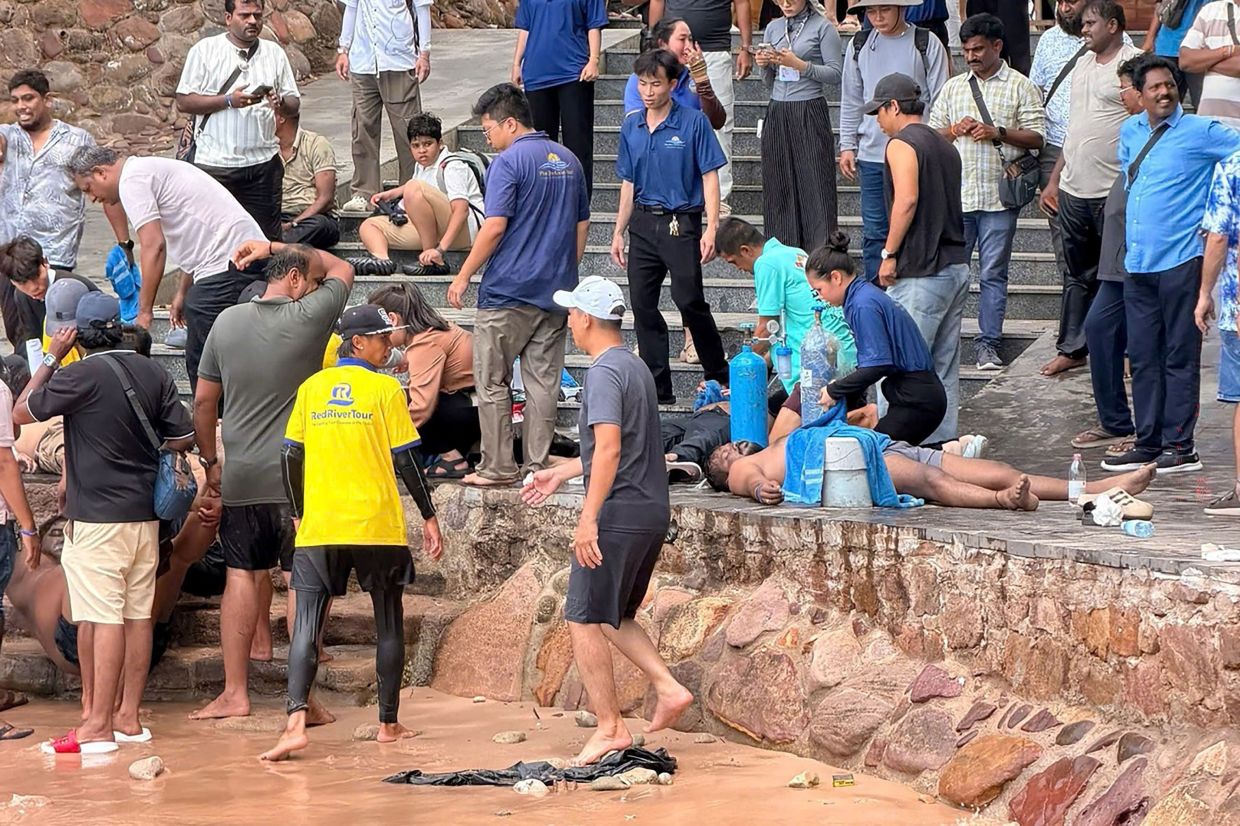
Vietnam's Prime Minister has launched an immediate and comprehensive investigation into a devastating maritime accident near Phu Quoc Island that claimed the lives of 15 Indian tourists on July 11. The high-level directive came swiftly after a speedboat capsized near Hon May Rut Ngoai in the Phu Quoc Special Zone, prompting coordinated responses across multiple government ministries and agencies to address the tragedy and prevent similar incidents in the region's busy waterways.
The ill-fated vessel was carrying 32 Indian tourists along with four crew members and guides when disaster struck. The deceased comprised 13 men and two women, while rescue operations managed to save 21 people from the water. The Indian Embassy in Vietnam subsequently released a full manifest of the 32 passengers involved—30 men and two women—and swiftly established two emergency contact centres in Ho Chi Minh City and Hanoi to coordinate support for affected nationals and coordinate with Vietnamese authorities on next steps.
The Prime Minister's response reflected the gravity of the situation and the need for accountability. He personally issued an official dispatch expressing condolences to the families of the victims and calling upon all relevant government bodies to coordinate a thorough examination of what went wrong. The directive emphasised the importance of mobilising all available medical resources and medicines to treat the injured survivors and, critically, to prevent further loss of life and property in the immediate aftermath.
An Giang Province, the administrative jurisdiction overseeing Phu Quoc Island, was designated to lead the investigative effort. Provincial authorities have been tasked with working alongside relevant agencies and emergency services to comprehensively assess the underlying causes of the accident, examine any regulatory gaps or operational failures, and identify corrective measures to prevent recurrence. This multi-agency approach underscores the Prime Minister's determination to understand not just what happened, but why safety protocols may have failed.
The Ministry of Public Security received explicit instructions to conduct an urgent and thorough investigation, tasked with clarifying the exact sequence of events and determining legal responsibility. The directive made clear that strict action would be taken against any organisations or individuals found to have violated applicable maritime safety laws or regulations. This sends a powerful signal that accountability will extend beyond mere administrative procedures to potential criminal culpability, should negligence or misconduct be established.
Maritime safety infrastructure came under intense scrutiny through the Ministry of Construction's assignment. The ministry has been ordered to conduct comprehensive reviews and inspections of all safety measures governing inland waterway and maritime traffic specifically in the area where the accident occurred, as well as in comparable maritime zones throughout the region. This broader remit suggests concerns that safety standards may be systemically inadequate across Vietnam's popular tourist waterways, not merely at this isolated location.
The incident carries significant implications for Southeast Asia's booming maritime tourism sector. Phu Quoc Island has become one of Vietnam's premier tourist destinations, attracting visitors from across Asia and beyond. The accident raises uncomfortable questions about whether rapid tourism expansion has outpaced adequate safety infrastructure and regulatory enforcement. For Malaysian and other Southeast Asian tourism operators and regulators, the accident serves as a cautionary reminder of the critical importance of maintaining rigorous safety standards even under commercial pressure to accommodate growing visitor numbers.
The Ministry of Foreign Affairs was directed to coordinate closely with the Indian Embassy on all consular matters, victim protection protocols, and related diplomatic issues. This coordination is essential given the geopolitical dimensions of the tragedy. India-Vietnam relations are strategically important, and the Vietnamese government's swift and comprehensive response demonstrates its commitment to maintaining this relationship while ensuring justice for the victims. The establishment of dedicated embassy contact centres reflects both nations' determination to support affected families through a clearly difficult period.
The speedboat accident highlights broader challenges facing maritime tourism operators throughout the region. Questions about vessel maintenance, passenger capacity compliance, crew training standards, and weather assessment protocols have likely become focal points in the investigation. Many Southeast Asian maritime operators face pressure to maximise passenger numbers and trip frequency, sometimes at the expense of safety margins. Regulators across the region, including Malaysian maritime authorities, will be watching Vietnam's investigative process and subsequent policy responses closely.
For Vietnamese tourism authorities, the incident presents a test of their ability to balance economic interests against public safety imperatives. Phu Quoc's Special Zone status gives it considerable commercial autonomy, but the tragedy may necessitate tighter safety oversight. The Prime Minister's intervention at the highest governmental level signals that tourism revenue cannot be allowed to compromise visitor safety, a principle that should resonate throughout the region's tourism-dependent economies.
The next phase involves waiting for the Ministry of Public Security's investigation findings and the Ministry of Construction's safety review conclusions. These will determine whether the accident resulted from operator negligence, inadequate vessel maintenance, poor weather judgment, overcrowding, or systemic regulatory failures. Each scenario would demand different corrective responses, from individual prosecution to industry-wide regulatory reform.

