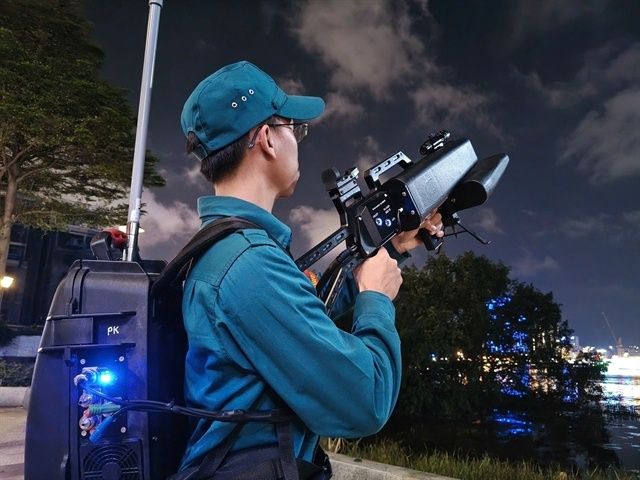
Vietnam's Ministry of Public Security is sounding the alarm over a worrying surge in unauthorised drone flights near major airports, a phenomenon that has prompted emergency flight diversions, schedule chaos, and mounting financial losses across the aviation sector. The Immigration Department has released a stern public advisory warning civilians against operating unmanned aircraft in airport restricted zones without proper authorisation, underscoring the escalating risks to aviation safety in a country where air traffic continues to expand rapidly across Southeast Asia's busiest corridors.
The scale of the problem has grown dramatically in recent years. According to official records, Vietnam recorded 34 separate incidents involving drones or unauthorised aircraft entering controlled airspace around airports during 2025, a figure that jumped sharply with 17 additional cases registered in just the first half of 2026. This accelerating trend reflects both the growing popularity of consumer drones among hobbyists and the challenge authorities face in monitoring and enforcing airspace regulations across a country with dozens of commercial and regional airports.
Each intrusion forces air traffic controllers into emergency protocols designed to prevent catastrophic collisions. Controllers must immediately halt aircraft departures, suspend landing operations, or redirect incoming planes to alternative airports—actions that cascade through flight schedules and create serious operational bottlenecks. The complexity lies in the fact that modern commercial aviation operates on razor-thin scheduling margins, particularly at congested hubs, meaning even brief diversions can trigger delays across entire networks and strand thousands of travellers.
The financial impact has been staggering. Vietnam Airlines quantified losses from just one week of drone incidents between February 17 and 24, reporting direct costs of approximately VNĐ5.6 billion (US$215,000) alongside operational chaos affecting roughly 9,200 passengers through delays and itinerary changes. More concerning still, Danang International Airport—one of the nation's fastest-growing regional hubs—separately documented direct losses exceeding VNĐ10 billion ($384,000), though airport officials acknowledged this figure excludes cascading indirect costs absorbed by affiliated airlines, cargo operators, and affected travellers who experienced missed connections and business disruptions.
Beyond economics, authorities emphasize the acute safety hazard presented by drone strikes during the most vulnerable phases of flight. A collision between a small unmanned aircraft and a commercial jet during takeoff or landing could prove catastrophic, potentially disabling critical systems or causing structural damage that endangers hundreds of passengers and crew members. The consequences extend beyond individual aircraft—a major accident could paralyze operations at an entire airport and reverberate across regional air transport networks that Malaysian carriers and businesses depend upon for connectivity.
Vietnam's legal framework governing drone operations is comprehensive, though enforcement remains inconsistent. Drone owners must complete registration and secure an explicit flight permit before operating—crucially, registration alone provides no authorization to fly. Permits specify precise operational parameters including geographic boundaries, altitude ceilings, permissible hours, and mission scope. Violators face graduated consequences: administrative penalties for minor infractions, civil liability for economic losses, and criminal prosecution for serious breaches.
A 2025 government decree established concrete penalties for violations, including monetary fines, mandatory confiscation of equipment, and revocation of flight privileges. However, more severe cases—where a drone obstructs air traffic or materially endangers aviation safety—can trigger criminal prosecution without requiring an actual accident to have occurred. This is a critical distinction: authorities can prosecute an operator for creating a genuine collision risk, even if the aircraft successfully avoids contact.
The criminal penalties for flying unmanned aircraft into approach, takeoff, or landing corridors carry substantial teeth. Convicted operators face fines ranging from VNĐ10 million to VNĐ50 million (US$384-$1,920), possible non-custodial rehabilitation programmes lasting up to two years, or direct imprisonment sentences ranging from three months to two years depending on circumstances and aggravating factors. Beyond these direct consequences, convicted individuals may face employment restrictions barring them from certain occupations for one to five years, effectively ending careers in aviation, security, or other sensitive sectors.
The graduated penalty structure reflects authorities' intent to distinguish between negligent hobbyists and deliberate offenders or malicious actors. However, the criminalization approach also demonstrates how seriously Vietnamese regulators now view drone intrusions in the context of national aviation infrastructure. For Malaysian and regional travellers using Vietnamese airports—particularly Ho Chi Minh City's Tan Son Nhat, Hanoi's Noi Bai, and secondary hubs like Da Nang—the proliferation of flight disruptions represents a growing operational risk that extends beyond Vietnam's borders.
The security dimensions of this issue also merit attention. While most reported incidents involve recreational flyers, authorities remain cognizant that drone technology could potentially be weaponised or used for intelligence gathering. A concentrated campaign of drone intrusions could theoretically disrupt critical air cargo corridors or create security vulnerabilities at airports handling sensitive operations. This concern has prompted a whole-of-society approach to enforcement and prevention.
Recognising the limits of regulatory action alone, Vietnamese authorities are appealing directly to the public to participate in monitoring and reporting suspicious drone activity. The Immigration Department is requesting civilians to alert police, military units, or airport management of any unauthorised unmanned flights near airports. This grassroots surveillance component acknowledges that traditional enforcement mechanisms—ground patrols, radar monitoring—remain resource-constrained across Vietnam's extensive airport network.
For Malaysian readers and businesses operating across the region, the implications are substantial. Vietnam represents a critical node in Southeast Asian air transport networks, with airlines like Malaysia Airlines, AirAsia, and Malayan carriers operating frequent services to Vietnamese destinations. Persistent drone-related disruptions threaten the reliability of these connections, complicate supply chains dependent on air cargo, and undermine Vietnam's positioning as a regional aviation hub competing with Thailand and other neighbours.
The enforcement campaign signals that Vietnamese authorities will increasingly prosecute offenders, particularly as incidents multiply. Operators—whether recreational enthusiasts, commercial videographers, or agricultural users—must recognise that restricted airspace is no longer a grey area but a clearly demarcated zone with severe consequences for violation. As drone technology becomes cheaper and more ubiquitous across Asia, other regional governments will likely follow Vietnam's lead in imposing stricter penalties, making this Vietnamese crackdown emblematic of broader Southeast Asian trends toward stricter unmanned aircraft regulation.

