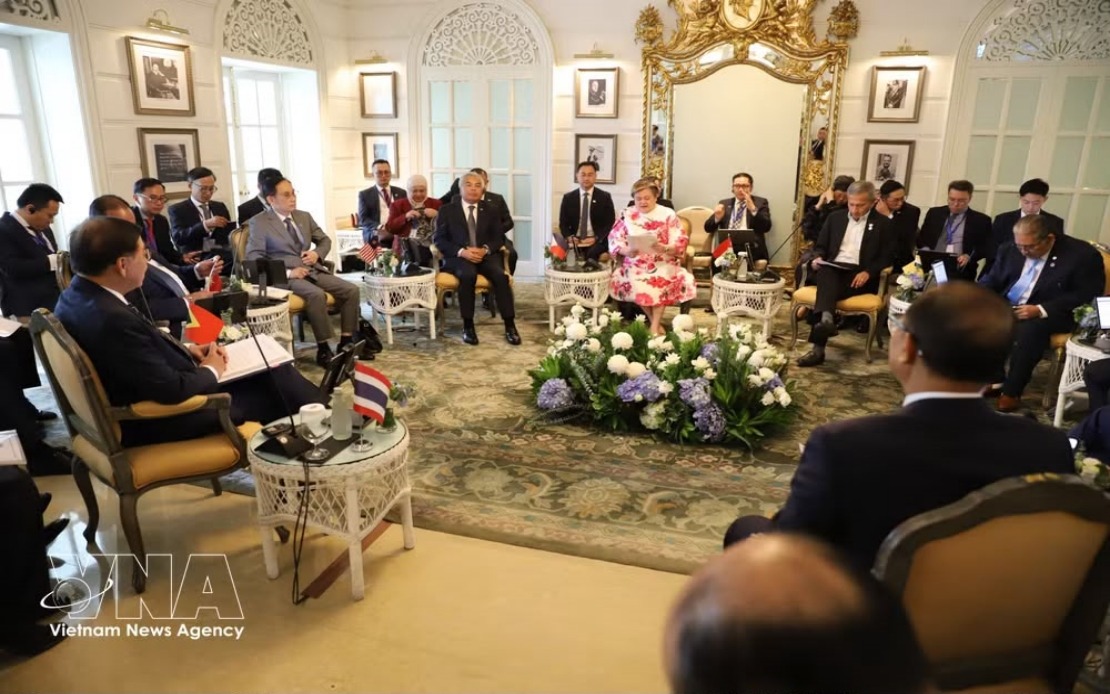
Vietnam has pledged to work closely with fellow ASEAN members in supporting Myanmar's recovery and long-term stability, marking a significant moment of unity within the regional bloc on one of its most pressing geopolitical challenges. Speaking at an informal meeting of ASEAN foreign ministers with their Myanmar counterpart in Bangkok on July 12, Vietnamese Minister of Foreign Affairs Le Hoai Trung emphasised that Hanoi views Myanmar not as a pariah state but as a valued member of the regional community deserving of sustained engagement and practical assistance.
The gathering, chaired by Philippine Secretary of Foreign Affairs Maria Theresa P. Lazaro representing ASEAN's 2026 chair, represented a watershed moment in ASEAN's crisis diplomacy. It was the first substantial in-person engagement between multiple ASEAN foreign ministers and Myanmar's administration since 2021, signalling that the bloc has moved beyond rhetoric towards concrete initiatives aimed at helping the country navigate its complex political and economic challenges.
Vietnam's position centres on what ASEAN calls the Five-Point Consensus, a framework adopted in 2021 that seeks to guide the bloc's engagement with Myanmar. Rather than isolation or punishment, this approach emphasises dialogue, gradual reform and maintaining channels of communication with Myanmar's current leadership. Trung acknowledged that Myanmar has undertaken several stabilising measures in recent months, including efforts to revive its battered economy, strengthen governance structures, and crack down on transnational criminal activities such as drug trafficking and the growing cybercrime problem that has plagued the region.
The minister's remarks underscore a subtle but important distinction in how ASEAN members view their role in Myanmar's future. Rather than imposing external solutions, Vietnam and other ASEAN states have embraced the concept of Myanmar-owned, Myanmar-led recovery—a principle that respects national sovereignty while maintaining pressure for meaningful progress on democratic norms and human rights. This balancing act reflects the reality that ASEAN's influence is limited, and that sustainable change in Myanmar must ultimately emerge from within the country rather than being imposed from outside.
Vietnam specifically committed to assisting Myanmar in three critical areas: economic recovery, governance and social development, and the fight against transnational crimes including drug trafficking and cybercrime. These are not trivial issues for Southeast Asia. Myanmar's economic collapse since 2021 has created regional spillover effects, including increased instability along borders and a surge in illicit activities that destabilise neighbouring countries including Thailand and Laos. By helping Myanmar stabilise economically, Vietnam and other ASEAN members are investing in their own regional security and prosperity.
The Five-Point Consensus itself remains contested within ASEAN and internationally. Critics argue it lacks enforcement mechanisms and has failed to produce meaningful democratic progress. However, supporters contend that it represents the only realistic framework for maintaining ASEAN's unity on Myanmar while keeping channels open for dialogue. Vietnam's reaffirmation of this approach suggests Hanoi believes that sustained engagement remains preferable to the isolation that characterised earlier international responses to Myanmar's political crisis.
Myanmmar Foreign Minister Tin Maung Swe used the meeting to brief ASEAN on his administration's 100-day plan and specific measures aimed at promoting peace and reconciliation. While details remain sparse, the willingness of Myanmar's current leadership to engage directly with ASEAN ministers and present its own vision for recovery indicates a level of openness to regional input that hasn't always been evident. ASEAN's role here is delicate: maintaining credibility with its own publics and international partners while also preserving relationships that might ultimately prove essential for channelling influence towards positive change.
The broader context matters significantly for Malaysian readers and other Southeast Asian audiences. Myanmar's stability affects the entire region through multiple channels: refugee flows, cross-border crime, trade disruption, and geopolitical competition between major powers seeking influence in the country. By strengthening ASEAN's collective approach to Myanmar, Vietnam is supporting an effort that ultimately serves all member states' interests in maintaining a cohesive regional community capable of managing complex crises without fracturing along strategic lines.
Vietnam's diplomatic positioning also reflects its own interests as a major trading partner with Myanmar and a country that shares long border areas where transnational crime and governance challenges directly impact Vietnamese communities. Hanoi's emphasis on combating drug trafficking and cybercrime signals that Vietnamese support for Myanmar's recovery is not purely altruistic but grounded in practical security concerns that resonate across the region.
The meeting's frank and constructive tone, as described in the official statements, suggests that ASEAN foreign ministers are willing to engage in honest assessment of Myanmar's situation while maintaining solidarity around the Five-Point Consensus framework. This approach differs markedly from the heated rhetoric that sometimes characterises international discussions of Myanmar, where some countries have called for suspension or punitive measures. ASEAN's more pragmatic stance reflects its commitment to the principle of non-interference in members' internal affairs, even as it attempts to encourage positive developments.
Moving forward, Vietnam's concrete commitments will be tested by implementation. ASEAN's support will be meaningful only if it translates into visible progress on the ground—genuine economic recovery, reduced transnational crime, and incremental improvements in governance and human rights. The bloc's credibility depends on demonstrating that its engagement strategy can produce tangible results while maintaining the unified approach that remains essential for ASEAN's effectiveness in regional affairs.
The significance of this meeting extends beyond Myanmar itself. It demonstrates ASEAN's determination to maintain its centrality in regional affairs and its capacity to manage difficult issues through dialogue and consensus-building. For a region increasingly contested by major power competition, ASEAN's ability to maintain unity on Myanmar—however imperfect—remains crucial for defending the bloc's relevance and protecting smaller member states' interests in a complex geopolitical environment.

