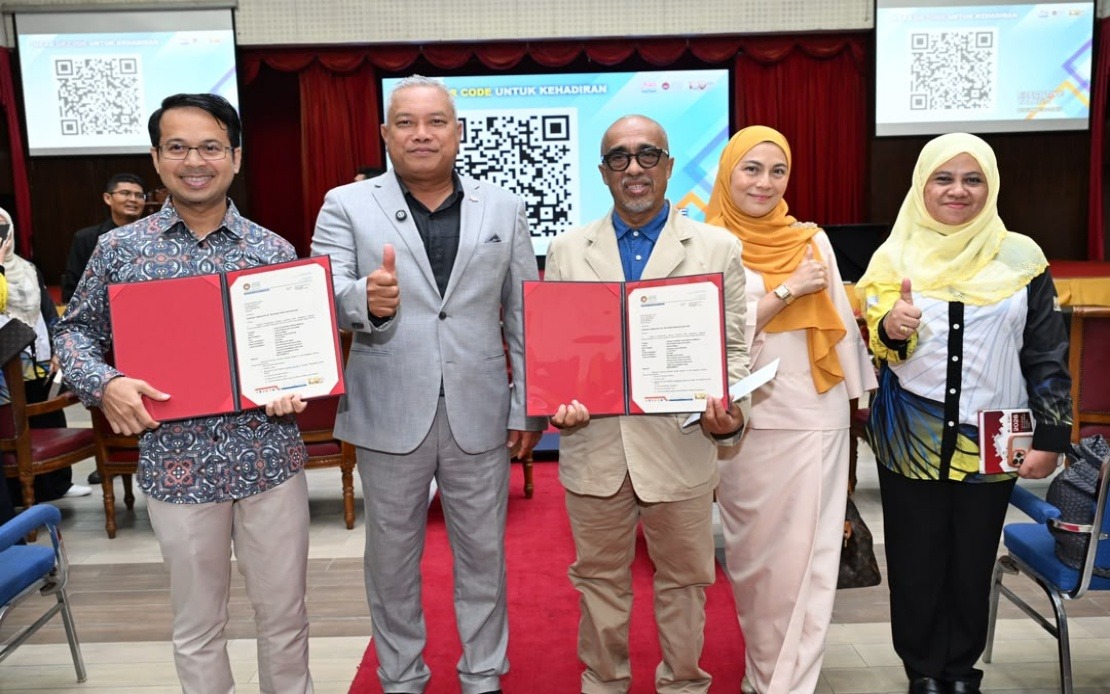
Two prominent figures from Malaysia's entertainment industry have realised long-deferred academic ambitions by gaining admission to postgraduate studies at Universiti Pendidikan Sultan Idris (UPSI) in Perak. The university announced that 65-year-old actor and filmmaker Mohd Sabri Yunus and 45-year-old television presenter Ahmad Fedtri Yahya have been accepted as pioneer students through an innovative alternative qualification route, marking a significant development in how Malaysia recognises non-traditional pathways to higher education.
Both individuals have secured places in UPSI's Faculty of Languages and Communication, with Mohd Sabri pursuing a Master of Education in Malay Literature while Ahmad Fedtri has been accepted for a Master of Education in Malay Language. Their admission represents the inaugural cohort under this particular application of the Accreditation of Prior Experiential Learning for Award of Qualifications (APEL.Q) framework, a mechanism designed to evaluate accumulated professional experience and expertise as legitimate substitutes for conventional academic prerequisites.
For Mohd Sabri, this opportunity carries particular symbolic weight. The accomplished director, whose career in the Malaysian film and television industry spans decades, revealed that he had attempted twice during the 1980s and early 1990s to pursue university education while employed at Dewan Bahasa dan Pustaka (DBP) as an illustrator. Both previous attempts proved unsuccessful because his employment obligations made full-time study untenable. "I actually attempted twice to become a university student after I joined DBP in 1982 as an illustrator, but it did not materialise because I could not leave my job," he explained during remarks at UPSI's Executive Talk 6.0 Cybersecurity programme. Despite these disappointments, Mohd Sabri maintained an intellectual curiosity throughout his working life, viewing every professional encounter and relationship as a learning opportunity.
The APEL.Q pathway that has now enabled Mohd Sabri's enrolment represents a paradigm shift in how Malaysian universities assess eligibility for advanced study. Rather than insisting on conventional qualification hierarchies, the framework acknowledges that individuals with substantial practical experience in relevant fields accumulate expertise and knowledge equivalent to traditional degree-holders. This approach holds particular relevance for mid-career professionals in creative and cultural sectors, where hands-on experience often outweighs formal credentials in developing expertise. Mohd Sabri's acceptance signals UPSI's confidence that his four-decade career in Malaysian cinema and television provides a legitimate foundation for advanced study in Malay Literature.
Ahmad Fedtri's participation in the programme reflects his long engagement with Malaysian media and entertainment. The television personality expressed enthusiasm about joining the UPSI community and emphasised his deliberate choice of Malay Language as his field of study. His decision reflects a broader concern about language preservation and evolution in contemporary Malaysia. Ahmad Fedtri articulated the connection between linguistic practices and societal development, noting that "the way people use language was closely linked to a society's level of civilisation and knowledge." This perspective carries weight given the documented concerns about declining Malay language proficiency among younger Malaysians and the growing influence of English, Mandarin, and hybrid digital communication forms.
The media landscape's transformation presents particular challenges for language standardisation and cultural continuity. Ahmad Fedtri highlighted how social media and digital technology have fundamentally altered communication patterns among younger generations, creating linguistic fragmentation and erosion of formal language conventions. His decision to pursue postgraduate study in Malay Language suggests a commitment to researching and addressing these contemporary challenges academically. For a media professional with his platform and influence, undertaking formal research on language dynamics positions him to contribute meaningfully to policy discussions and educational initiatives around language preservation.
UPSI Vice-Chancellor Prof Datuk Dr Md Amin Md Taff emphasised the institutional benefits of welcoming Sabri Yunus and Ahmad Fedtri as community members. He highlighted that their presence and experiences across arts, language, and culture would enrich interactions with UPSI's approximately 25,000 students, most of whom are training to become educators. The university recognised that celebrity figures pursuing serious academic study create tangible demonstration effects. When high-profile Malaysians visibly commit to further learning in their mature years, it sends powerful cultural messages about the value of continuous intellectual development and the legitimacy of non-linear educational pathways.
The pedagogical implications extend beyond individual benefit. Teachers-in-training at UPSI will observe and interact with accomplished professionals undertaking rigorous graduate research in their disciplines. This exposure potentially cultivates among future educators a more nuanced understanding of how lived experience, professional achievement, and formal scholarship can complement one another. Moreover, Sabri Yunus and Ahmad Fedtri's research projects—particularly Sabri's stated intention to conduct research on specific categories of pantun, Malaysia's traditional poetic form—could yield scholarly contributions that bridge academic knowledge production with cultural preservation.
The APEL.Q framework represents an important development for Southeast Asia's educational landscape more broadly. Many countries in the region struggle to balance quality assurance in higher education with inclusive access for non-traditional students. Malaysia's adoption of this accreditation methodology demonstrates recognition that rigid academic hierarchies may exclude valuable contributions from accomplished practitioners. As the region experiences demographic shifts, with ageing populations and mature workers seeking reskilling or career transitions, alternative pathways to postgraduate study become increasingly relevant for economic and social adaptation.
The cultural dimensions of this initiative warrant particular attention for Malaysia. At a moment when anxieties about cultural transmission, language maintenance, and artistic continuity dominate public discourse, the government and educational institutions are signalling that these domains merit serious intellectual investment. By welcoming prominent cultural figures into research-focused postgraduate programmes, UPSI positions humanistic and linguistic scholarship as serious knowledge enterprises rather than supplementary pursuits. This recalibration matters for how Malaysian society values different types of expertise and credentials across sectors.
Mohd Sabri's and Ahmad Fedtri's journeys also illustrate the delayed potential that exists within Malaysia's professional classes. Many accomplished mid-career professionals possess deep expertise but lack conventional terminal degrees, which historically constrained their formal contributions to knowledge production. The APEL.Q pathway opens avenues for this accumulated experience to translate into research, publication, and influence within academic spheres. As UPSI implements these programmes, outcomes will likely influence other Malaysian universities to develop their own alternative accreditation mechanisms, potentially democratising access to advanced study across the region and creating new models for lifelong learning.

