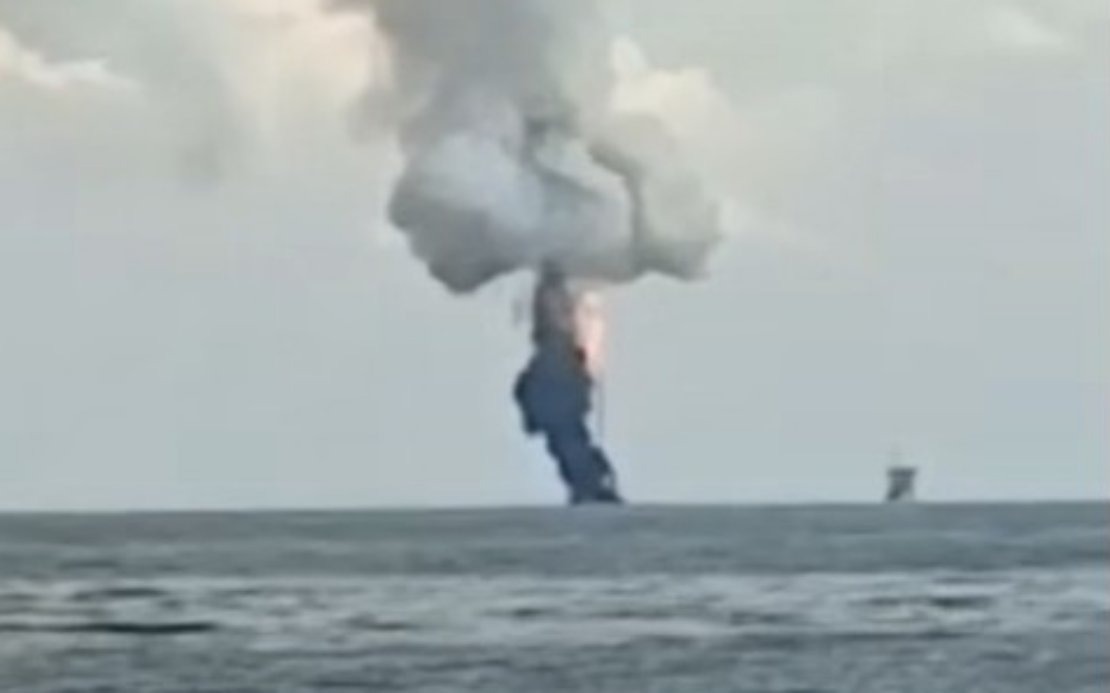
An offshore oil and gas facility operated by Petronas Carigali subsidiary Vestigo Petroleum Sdn. Bhd. caught fire on June 28, prompting swift response measures and triggering viral social media coverage. The blaze erupted at approximately 2 pm at the West Lutong Vent A (WLV-A) installation, located in Sarawak's maritime jurisdiction. The company confirmed the incident through an official statement issued the following day, assuring stakeholders that the situation had been stabilised and that comprehensive investigations were already underway to determine the underlying cause.
Vestigo's immediate response underscores the established protocols within Malaysia's energy sector for managing such emergencies. The operator worked in coordination with relevant government authorities and regulators, implementing precautionary measures to mitigate potential risks and limit exposure across the facility. The coordinated effort between the private operator and state agencies reflects the integrated approach to offshore safety that has evolved over decades of hydrocarbon exploration in Malaysian waters, particularly in the prolific Sarawak basin where production platforms routinely operate in high-pressure environments.
The company's statement emphasised that no personnel suffered injury or harm during the incident, a critical reassurance given the inherent hazards associated with offshore petroleum operations. Fire incidents in offshore installations carry significant potential for catastrophic outcomes, making the absence of casualties a matter of considerable relief to workers' families, industry observers, and regulators alike. The safety record of Malaysian offshore operations has generally been robust compared to some global peers, though each incident provides valuable lessons for continuous improvement across the sector.
Vestigo stressed that the fire presented no immediate danger to nearby communities or the marine environment, a statement that carries particular weight given public sensitivity toward environmental protection in Sarawak. The state has experienced significant development pressures, and any incident affecting offshore infrastructure generates immediate scrutiny regarding potential ecological consequences. The company's emphasis on environmental stewardship reflects broader industry recognition that maintaining public trust requires demonstrable commitment to preventing pollution and protecting natural resources.
The incident gained unexpected prominence when video footage circulated rapidly across social media platforms, amplifying public awareness beyond traditional news channels. Such viral spread of industrial incidents has become commonplace in the digital age, often outpacing official communications and creating information vacuums that speculation can fill. Vestigo's relatively prompt public disclosure appears designed to address this dynamic by providing authoritative information before alternative narratives gain traction online.
The West Lutong Vent A facility represents part of Petronas' extensive offshore portfolio in Sarawak, one of Malaysia's most significant petroleum-producing regions. These installations operate continuously under demanding conditions, extracting hydrocarbons from deepwater reserves while managing the technical and safety complexities inherent in such operations. The facility's designation as a vent system suggests it handles gas processing, a function critical to overall production operations in the field.
The ongoing investigation into the fire's cause will likely examine mechanical systems, operational procedures, maintenance records, and environmental factors that may have contributed to ignition. Such investigations typically involve multiple stakeholders, including the operator's technical teams, government regulators from the Department of Petroleum Resources or equivalent bodies, and potentially independent specialists. The findings will inform safety recommendations that could apply across the broader industry, particularly if systemic issues are identified.
For Malaysia's energy sector, such incidents serve as important reminders of the operational risks inherent in offshore petroleum extraction, particularly as platforms age and as exploration expands into more challenging environments. Investment in safety technology, worker training, and preventive maintenance remains essential to maintaining both operational continuity and the industry's social licence to operate. The regulatory framework governing offshore safety in Malaysian waters continues to evolve, drawing on international best practices and lessons learned from incidents across the region.
Vestigo's commitment to operational integrity, as stated in their communication, reflects broader industry imperatives to sustain production while meeting increasingly stringent safety and environmental standards. For Malaysian readers, the incident underscores the ongoing importance of robust oversight of energy infrastructure that contributes substantially to national economic output and government revenue. The seamless coordination between private operators and government authorities demonstrated in this instance provides some reassurance that Malaysia's offshore safety systems are functioning as designed, though continued vigilance remains essential as the sector navigates evolving technological and regulatory landscapes.

