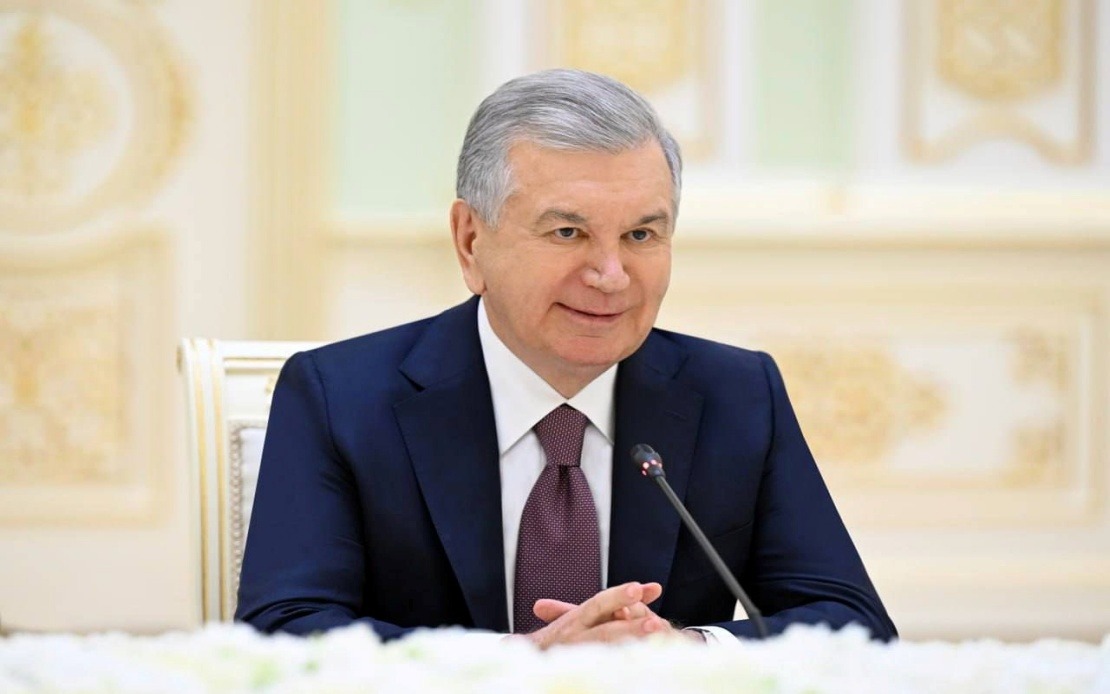
Uzbekistan President Shavkat Mirziyoyev has appealed to the international community to embrace collaborative engagement centred on Islamic civilisation's enduring contributions to human progress, positioning such cooperation as a counterweight to mounting global tensions, religious extremism and cultural polarisation. Addressing delegates at the First International Islamic Civilisation Forum in Tashkent, delivered through presidential adviser Khayriddin Sultanov, Mirziyoyev framed the gathering as a timely intervention amid what he characterised as an era of unprecedented transformation marked by deepening conflicts, eroding trust between nations and deliberate attempts to fracture bonds across religious and cultural boundaries.
The Uzbek leader articulated a vision of Islamic values as foundational to addressing contemporary crises, arguing that the intellectual and spiritual traditions embedded within Islamic civilisation have historically catalysed scientific breakthroughs, cultural flowering and moral advancement that transcend religious communities. He positioned these heritage frameworks not as parochial or sectarian, but as universal repositories of wisdom that have shaped humanity's collective intellectual inheritance. This framing represents a deliberate rhetorical pivot, rebranding Islamic intellectual history as a shared global resource rather than a distinctly religious or civilisational property, an approach with particular resonance for pluralistic societies including Malaysia where interfaith understanding carries tangible political and social weight.
Central to Mirziyoyev's message was Uzbekistan's "Enlightenment Against Ignorance" initiative, unveiled at the United Nations in 2017, which emphasises the indispensable role of scientific inquiry, pedagogical excellence, cultural preservation and ethical anchoring in building sustainable peace and mutual comprehension across populations. This flagship policy signals Uzbekistan's strategic commitment to recasting its regional identity around knowledge production and educational leadership rather than purely economic or military parameters. The initiative's explicit linking of enlightenment to countering ignorance carries implicit messaging about the risks of ideological extremism and sectarian radicalisation that have affected Central Asia and neighbouring regions, providing a softer diplomatic language for addressing security concerns.
Mirziyoyev emphasised Uzbekistan's determination to serve as a custodian and promoter of Islamic civilisation's intellectual legacy through expanded scholarly research, integrated educational curricula, systematic restoration of historically significant structures and enhanced international partnerships on humanitarian concerns. This positioning transforms the nation into a continental centre for civilisational studies and heritage preservation, elevating its geopolitical profile beyond conventional measures of state power. For regional observers, particularly in Southeast Asia where similar questions about balancing modernisation with civilisational identity persist, Uzbekistan's model offers a template for leveraging historical and intellectual resources as soft power assets.
The forum organisers highlighted Central Asia's extraordinary contribution to global intellectual traditions, invoking the legacies of luminaries including Muhammad al-Khwarizmi, whose mathematical innovations became foundational to algebra; Abu Rayhan Biruni, a polymathic genius spanning astronomy, mathematics and philosophy; Abu Ali ibn Sina, whose medical treatises influenced European scholarship for centuries; the astronomer and administrator Mirzo Ulugh Beg; and foundational Islamic jurists Imam al-Bukhari, Imam al-Tirmidhi and Imam al-Maturidi. This genealogy establishes Central Asia as a cradle of civilisational achievement rather than a peripheral periphery, a reframing with substantial implications for regional self-conception and international standing. The invocation of these figures demonstrates how historical scholarship can be mobilised to bolster contemporary political narratives around cultural pride and intellectual contribution.
Mirziyoyev articulated an ambitious aspiration for Uzbekistan to architect a "Third Renaissance" grounded in scientific innovation, modern educational methodologies, spiritual cultivation and reverential engagement with historical patrimony while simultaneously unlocking individual creative capacities. This formulation echoes traditional periodisation of European history while asserting that comparable civilisational flowering remains possible and necessary in contemporary contexts. The emphasis on enabling personal creativity within frameworks of collective heritage reflects contemporary tensions between individualistic and communitarian values that Southeast Asian nations also navigate, making this articulation particularly relevant for regional policymakers considering how to synthesise modernity with tradition.
The Islamic Civilisation Centre, which Mirziyoyev positioned as an intellectual crossroads reconciling historical memory with future orientation and Eastern knowledge systems with Western frameworks, has emerged as a tangible institutional manifestation of these conceptual ambitions. By characterising the Centre as an open intellectual commons where scholars, researchers and religious authorities collaboratively advance knowledge and safeguard universal principles, Mirziyoyev sought to project an image of inclusive engagement divorced from exclusionary or supremacist ideologies. The Centre's collaborative structure, incorporating multiple national institutions and the Islamic World Educational, Scientific and Cultural Organisation (ICESCO), represents a pragmatic institutional architecture for operationalising civilisational cooperation across borders.
The five-day forum, convening approximately 300 participants spanning scholars, religious authorities, governmental officials and cultural specialists drawn from more than 50 countries across Tashkent, Samarkand and Termez, constructed a genuinely multinational intellectual gathering rather than a confined regional assembly. The venue selection itself carried symbolic weight: Samarkand and Termez remain repositories of tangible Islamic heritage, with their historical significance reinforcing the forum's thematic coherence. This geographic distribution across three cities enabled participants to engage directly with preserved architectural and archaeological remains, transforming intellectual discourse into embodied historical experience.
The substantive programming encompassed 11 plenary sessions, four specialised international scientific conferences, exhibitions curating rare manuscripts and cultural materials, and showcases of digital heritage initiatives and artificial intelligence applications for conserving Islamic textual traditions. This multidisciplinary approach bridged conventional humanistic scholarship with computational methodologies, positioning Islamic civilisation as relevant to contemporary technological frontiers rather than consigned to historical archiving. The inclusion of artificial intelligence applications particularly signals recognition that digital tools and data science increasingly shape how societies preserve, interpret and transmit cultural knowledge, ensuring Islamic intellectual heritage remains pertinent to emerging generations navigating technologically mediated worlds.
Mirziyoyev emphasised that science and education function as paramount unifying mechanisms in contemporary geopolitical contexts, providing intellectual and ethical substrates for sustainable advancement and peaceful coexistence. This assertion carries particular significance for Southeast Asian nations grappling with questions about how to construct inclusive national identities spanning multiple religious communities while maintaining developmental momentum. The framing of pedagogical and scientific cooperation as transcending sectarian divisions offers a diplomatic vocabulary for regional cooperation that emphasises shared material interests and intellectual progress over potentially divisive theological questions.
The anticipated concluding outcomes—including adoption of the Tashkent Declaration, approval of the Islamic Civilisation Centre's 2027-2030 strategic roadmap, and execution of bilateral and multilateral cooperation agreements among international organisations, research institutions and cultural bodies—suggested intentions to convert rhetorical commitment into sustained institutional arrangements and concrete collaborative projects. Such formalisation transforms the forum from ephemeral diplomatic event into foundation for ongoing institutional engagement. For Malaysia and other Southeast Asian nations with significant Islamic populations and thriving research ecosystems, such frameworks create potential avenues for academic partnerships, manuscript digitisation initiatives and scholarly exchange programmes that strengthen regional intellectual connectivity.
Mirziyoyev's rhetorical positioning of Islamic civilisation as a unifying global force rather than a marker of sectarian or civilisational partition reflects contemporary diplomatic strategies across Muslim-majority nations seeking to reclaim agency in global discourse while positioning themselves as constructive contributors to international stability. The emphasis on tolerance, enlightenment and pluralistic engagement attempts to distinguish such engagement from competing narratives that might weaponise religious identity or promote exclusionary ideologies. As geopolitical tensions persist across multiple regions and extremist movements continue exploiting religious grievances, Uzbekistan's investment in institutional platforms promoting intellectual cooperation through civilisational heritage represents a calculated effort to advance alternative framings where Islamic identity correlates with cosmopolitan values, scientific rationalism and peaceful coexistence.

