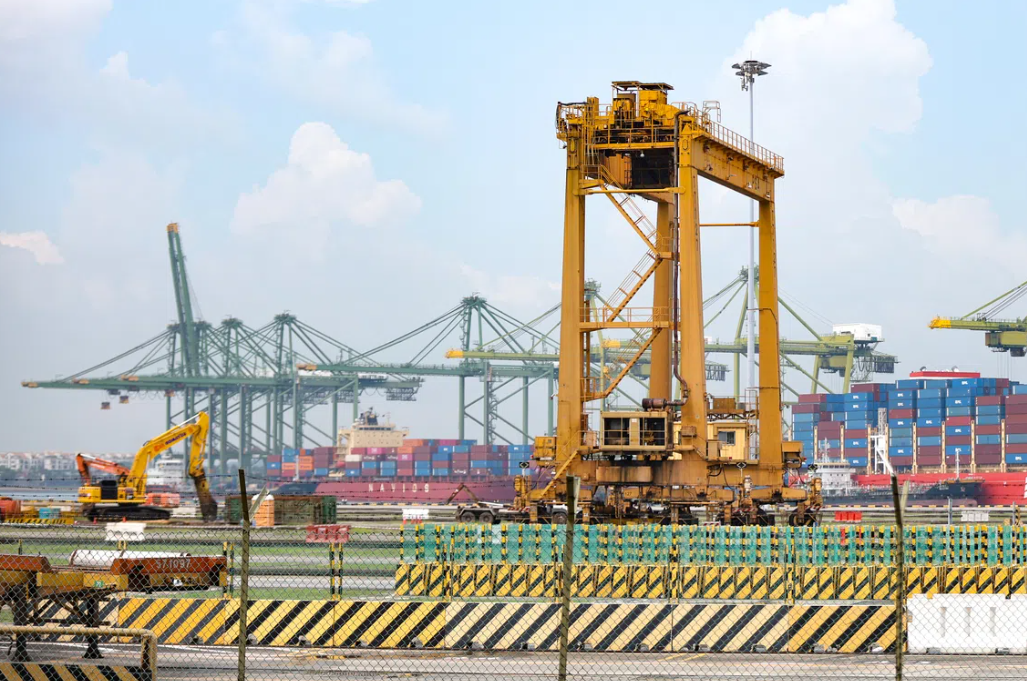
The United States has thrown a spotlight on what it characterises as a coordinated scheme by Chinese exporters to circumvent American tariffs by channelling products through a network of 40 countries—including Singapore—as intermediate transit points. The White House released a detailed report in August titled "The Great Transshipment Scam" that maps the architecture of this evasion strategy, signalling an escalation in Washington's effort to police global supply chains and recover revenue lost to what officials contend is systematic customs fraud on a massive scale.
At the heart of the controversy is a practice known as transshipment, wherein goods manufactured in China are routed through lower-tariffed jurisdictions, their true origin concealed, before entering the American market under deceptively altered identities. The White House estimates this illicit rerouting may have deprived the US Treasury of between US$40 billion and US$303 billion in customs duties—a staggering range that underscores the opacity surrounding actual transshipment volumes. The administration has already begun deploying what it calls an artificially intelligent "Detective Border" system and other technological countermeasures to detect and interdict these shipments, with officials declaring bluntly that "the age of untraceable illegal transshipment is over."
The scale of the alleged evasion becomes apparent when examining trade data following America's 2018 tariff regime. As China's direct share of US imports visibly declined, imports from the identified transshipment nations surged proportionally—a pattern the White House interprets as evidence of deliberate rerouting rather than natural economic rebalancing. Though the report concedes that some trade reallocation reflects legitimate shifts in manufacturing and investment decisions, the timing and magnitude of these flows warrant deeper scrutiny into whether tariffed Chinese goods were systematically diverted through third countries to circumvent duties.
Singapore occupies a peculiar position within this framework. The White House classified the city-state in Tier 3, described as "small, opportunistic Chinese targets"—a category comprising economies with lower absolute transshipment volumes but possessing specific vulnerabilities that make them attractive to rerouting operations. These vulnerabilities include low-cost labour, free trade zones, unrestricted port and border access, bonded warehousing facilities, niche assembly capacities, preferential access to US markets, or limited customs enforcement depth. Other Tier 3 nations identified include Cambodia, Laos, Myanmar and the Philippines, suggesting that Southeast Asia features prominently in Beijing's alleged evasion architecture.
The tiering system reveals Washington's assessment of transshipment risk across different economic contexts. Tier 1 economies—Canada, the European Union, India, Israel, Japan and Taiwan—are positioned as major export platforms where transshipment risks blend seamlessly into broader legitimate trade flows, making detection inherently difficult. Tier 2 comprises nations with substantial economic integration with China, encompassing Brazil, Indonesia, Malaysia, Thailand, Turkey and Vietnam. The inclusion of multiple Southeast Asian economies across multiple tiers underscores how the region has become integral to global tariff arbitrage strategies, whether through design or structural circumstance.
Beyond tariff evasion, the White House report raises a geopolitical dimension that resonates across Southeast Asia. The administration warns that as smaller economies become increasingly dependent on Chinese inputs, logistics networks and capital flows, Beijing accumulates commercial and geopolitical leverage while maintaining indirect access to American markets. This dependency paradox—whereby countries participating in transshipment networks simultaneously strengthen Chinese influence—represents a subtle form of economic coercion that may escape formal notice but carries long-term strategic implications for regional autonomy and policy flexibility.
Singapore has maintained steadfast that its regulatory and legislative frameworks meet international standards. Singapore Customs reiterated that the nation's transshipment regime aligns with World Customs Organization best practices and that goods cannot be relabelled as originating from Singapore merely because they pass through its ports and logistics hubs. Companies engaging in transshipment must comply fully with local laws, and the agency claims active cooperation with international enforcement partners to intercept illicit goods. This defence echoes past declarations by the city-state regarding its commitment to trade compliance, though it does not directly address whether existing enforcement capacity suffices to detect sophisticated rerouting operations.
The timing of the White House initiative reflects broader shifts in American trade enforcement. Earlier in 2026, a court decision had weakened the Trump administration's tariff regime, prompting officials to rebuild their enforcement arsenal through alternative mechanisms. In July, the administration imposed an additional 12.5 per cent levy on roughly one-third of Singapore's domestic exports to the United States after alleging that the city-state and dozens of other nations failed to adopt and effectively enforce prohibitions on trade involving forced labour. That action preceded the transshipment report, suggesting multiple pressure points through which Washington intends to reshape global trade compliance.
For Malaysia and other Southeast Asian economies, the transshipment report carries several immediate implications. Nations classified in Tier 2, including Malaysia, face heightened scrutiny of their supply chains and port operations. The prospect of additional tariffs on transshipped goods—the administration has already announced a 40 per cent duty on illegally transshipped merchandise—creates incentive for regional governments to strengthen customs infrastructure and inter-agency coordination. Simultaneously, the geopolitical dimension implies that participation in Chinese transshipment networks, even unwillingly, may invite broader American sanctions or restrictions that extend beyond the specific goods involved.
The challenge for Southeast Asian policymakers lies in balancing legitimate trade facilitation with vulnerability to rerouting exploitation. Nations positioned as low-cost transshipment hubs may find their competitive advantages suddenly converted into liabilities within a more adversarial US-China trade environment. Strengthening customs enforcement and supply chain transparency will require substantial investment in technology, training and inter-agency capacity, resources that smaller economies may struggle to mobilise. Meanwhile, Chinese exporters possess strong incentive to innovate evasion tactics faster than detection systems can adapt, ensuring that transshipment remains a persistent feature of global trade friction.
The broader implication is that tariff evasion and geopolitical competition increasingly intersect in ways that implicate entire regional economies rather than individual firms. The concept of "shadow transshipment networks" reflects not merely technical violations of tariff codes but rather a fundamental contestation over how global supply chains should be governed and who controls market access. For Malaysia, Singapore, Vietnam, Thailand and Indonesia, navigating this landscape demands simultaneous commitment to international legal standards, investment in enforcement capacity, and careful calibration of economic relationships to avoid becoming collateral damage in great-power competition over tariff regimes and market control.

