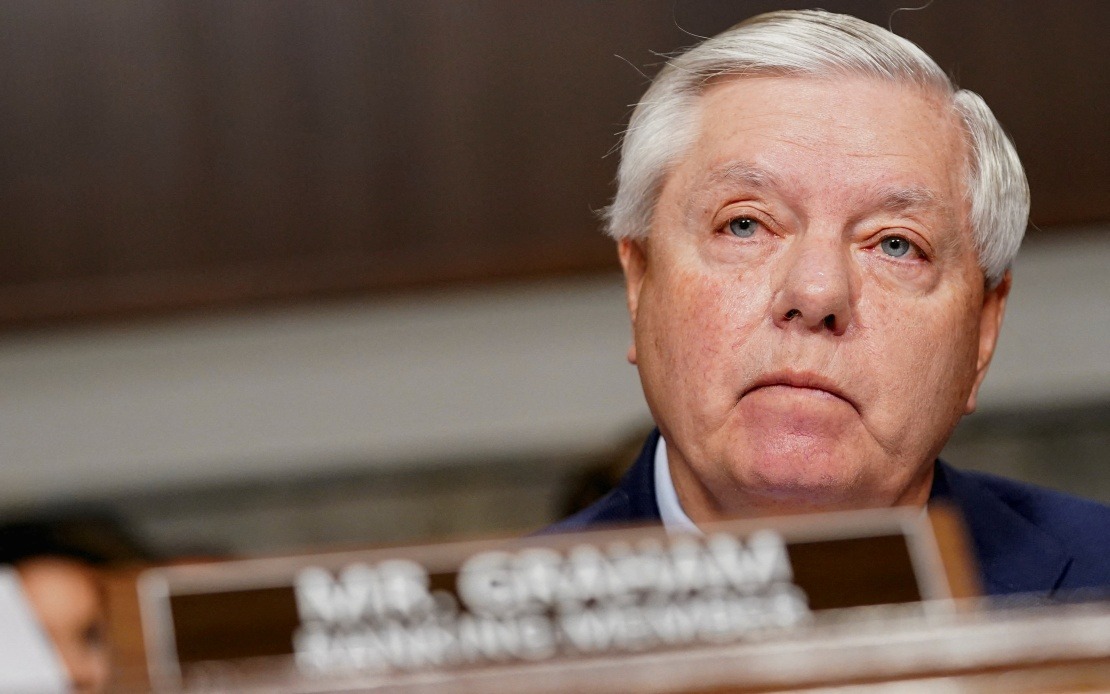
Prominent United States Senator Lindsey Graham has died at the age of 71 following what his office described as a brief and unexpected health crisis. The announcement came Sunday morning, with Graham's death occurring on Saturday evening, July 11. His office released a statement expressing that the senator's family sought prayers and privacy during what they characterised as an extremely challenging time.
Graham represented South Carolina as a Republican in the upper chamber of Congress, having first won election to the Senate in 2002. He subsequently secured reelection in 2008, 2014, and 2020, establishing himself as a fixture in American political life for more than two decades. At the time of his death, the senator was actively campaigning for what would have been his fifth consecutive six-year term, with the general election scheduled for November.
The South Carolina senator held considerable influence within Republican ranks and the Trump administration. He chaired the Senate Budget Committee, a position that placed him at the centre of fiscal policy debates. His alignment with former President Donald Trump was well-established, and this relationship had significantly shaped his political trajectory in recent years, making him a notable figure within the broader conservative movement.
Graham's death comes shortly after he undertook a significant international diplomatic mission. Just days before his passing, he had visited Kyiv, where he held meetings with Ukrainian President Volodymyr Zelenskyy on Friday. This trip underscored his engagement with foreign policy matters, particularly regarding the conflict in Ukraine, which had become increasingly central to congressional deliberations.
The senator's unexpected passing marks a significant moment in American political leadership. His tenure in the Senate spanned a period of considerable transformation within the Republican Party and American politics more broadly. Graham had witnessed and participated in numerous major legislative efforts, from defence policy to judicial confirmations, leaving an imprint on the Senate's operations.
For Malaysian and Southeast Asian observers, Graham's death represents the loss of a key American political figure whose positions on defence spending, alliance relationships, and Indo-Pacific strategy carried implications for regional security arrangements. The United States maintains substantial military presence and strategic partnerships throughout Southeast Asia, and senators like Graham wielded influence over funding and policy directions affecting these arrangements.
The timing of his death, mere months before a consequential American election, introduces uncertainty into Republican Senate dynamics. His planned campaign for reelection would have influenced South Carolina's political landscape and potentially affected the composition of the chamber. The process of succession and the special arrangements that would follow represent standard constitutional procedures, yet the loss of an experienced legislator carries practical implications for ongoing Senate operations.
Graham's international engagement, particularly his recent Ukraine visit, demonstrated the activism some American senators maintain regarding global conflicts. His willingness to travel to Kyiv reflected a particular orientation toward American involvement in European security matters, positioning him within a specific school of thought regarding US foreign policy commitments and responsibilities.
The senator's career reflected broader patterns within American conservatism, including the party's evolution on various foreign policy questions and domestic issues. His ability to navigate shifting political currents while maintaining influence suggested adaptive leadership skills that had sustained his electoral success across multiple election cycles and changing political conditions.
In the context of Southeast Asian politics and American regional relationships, Graham's passing removes a voice that had engaged with questions of military aid, alliance strengthening, and strategic competition considerations relevant to the region. The composition of Senate committees and leadership structures influences resource allocation and diplomatic emphasis, making generational transitions in the chamber consequential for partners and allies throughout Asia.

