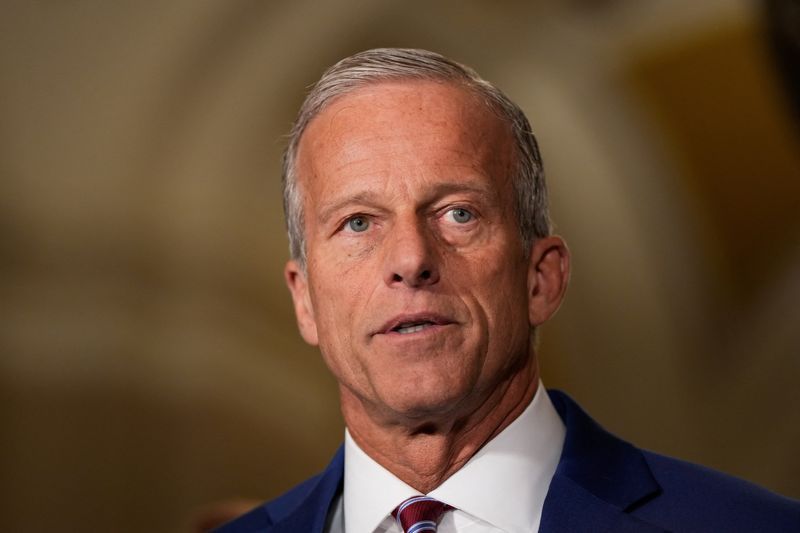
Senate Majority Leader John Thune has initiated procedural steps to advance comprehensive cryptocurrency legislation that could reshape how digital assets are regulated in the United States. The Republican senator filed a motion early on Saturday to schedule a crucial procedural vote on the Clarity Act once the chamber reconvenes in mid-September following its August recess, signalling that Senate leadership believes the bill has a viable path to passage. This tactical manoeuvre suggests Republican leaders are confident they can assemble the necessary coalition to move the legislation forward.
The Clarity Act represents a watershed moment for an industry that has operated in a regulatory grey zone since Bitcoin's emergence in 2009. The legislation would establish the first comprehensive federal framework governing digital tokens, clarifying which are securities subject to Securities and Exchange Commission oversight and which are commodities regulated by the Commodity Futures Trading Commission. For crypto companies, which have long complained about regulatory uncertainty hampering their growth in the United States, the bill promises much-needed clarity that could facilitate innovation and mainstream adoption of blockchain-based financial products and services.
However, securing passage will require navigating partisan divisions that have increasingly characterised crypto policy debates in Congress. To reach the 60-vote threshold necessary to overcome a potential filibuster, Senate Republicans must maintain unified support from all 53 senators in their caucus whilst also convincing at least eight Democrats to vote in favour. This mathematical reality underscores just how contentious the issue remains, with many Democrats harbouring concerns about regulatory gaps and consumer protections in the current draft.
The White House has thrown its considerable weight behind the Clarity Act, with President Donald Trump publicly prioritising crypto reform as a key policy objective during his second administration. Trump's enthusiasm for the sector extends beyond mere policy preference; the president's family has accumulated substantial wealth through cryptocurrency ventures, with Trump reporting over $1.4 billion in income from family crypto enterprises last year. This personal financial stake has become a point of contention among Democratic critics, who argue that government officials should face stricter disclosure and conflict-of-interest restrictions when legislating in areas where they maintain direct financial interests.
The crypto industry's organised campaign to advance this legislation has been remarkably successful in securing political support. Industry groups and companies collectively invested more than $119 million in backing pro-crypto candidates during the 2024 election cycle, demonstrating their willingness to mobilise substantial resources to advance a legislative agenda that would benefit their commercial interests. These investments appear to have paid dividends, with the Clarity Act now poised for consideration and potential passage.
For Malaysia and Southeast Asia, the passage of US crypto legislation holds significant implications. As a region home to increasingly sophisticated cryptocurrency markets, trading platforms, and blockchain technology startups, developments in the world's largest economy often set precedents that ripple across international financial markets and regulatory frameworks. A clear US regulatory regime could either encourage or discourage institutional adoption of cryptocurrencies depending on how restrictive or permissive the final rules prove to be. Malaysian regulators, already engaged in crafting their own digital asset frameworks through Bank Negara Malaysia and the Securities Commission, will likely study the Clarity Act closely for lessons about balancing innovation with consumer protection.
A major sticking point in negotiations concerns provisions that could allow cryptocurrency firms to offer interest-bearing accounts on stablecoin holdings, effectively functioning as banking services without traditional bank licensing requirements. The banking sector has actively opposed such language, warning that it would create an unlevel playing field and potentially threaten the competitive position of established financial institutions. Democrats have aligned with banking interests on this issue, using it as leverage to extract concessions regarding conflict-of-interest rules for government officials engaged in cryptocurrency ventures.
Trump's administration has already achieved one significant crypto policy victory, signing legislation supporting dollar-backed stablecoins into law last year. The Clarity Act would represent an even more sweeping win for the cryptocurrency industry and an administration eager to demonstrate tangible policy achievements to its supporters. The legislative sequencing is noteworthy: rather than attempt passage before the August recess when parliamentary schedules are congested, Senate leadership chose to position the bill for consideration in mid-September when members return refreshed and procedural obstacles may prove less formidable.
The negotiations around conflict-of-interest restrictions for government officials remain ongoing and fluid, suggesting that final deal-making could resolve partisan disputes if Democrats succeed in embedding stronger safeguards against potential corruption or self-dealing. These discussions will likely prove decisive in determining whether the bill can attract sufficient Democratic support to clear the 60-vote threshold. As the Senate prepares for its recess, the Clarity Act represents one of the most significant pieces of unfinished business awaiting resolution, with implications that will extend well beyond Wall Street into emerging markets throughout Asia-Pacific where cryptocurrency adoption continues accelerating.

