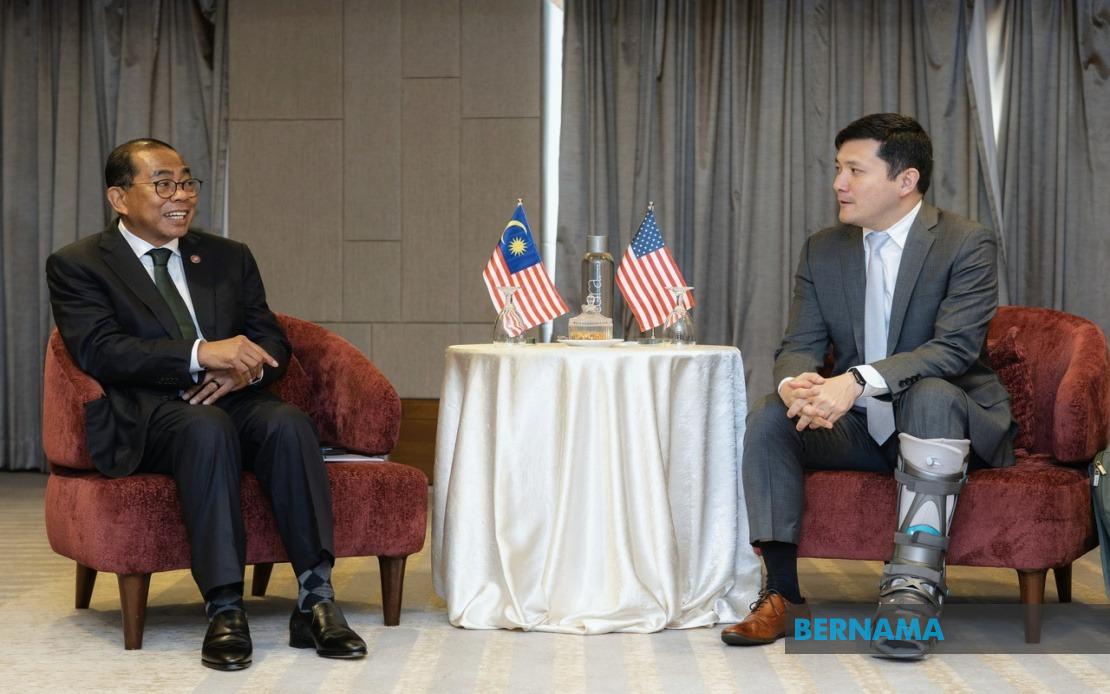
Malaysia's Defence Minister Datuk Seri Mohamed Khaled Nordin has highlighted the United States' continued dedication towards enhancing bilateral defence relations during diplomatic engagements held on the sidelines of the 37th Annual Military Law and Operations Conference in Kuala Lumpur. The assertion comes following a courtesy call from US Ambassador to ASEAN Kevin Kim, who conveyed Washington's strategic intent to maintain and deepen collaborative efforts across the defence spectrum with Putrajaya, underscoring the importance both nations place on their military partnership within the broader Indo-Pacific context.
The ministerial discussion centred predominantly on reinforcing the existing framework of cooperation between Malaysia and the United States rather than deliberating on substantive policy shifts. According to Mohamed Khaled, the exchange reflected a mutual commitment to nurturing the defence relationship, which has evolved as a cornerstone of regional security architecture. The Ambassador's visit signified Washington's recognition of Malaysia's pivotal role in maintaining stability across Southeast Asia and the broader Asia-Pacific region, where geopolitical competition has intensified considerably in recent years.
Beyond the American delegation, Mohamed Khaled fielded courtesy calls from other distinguished regional figures, including ASEAN Secretary-General Dr Kao Kim Hourn and Singapore's newly appointed Permanent Secretary for Defence Joseph Leong. These consecutive engagements underscored Malaysia's prominent position within the regional security framework and its diplomatic significance as a nation bridging various multilateral defence mechanisms. The convergence of these high-level visits during the MILOPS conference demonstrated the interconnected nature of security cooperation across Southeast Asia and the central role Malaysia occupies in these arrangements.
The discussion with ASEAN Secretary-General Kao Kim Hourn touched upon multifaceted challenges confronting the Association and strategies for leveraging the defence sector's contributions toward sustaining ASEAN Centrality. Both officials acknowledged that the region's military establishment carries substantial responsibility in upholding the foundational principles that have governed ASEAN's operations, particularly concerning the maintenance of peace, stability and economic prosperity. This dialogue reflected growing recognition that traditional security cooperation must be complemented by collective efforts to address non-traditional security threats ranging from maritime challenges to transnational concerns.
In addressing cooperation frameworks, Mohamed Khaled emphasized that both Malaysian and ASEAN leadership concurred on the defence sector's instrumental role in consolidating intra-regional collaboration among member states. This perspective becomes increasingly relevant as Southeast Asian nations navigate complex geopolitical terrain characterized by great power competition and evolving security paradigms. The defence community's capacity to foster practical cooperation at bilateral and multilateral levels has emerged as crucial for sustaining the region's strategic autonomy and ensuring that no single external power can dominate the area.
Joseph Leong's engagement with the Malaysian Defence Minister signified Singapore's commitment to perpetuating and expanding defence cooperation with Malaysia on multiple operational levels. As a newly appointed Permanent Secretary, Leong's commitment to strengthen bilateral ties carries particular significance, suggesting continuity and potential enhancement of the existing relationship. The interaction underscored how senior defence bureaucrats from neighbouring countries actively nurture partnerships that transcend immediate bilateral interests to encompass broader regional security considerations.
The scope of Malaysia-Singapore cooperation extends beyond bilateral channels into multilateral frameworks, particularly through the Five Power Defence Arrangements, a long-standing security mechanism involving Malaysia, Singapore, Australia, Britain and New Zealand. This institutional arrangement represents one of the region's most durable security partnerships, facilitating coordinated defence efforts and intelligence-sharing among like-minded nations committed to regional stability. The continued emphasis on FPDA cooperation during the ministerial meeting indicates that both nations recognize the enduring relevance of this mechanism in an increasingly uncertain security environment.
The 37th MILOPS Annual Conference, hosted in Kuala Lumpur from August 3 to 6, assembled defence and governmental officials representing more than 30 countries for substantive discussions on regional security challenges and cooperation modalities. This gathering provided an opportune platform for bilateral and multilateral diplomatic engagements, enabling nations to reaffirm strategic partnerships and explore innovative approaches to contemporary security concerns. The conference's focus on legal dimensions and operational aspects of military cooperation reflected sophisticated understanding that effective defence collaboration requires robust institutional frameworks and adherence to international legal principles.
For Malaysian stakeholders, the reaffirmation of American commitment to defence partnership carries tangible implications for regional security architecture. As the United States navigates its strategic priorities in the Indo-Pacific, Malaysia's geographical location, maritime position and institutional capacity make it an increasingly valuable partner in maintaining freedom of navigation and regional balance. The strengthening of defence ties creates opportunities for enhanced intelligence-sharing, training collaboration, and coordinated responses to emerging security threats, from piracy to maritime territorial concerns.
The diplomatic emphasis on defence cooperation also reflects Malaysia's successful navigation of complex geopolitical relationships with both Western powers and other major players in the region. By maintaining robust defence partnerships with the United States while simultaneously engaging comprehensively with ASEAN and other regional partners, Malaysia demonstrates a pragmatic approach to security policy that prioritizes national interests while contributing to collective regional stability. This balanced posture has become increasingly valuable as international relations grow more multipolar and regional nations seek strategic flexibility.
Moreover, the confluence of these high-level defence discussions occurring within Malaysia signals the country's growing prominence as a venue for regional security dialogue and its recognition as a responsible steward of multilateral defence cooperation. The hosting of MILOPS and the calibre of delegations engaging with Malaysian leadership underscore how Kuala Lumpur has established itself as an important nexus for security discussions affecting the entire Southeast Asian region and extending into the broader Indo-Pacific sphere.

