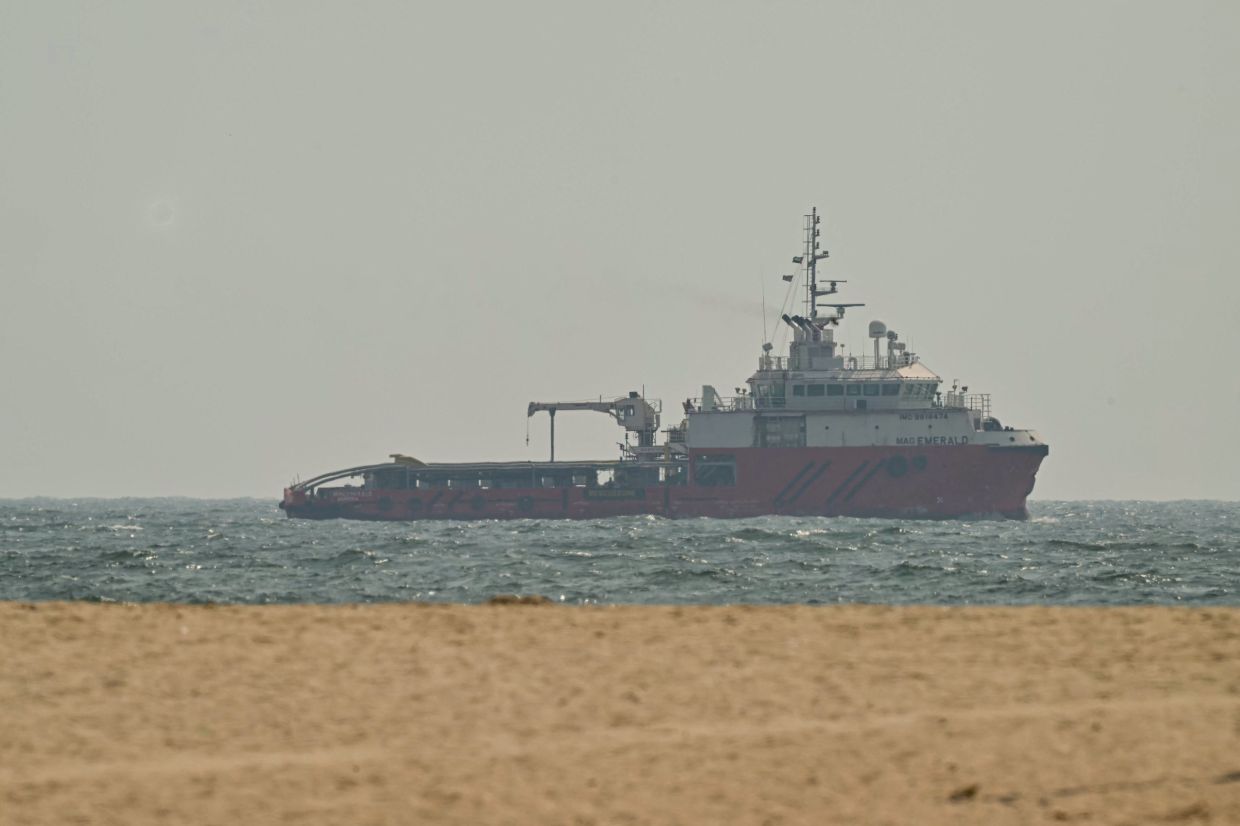
Diplomatic efforts to stabilise one of the world's most strategically vital waterways have intensified as the United States demands an explicit Iranian commitment to cease attacks on commercial vessels transiting the Strait of Hormuz. The development comes as President Donald Trump declared an end to the ceasefire between Washington and Tehran, marking a significant escalation in rhetoric even as both sides maintain ongoing negotiations through intermediaries. Iran's Foreign Minister Abbas Araqchi travelled to Oman on Saturday to address arrangements ensuring safe passage for shipping, with American officials seeking a formal, public undertaking from Tehran that the crucial waterway will remain open for international commerce without disruption or imposed tolls.
The collapsing ceasefire reflects the fragile nature of recent diplomatic progress aimed at resolving a conflict that has destabilised the entire Gulf region since airstrikes commenced on February 28. Trump's announcement that the US would continue talks whilst simultaneously declaring the ceasefire terminated represents a calculated negotiating stance, projecting strength whilst keeping diplomatic channels open. Senior American officials disclosed that the administration is specifically demanding Tehran acknowledge it will permit unrestricted access through the strait, which conveyed approximately one-fifth of global oil supplies before recent hostilities disrupted maritime commerce. The symbolic importance of such a public pledge extends beyond logistics—it would constitute an explicit Iranian capitulation on a matter that Tehran considers central to its regional standing.
Oman's role as a neutral mediator has become increasingly significant throughout these negotiations. The sultanate, which maintains diplomatic relations with both Washington and Tehran, hosted the latest round of discussions as part of broader efforts to prevent further military escalation. Reports indicate that high-level American delegations including Vice President JD Vance, Secretary of State Marco Rubio, special envoy Steve Witkoff and Jared Kushner were expected to lead negotiations, though confusion persisted regarding whether talks would occur in-person or through virtual channels. The involvement of such senior figures underscores the gravity with which the Trump administration views both the immediate maritime security situation and the broader strategic competition with Iran.
However, the Iranian government's response suggests deep scepticism about American intentions. Foreign Minister Araqchi accused Washington of violating the previous ceasefire agreement, particularly pointing to the revocation of crude oil sales licenses following the targeting of vessels earlier in the week. State media quoted Araqchi declaring that "there can only be mutual compliance," a formulation that implicitly rejects American claims of good faith. Iran's semi-official news agencies further suggested that Tehran views the US position as non-negotiable posturing rather than genuine diplomatic flexibility. The contradiction between Trump's declaration that the ceasefire was finished and the simultaneous continuation of talks created confusion about whether meaningful negotiation remained possible.
The immediate trigger for the current breakdown involved attacks on commercial tankers registered to Qatar and Saudi Arabia operating within the strait. These incidents prompted robust American military responses targeting Iranian installations, which Tehran subsequently answered with strikes against US military positions stationed throughout Gulf states. While Iranian officials have declined to claim direct responsibility for the shipping attacks, analysts widely acknowledge that such operations serve Tehran's broader negotiating strategy, applying pressure on international actors whilst preserving deniability. Senior US officials subsequently attributed the incidents to an "errant part" of Iran's command structure, language seemingly designed to provide Tehran with face-saving cover for de-escalation without requiring explicit acceptance of responsibility.
The maritime security crisis directly impacts global energy markets and poses particular challenges for the Trump administration heading towards November congressional elections. Oil prices experienced their most significant weekly increase in eight weeks following the renewed hostilities, a development that threatens to increase fuel costs for American consumers at a politically inopportune moment. The Strait of Hormuz's critical importance to worldwide energy supplies means that even temporary disruptions cascade through global markets, affecting economies from East Asia to Europe. Malaysia and other Southeast Asian nations dependent on stable energy prices face exposure to these geopolitical fluctuations, as crude oil represents both a crucial import for many regional economies and a commodity affecting manufacturing competitiveness.
Iran has coupled its negotiating demands with explicit security threats, with massive crowds at Supreme Leader Ayatollah Ali Khamenei's funeral bearing banners declaring intentions to assassinate Trump. The Wall Street Journal reported that Israeli intelligence shared assessments with Washington suggesting Iran had recently developed assassination plans targeting the American president. Trump responded by posting stark warnings on social media, stating that "1000 Missiles are Locked and Loaded and aimed at the Islamic Republic of Iran," language that reflected both the escalation in rhetoric and the underlying military capabilities at Washington's disposal. These public threats, rather than being conveyed through diplomatic channels, suggest that both sides are simultaneously attempting negotiation whilst preparing populations for potential further conflict.
The humanitarian cost of the ongoing confrontation has been substantial. Iranian officials reported that US airstrikes on six cities during Wednesday and Thursday killed at least seventeen people and wounded 115 others, figures reflecting the intense military operations that have characterised recent days. The broader conflict, now in its fifth month, has claimed thousands of lives and generated massive displacement, with energy supply disruptions contributing to global economic concerns. These casualty figures underscore that despite the diplomatic activity, military operations continue at significant intensity, challenging any suggestion that ceasefire mechanics remain operational.
The underlying dispute concerns not merely shipping safety but fundamental questions of regional influence and Iran's strategic position. Tehran's ability to disrupt the Strait of Hormuz has long represented a key lever in its confrontation with the internationally superior American military, providing asymmetric leverage that partially compensates for conventional military disparities. By controlling or threatening transit through this vital waterway, Iran has effectively created a stalemate in the broader conflict, preventing decisive American military victory whilst avoiding direct confrontation that would likely prove catastrophic for Iranian interests. The American demand for a public Iranian commitment to cease such disruption therefore represents an attempt to permanently surrender this strategic advantage, explaining Tehran's resistance to Washington's formulation.
Qatari mediators have maintained separate contact with both capitals, attempting to translate military confrontation into diplomatic resolution. Qatari officials met Iranian authorities on Friday to explore de-escalation possibilities and discuss specific arrangements governing Strait of Hormuz passage. This multi-channel approach, with formal negotiations in Oman complemented by Qatari shuttle diplomacy, reflects the complexity of achieving agreement when fundamental interests diverge. Neither side currently appears prepared to concede the essential points the other demands, yet neither wishes to risk further military escalation that could spiral beyond current levels.
Tehran has signalled that any American breach of negotiated commitments would trigger "reciprocal action," establishing symmetrical consequences for bad faith performance. This formulation mirrors American rhetoric warning of massive retaliation against Iranian aggression, creating a situation where both sides possess credible deterrent threats but uncertain control over escalation dynamics. The fragility of the current ceasefire mechanics, combined with the intensity of underlying strategic competition, suggests that even minor incidents could trigger renewed major-power confrontation. Regional stability therefore remains hostage to negotiations whose success remains far from assured.
For Malaysian policymakers and businesses, the implications are substantial and multifaceted. Energy price volatility affects manufacturing competitiveness, shipping costs for regional trade, and inflation dynamics across Southeast Asian economies. The extended nature of Gulf tensions creates permanent uncertainty rather than temporary disruption, complicating strategic planning for corporations dependent on stable energy supplies. Malaysian participation in international efforts to maintain freedom of navigation through this vital waterway gains additional urgency as tensions persist, with regional states benefiting from their traditional non-alignment positioning to encourage diplomatic rather than military solutions. The current negotiating moment, despite superficial appearances of progress, remains precarious and dependent on developments entirely beyond Southeast Asian control.

