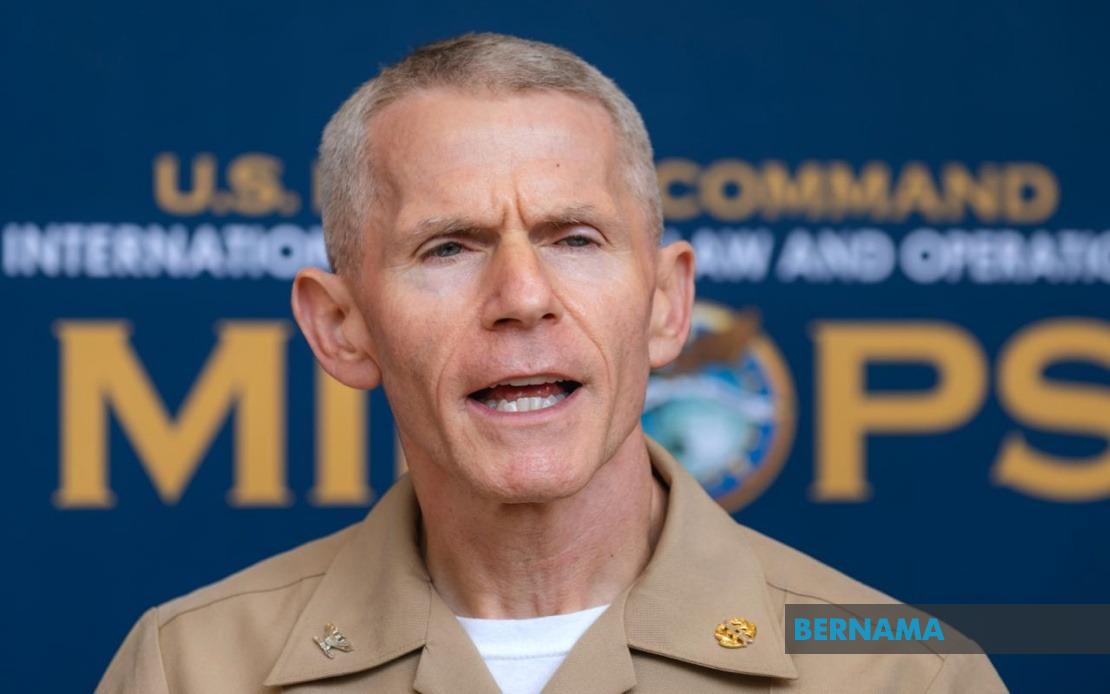
The United States Pacific Command declared its unwavering commitment to preserving peace and stability across the South China Sea, signalling that Washington will sustain its military footprint in the strategically vital waterway as part of a wider Indo-Pacific strategy that prioritizes working alongside regional nations and alliances. The declaration comes as maritime tensions persist across one of the world's most contested sea zones, where overlapping territorial claims and competing strategic interests have repeatedly tested international protocols and bilateral relations.
Navy Captain Dustin Wallace, serving as USPACOM's Staff Judge Advocate, articulated the command's core mission during remarks at a major international military law conference in Kuala Lumpur on Monday. According to Wallace, deterring aggression and preventing destabilizing activities across the South China Sea represents a fundamental operational priority for the American military establishment in the region. This deterrent posture extends beyond individual flashpoints to encompass broader efforts aimed at sustaining the rules-based international order that underpins commerce and security throughout the Indo-Pacific.
Central to USPACOM's regional approach is an unwavering commitment to established principles of international maritime law, which Wallace emphasized serve as shared commitments between the United States and its network of regional partners and allies. Freedom of navigation—the right of vessels to transit international waters unimpeded—and freedom of commerce constitute the cornerstones of this legal framework, enabling the smooth flow of goods and military assets that sustain the region's economic prosperity and security architecture. These principles also reinforce the broader concept of sovereign equality, ensuring that no single power can unilaterally dictate terms or restrict access to shared international spaces.
Wallace's remarks underscored a critical distinction in how USPACOM approaches partnerships across Southeast Asia. Rather than implementing a one-size-fits-all strategy, the command has committed to tailoring its engagement with individual ASEAN members according to their unique strategic interests and policy priorities. This differentiated approach recognizes that nations across the region—including Malaysia, Vietnam, the Philippines, Indonesia, and Thailand—maintain varying levels of concern regarding maritime security, with some more directly affected by territorial disputes than others. By identifying and respecting these distinct sovereign interests, USPACOM aims to build deeper, more sustainable partnerships grounded in mutual understanding rather than imposed doctrine.
The emphasis on ASEAN centrality represents a significant aspect of Washington's regional diplomacy. Wallace stressed that the United States regards the ten-member regional bloc as instrumental to maintaining peace and security architecture across Southeast Asia. This backing for ASEAN's leadership role carries particular weight given ongoing debates within the organization about how to address contentious maritime issues while maintaining consensus and preventing the bloc from fracturing along geopolitical lines. American support for ASEAN's centrality implicitly acknowledges that the association's cohesion and effectiveness depend on respecting member states' sovereignty and allowing the organization to chart its own course on sensitive regional matters.
The broader context for these statements emerges from the 37th International Military Law and Operations Conference, formally designated as MILOPS 26, which convened in Kuala Lumpur from August 3 to 6. Co-hosted by USPACOM, Malaysia's Defence Ministry, and the Malaysian Armed Forces, the conference drew more than 300 participants representing military establishments, legal experts, policymakers, and scholars from over 30 countries, alongside representatives of major international organizations. This gathering reflected a deliberate attempt to foster dialogue and build consensus on complex legal and operational questions affecting regional security and stability.
The conference's thematic focus—"From the Seabed to Space: Advancing Security, Freedom, and Prosperity for All Across the Indo-Pacific"—captured the expanding scope of security challenges confronting the region beyond traditional surface maritime disputes. The inclusion of "seabed" reflects growing concerns about submarine activities and underwater infrastructure, while "space" acknowledges the emerging domain of satellite communications and intelligence gathering that increasingly defines modern military operations. This comprehensive framing suggests that addressing contemporary security challenges requires attention to multiple theaters and dimensions of military competition simultaneously.
For Malaysia and other Southeast Asian nations, USPACOM's reaffirmed commitment carries substantial implications. The country sits at the intersection of global maritime trade routes and regional territorial disputes, making stability in the South China Sea directly relevant to national prosperity and security. Malaysian policymakers have consistently advocated for peaceful resolution of disputes and respect for international law, positions that align closely with USPACOM's stated commitments. The American military presence and diplomatic backing provide reassurance to nations seeking alternatives to unilateral pressure from more powerful regional actors.
However, the American emphasis on supporting ASEAN centrality while simultaneously maintaining a robust military presence reflects an inherent tension in regional geopolitics. Some observers question whether external military deployments genuinely serve ASEAN's interests or instead risk entangling the organization in great power competition. USPACOM's framing of its efforts as supporting member states' sovereign interests rather than imposing a particular strategic agenda represents an attempt to navigate this delicate balance. Whether this approach succeeds depends significantly on how individual ASEAN nations perceive the alignment between American interests and their own strategic objectives.
Wallace's articulation of USPACOM's commitment also reflects broader American strategic thinking about the Indo-Pacific region, which senior U.S. officials have increasingly described as the primary arena for long-term geopolitical competition. Maintaining freedom of navigation and supporting the rules-based order form essential components of this strategy, as they preserve the international legal frameworks that benefit smaller nations and constrain the ability of larger powers to dominate regional affairs through coercive means. This perspective presents American military presence not as a threat but as a stabilizing force that protects the interests of all regional actors.
Looking forward, the sustainability of USPACOM's regional strategy depends on continued alignment with ASEAN members' evolving interests and capacity to demonstrate tangible benefits from closer security partnerships with the United States. As regional nations balance relationships with multiple great powers and navigate their own internal priorities, the ability to maintain genuine cooperation while respecting sovereignty will prove increasingly important. The command's commitment to working with each country according to its respective interests suggests recognition that one-dimensional pressure or strategic demands ultimately prove counterproductive for advancing long-term American objectives in the region.

