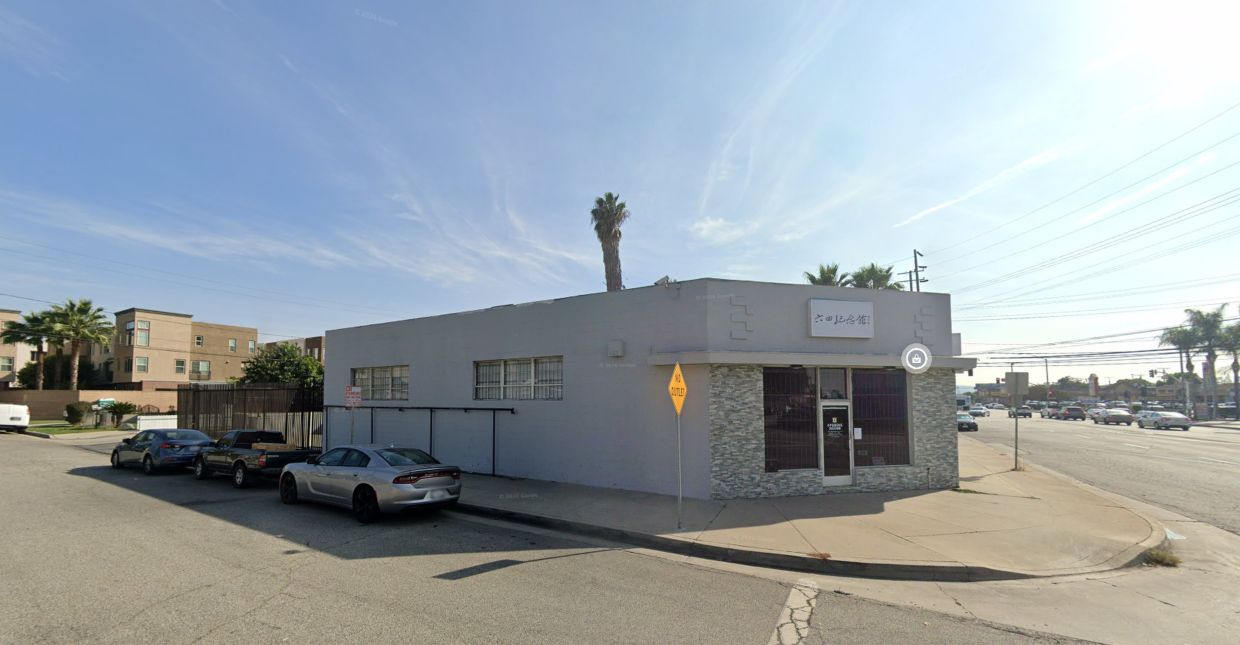
Two prominent Republican congressional leaders have pressed the US Justice Department to conduct a comprehensive inquiry into a break-in at a Los Angeles-area museum honouring victims of the 1989 Tiananmen Square crackdown, raising concerns about potential state-sponsored intimidation targeting Chinese diaspora communities in America. John Moolenaar, chairman of the House Select Committee on China, and Christopher Smith, co-chairman of the Congressional-Executive Commission on China, delivered a formal letter to federal authorities on Thursday requesting that both the Department of Justice and FBI investigate the incident with urgency.
The June 4th Memorial Museum in El Monte, California, which documents the historical events of Tiananmen Square, fell victim to a break-in on May 31, just days before the annual remembrance of the crackdown. According to the museum's official statement, intruders spray-painted interior walls and displays, destroyed property, and deliberately disabled surveillance equipment, leaving what the institution characterised as extensive damage to its collection and infrastructure. Photographs circulated online depicted orange paint markings across framed newspaper clippings and related archival materials, suggesting a deliberate targeting of the museum's exhibits rather than random vandalism.
The museum issued a public statement expressing strong condemnation of the perpetrators while vowing not to be silenced by what it perceived as an intimidation campaign. Management indicated that although the incident contained unmistakable elements designed to threaten and pressure the institution, they would continue their mission unimpeded. The museum further suggested that the break-in might constitute an act of transnational repression—a term describing efforts by foreign governments to suppress dissidents and critics operating beyond their borders—though specific evidence supporting this claim was not disclosed in their public communication.
In their correspondence to federal authorities, Moolenaar and Smith urged investigators to examine whether the attack was planned, encouraged, financed, or executed by individuals connected to, acting under instructions from, or sympathetic to the People's Republic of China or the Communist Party. The framing of this request reflects growing concerns among American policymakers about Beijing's alleged use of coercive tactics against Chinese diaspora groups and pro-democracy advocates within the United States. This approach aligns with broader congressional attention to what many view as extraterritorial harassment of political activists.
The June 4th Memorial Museum represents a relatively young institutional effort, having launched in 2023 after relocating from its original New York location to California to reduce operational expenses. As a non-profit entity registered under US tax code, the museum has relied exclusively on independent fundraising, crowdsourced financial support, and contributions from civil society organisations rather than government funding. According to reports from 2023, fundraising campaigns had accumulated approximately US$500,000 toward an initial goal of US$2 million, indicating the institutional challenges facing independent remembrance projects.
El Monte police have initiated a formal investigation following notification of the break-in, with department officials indicating they have identified certain clues and points of interest relevant to the case. The museum stated its willingness to cooperate fully with law enforcement to resolve the matter expeditiously, suggesting active coordination between the institution and local authorities. However, neither the police department nor the Justice Department responded immediately to inquiries regarding the status or findings of any investigation.
The congressional request carries particular weight given the oversight authority wielded by both lawmakers. The House Select Committee on China, established in January 2023, holds broad investigative powers focusing on American economic and security interests in relation to China, including competitive and adversarial dimensions. The Congressional-Executive Commission on China, an independent federal agency founded in 2000, maintains a mandate to monitor human rights conditions and rule of law standards following Beijing's accession to the World Trade Organization. While neither body possesses direct legislative authority, both exercise considerable influence over congressional deliberations and policy direction.
Beijing's diplomatic mission in Washington did not immediately provide comment on the incident, though Chinese government statements have consistently characterised these congressional bodies as lacking credibility and driven by Cold War ideological frameworks and anti-China bias. China has repeatedly dismissed such committees as political instruments rather than objective analytical entities, dismissing their findings and recommendations as inherently skewed.
For Malaysian observers and Southeast Asian policymakers, the incident illuminates broader regional dynamics concerning political expression, diaspora activism, and the mechanisms through which major powers seek to influence communities beyond their immediate sovereignty. The case demonstrates how commemorative institutions dedicated to historical events—particularly those challenging official state narratives—operate in an increasingly contested transnational space. As Chinese communities throughout Southeast Asia engage with similar historical and political questions, the security and operational challenges facing such institutions merit careful consideration from regional analysts and civil society advocates.
The incident also underscores the strategic importance congressional committees place on monitoring alleged Chinese efforts to suppress dissent and political speech within the United States. Whether the investigation ultimately identifies specific connections to Chinese state actors or concludes the break-in resulted from unrelated criminal activity, the episode has already achieved one effect: heightening awareness among American political leadership about vulnerabilities facing institutions dedicated to sensitive historical narratives within Chinese communities.

