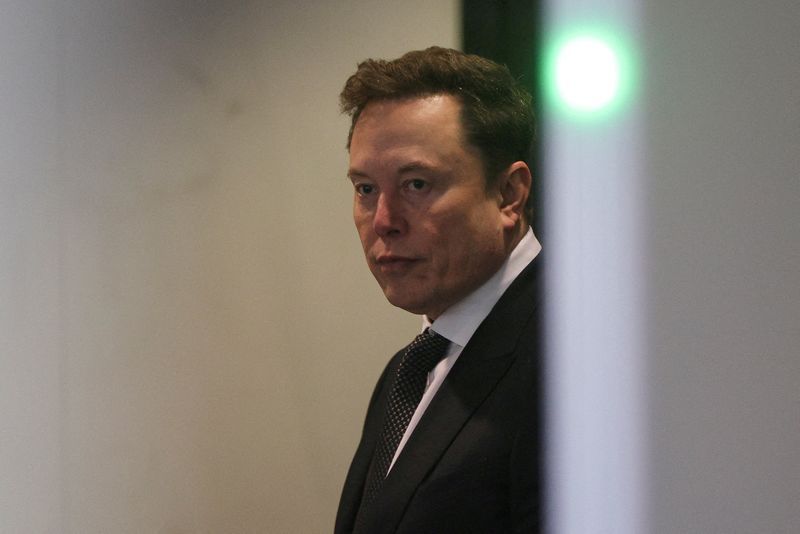
A federal judge in Washington, D.C., has greenlit the U.S. Securities and Exchange Commission's settlement with Elon Musk regarding his purchase of Twitter shares, yet her approval came laced with scepticism about whether the agreement adequately disciplined the billionaire entrepreneur. U.S. District Judge Sparkle Sooknanan acknowledged significant misgivings about the deal on Wednesday, suggesting that it raised troubling questions about regulatory evenhandedness and the robustness of accountability mechanisms for the world's wealthiest individuals.
The settlement requires a trust established in Musk's name to pay $1.5 million to resolve SEC allegations that he waited eleven days longer than legally permissible to disclose his early acquisitions of Twitter shares in March and April 2022. According to the SEC's calculations, this delayed disclosure timing enabled Musk to purchase shares at depressed prices, resulting in estimated savings of approximately $150 million before other investors became aware of his significant stake. Musk has consistently characterized the disclosure lag as unintentional, and the settlement does not require him to admit wrongdoing or to return the gains he obtained through the delayed announcement.
The crux of Judge Sooknanan's scepticism centred on what she perceived as unusually lenient terms for someone of Musk's stature. She explicitly questioned why the SEC abandoned its typical practice of pursuing disgorgement—the forced return of ill-gotten profits—to compensate investors harmed by his conduct. The regulator's justification that it had not historically pursued disgorgement in comparable cases struck the judge as potentially circular reasoning that conflated past practice with current propriety. This line of questioning carries particular significance for Malaysian and regional investors who rely on predictable, consistent enforcement of securities laws to protect their market participation.
Judge Sooknanan further probed the SEC's decision to structure the settlement such that Musk's trust, rather than Musk himself, would pay the penalty. This architectural choice allowed the billionaire to publicly declare vindication and claim he had been exonerated, despite settling allegations that he violated securities disclosure requirements. The judge's concern reflects a deeper anxiety about regulatory credibility: when enforcement actions allow alleged violators to emerge with reputational unblemished, the deterrent effect on future misconduct diminishes substantially, and the message to markets becomes muddied.
Additionally, Judge Sooknanan raised pointed questions about whether Musk received singular treatment designed exclusively for him. She noted that SEC lawyers litigating the case appeared genuinely surprised when Musk's legal team revealed during a May hearing that settlement negotiations were already underway—a disconnect suggesting that the deal may have been negotiated at leadership levels without full coordination with the agency's enforcement team. The settlement announcement came in May, shortly after Margaret Ryan, the SEC's enforcement chief, departed the agency in March following merely six months in the role. Ryan's exit followed clashes with agency leadership over the direction of the enforcement programme, adding another layer of complexity to the timeline and decision-making process.
The judge's written decision carefully navigated her constrained judicial role. She acknowledged that courts reviewing consent decrees cannot operate as blanket rubber stamps for regulatory settlements, but neither can judges function as omnbudsmen second-guessing every prosecutorial discretion call. Sooknanan ultimately deferred the broader political question to voters, writing that whether the executive branch, through the SEC, had sufficiently held Musk accountable for his alleged violations was fundamentally a matter for citizens to decide through electoral processes. This framing, while judicially appropriate, underscores the limits of judicial oversight when regulators and powerful figures reach accommodation outside courtroom adversarialism.
Musk's relationship with regulatory processes has consistently generated controversy, particularly given his advisory role to Republican President Donald Trump during Trump's first term. Judge Sooknanan was appointed by former Democratic President Joe Biden, and her expressed misgivings may reflect broader partisan tensions regarding regulatory capture and preferential treatment. The optics of a billionaire with political connections settling enforcement action for a small fraction of alleged gains at remarkably lenient terms inevitably invites scrutiny about whether the regulatory system operates equitably across different echelons of wealth and influence.
From a Southeast Asian perspective, this settlement carries implications for how international capital markets function and how investors assess regulatory risk. The Twitter share purchase occurred in early 2022 and culminated in Musk's $44 billion acquisition of the entire platform in October 2022, subsequently rebranded as X. The social media platform now operates as part of his broader commercial empire, encompassing SpaceX and Tesla, alongside numerous other ventures. Musk's wealth, estimated at $927.2 billion according to Forbes, represents the accumulated consequence of operations spanning multiple jurisdictions and regulatory regimes, underscoring how outcomes in US securities law reverberate through global investment behaviour.
The SEC defended its settlement by asserting that no collusion shaped the terms and that the $1.5 million penalty represented the largest of its category, though Judge Sooknanan's scepticism suggested that emphasizing record penalty sizes when the underlying violations generated $150 million in gains rings hollow. The SEC also highlighted that the settlement included an injunction effectively binding Musk when he acts through the trust—the vehicle through which he manages substantial portions of his wealth. Yet whether such an injunction carries meaningful teeth remained unresolved in the judge's reasoning.
The settlement's approval, despite judicial misgivings, illustrates a persistent tension in contemporary securities regulation: the preference for negotiated resolution over protracted litigation collides with concerns that settlement frameworks inadequately vindicate injured parties or deter future violations. For Malaysian investors and policymakers evaluating whether to encourage their capital into US markets or to strengthen protections for domestic investors facing foreign entities, this episode suggests that even the world's most developed regulatory systems struggle with asymmetries in enforcement capacity and political insulation. The judge's articulated concerns, while ultimately overruled by her acceptance of the settlement, serve as a public record of doubts about regulatory evenhandedness that investors and regulators alike must grapple with.

