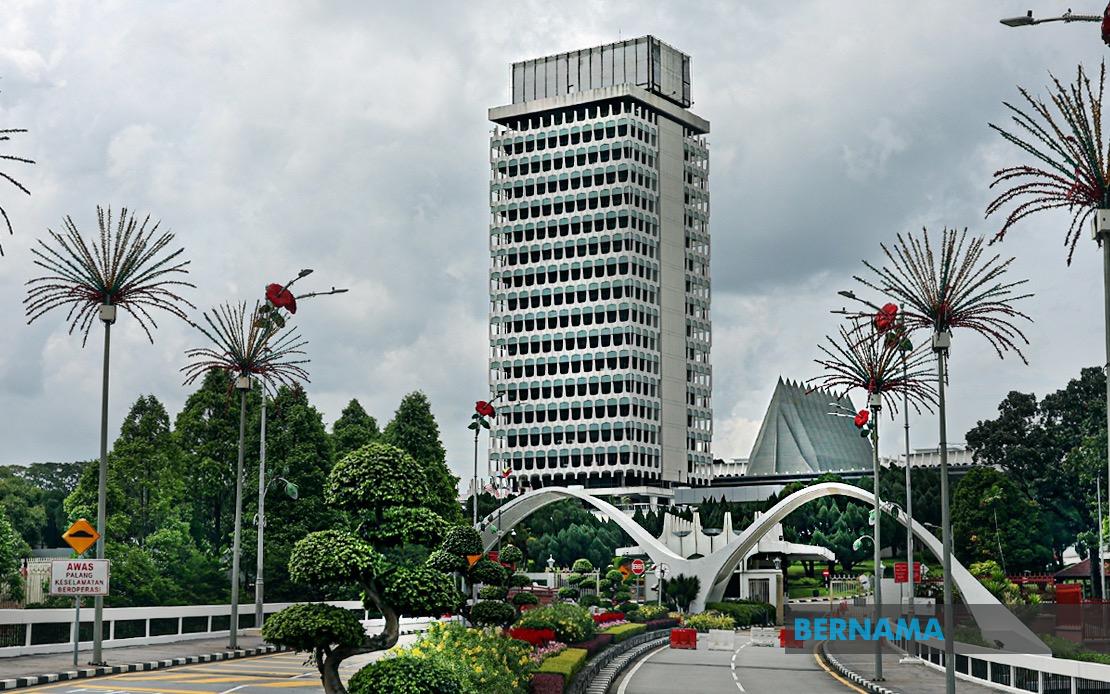
Malaysia's diplomatic stance on a nascent American-Iranian accord to resolve military tensions in West Asia will come under parliamentary scrutiny today, reflecting growing regional interest in the Middle East conflict and Kuala Lumpur's potential role as a stabilizing voice. The Dewan Rakyat sitting, convening at 10 am, has scheduled multiple questions touching on the security architecture of the wider region and how Malaysia intends to advance peace initiatives, signalling that foreign policy remains contested terrain across the political spectrum.
Datuk Mohd Isam Mohd Isa, representing the Barisan Nasional-held Tampin constituency, will direct his ministerial question to the Foreign Minister, seeking clarity on Malaysia's response to the reported Memorandum of Understanding between Washington and Tehran. Beyond merely acknowledging the accord, his inquiry will press the government on the concrete measures it plans to undertake to anchor a durable settlement in West Asia, a region where Malaysian economic and security interests intersect significantly. The framing of this question underscores how regional peace directly affects Malaysian shipping routes, energy supplies, and the safety of citizens working across the Middle East.
Simultaneously, the parliamentary agenda reflects domestic concerns that have animated Malaysian politics in recent months. Datuk Rosol Wahid, the Hulu Terengganu member from Perikatan Nasional, will interrogate the Minister of Domestic Trade and Cost of Living on the rollout of the MADANI Mart initiative, a signature government programme aimed at making essential goods more affordable for low-income households. His questions will seek specifics on how many physical outlets have opened since launch, the volume of applications from aspiring vendors, and the overall entrepreneur participation metrics, essentially requesting an audit of implementation fidelity against original targets.
The MADANI Mart scheme represents one facet of the administration's broader effort to address cost-of-living pressures that have preoccupied Malaysian voters since inflation spiked following the pandemic. Parliamentary attention to such details suggests that opposition figures and backbench members remain unconvinced the programme has achieved sufficient scale or impact, or that they wish to highlight gaps in execution that might reflect poorly on ministerial stewardship. The specificity of Wahid's inquiry—outlet counts, application numbers, entrepreneur profiles—indicates Parliament intends to hold the government accountable for granular delivery metrics, not merely aspirational announcements.
A third line of questioning will tackle synthetic drug abuse, another persistent public health menace that has gained political salience. Khoo Poay Tiong of the Pakatan Harapan-aligned Kota Melaka seat will ask the Home Minister to furnish statistics on addiction cases involving synthetic substances recorded since 2023 onwards, while simultaneously probing the government's tactical response to rising consumption patterns. His particular emphasis on fentanyl—a potent synthetic opioid that has devastated North American communities and increasingly penetrated Asian markets—suggests lawmakers recognize the emerging transnational narcotic threat and expect the ministry to articulate a coherent counter-narcotics strategy tailored to this evolving menace.
Fentanyl's emergence in Malaysia and the region represents a qualitatively distinct challenge from traditional opium-based dependency, requiring supply-chain interdiction, forensic pharmaceutical expertise, and medical responses calibrated to its extreme potency. Parliamentary attention signals that drug policy has transcended law enforcement alone, now encompassing health, border security, and international cooperation frameworks. The government's answer to this question will illuminate whether Malaysia's drug control apparatus has adapted sufficiently to confront a synthetic frontier that conventional rehabilitation infrastructure may struggle to address.
Trade negotiations with the United States will also surface in parliamentary discourse. Datuk Seri Hamzah Zainudin, the Larut representative from Perikatan Nasional, will pose questions to the Minister of Investment, Trade and Industry regarding implementation of the Agreement on Reciprocal Trade (ART) framework between Malaysia and the United States. This accord carries significant implications for Malaysian exporters, tariff schedules, and preferential market access, yet parliamentary scrutiny suggests uncertainty or concern about how zealously the government has pursued reciprocal advantage in bilateral talks. Lawmakers may harbour doubts about whether negotiators sufficiently protected sensitive sectors or secured adequate concessions for Malaysian industries competing against larger American counterparts.
Beyond the question-and-answer period, the legislative agenda includes three bills scheduled for first reading: the Prisons (Amendment) Bill 2026, the Competition (Amendment) Bill 2026, and the Competition Commission (Amendment) Bill 2026. The prisons amendment signals ongoing efforts to reform and modernize the correctional system, while the paired competition bills suggest the government intends to strengthen regulatory frameworks governing market conduct and anti-monopoly enforcement. These measures indicate that Parliament remains engaged in a broad modernization agenda spanning law enforcement infrastructure and economic regulation, though the substantive details and controversies surrounding these bills will become apparent only during committee-stage deliberations.
Today's parliamentary session thus encompasses the full spectrum of contemporary Malaysian governance: international relations and regional security, domestic welfare and anti-inflation measures, public health emergencies, trade negotiations, and legislative reform. The breadth and variety of topics underscore Parliament's role as a forum where government accountability, policy scrutiny, and competing visions for Malaysia's future are aired and contested across factional lines. Members from multiple coalitions—Barisan Nasional, Perikatan Nasional, and Pakatan Harapan—will each voice distinct priorities and challenge ministerial assumptions, ensuring that executive power remains subject to legislative oversight.

