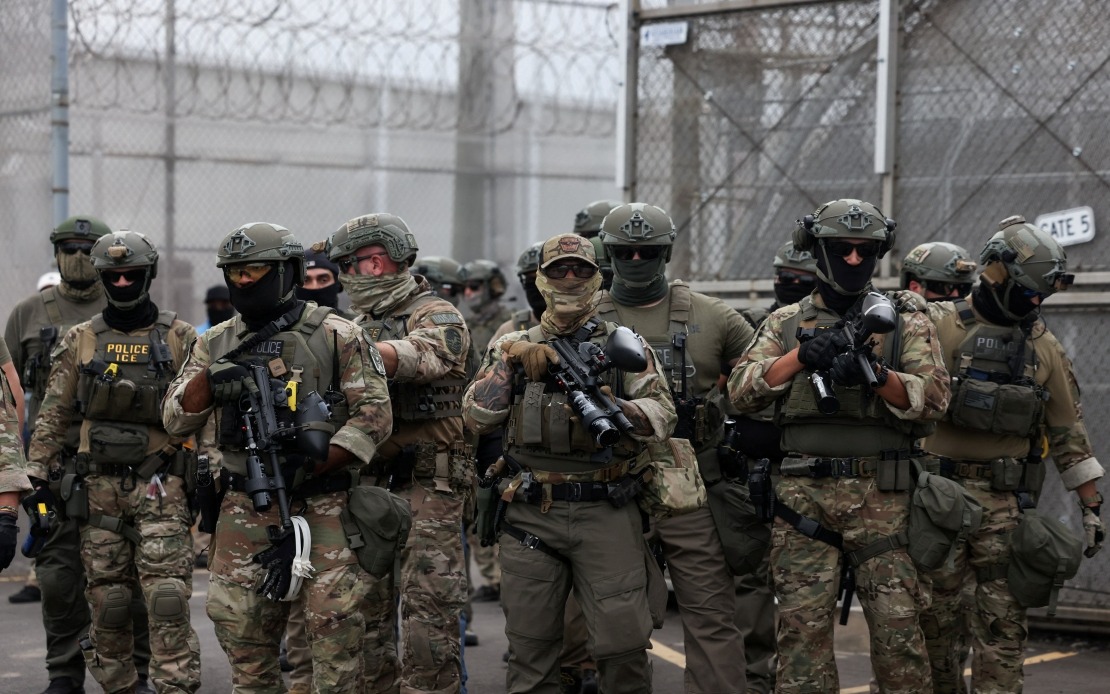
A federal judge in California has issued a nationwide injunction preventing United States Immigration and Customs Enforcement from conducting arrests at immigration courthouses, dealing a significant blow to the Trump administration's approach to handling undocumented migrants. The ruling effectively halts what immigration advocates have long described as a troubling practice that undermines fundamental legal protections and deters foreign nationals from appearing before judges in their deportation cases.
The practice of arresting migrants within or near immigration court premises became widespread during the previous year, with ICE officers routinely apprehending individuals both before and after their legal hearings. This tactic raised serious concerns among legal experts and civil rights organisations, who argued that it created an atmosphere of fear that discouraged migrants from attending court proceedings they were legally required to participate in. The strategy appeared particularly aggressive at the beginning of the Trump administration's second term, when new internal guidelines were established that explicitly promoted the advantages of conducting courthouse arrests as part of the government's immigration enforcement operations.
Immigration courts throughout the United States handle the most sensitive cases in the nation's immigration system—those involving migrants who face potential deportation and removal from American territory. These courts operate under the principle that all individuals, regardless of immigration status, are entitled to due process protections and the opportunity to present their case before a neutral adjudicator. The courthouse arrest practice directly threatened this fundamental principle by creating circumstances where individuals could be taken into custody before, during, or immediately after their scheduled hearings, regardless of whether they had completed their legal proceedings.
The judicial decision hinged on the government's failure to adequately justify the policy change or to address legitimate concerns about its potential negative consequences. The judge found that when ICE modified its approach at the start of Trump's second term and introduced revised guidelines emphasizing the purported benefits of courthouse arrests for immigration enforcement, the agency had not provided a sufficiently reasoned explanation for the policy shift. This deficiency in administrative justification rendered the new practice vulnerable to legal challenge and provided grounds for the court's intervention.
For Malaysian and Southeast Asian observers, this development carries significant implications for understanding how democratic systems respond to executive overreach in immigration enforcement. Malaysia itself has experienced considerable internal debate regarding the treatment of irregular migrants and asylum seekers, particularly in relation to how enforcement activities are balanced against humanitarian concerns and legal protections. The California court's decision demonstrates how judicial review can serve as a counterbalance to immigration enforcement policies that prioritize apprehension numbers over procedural fairness.
The ruling also reflects broader international concern about access to justice for vulnerable migrant populations. When individuals facing removal fear attending their own court hearings due to the risk of arrest, the integrity of the entire legal process becomes compromised. Courts cannot function effectively if parties are prevented from appearing, and deportation decisions made in absentia raise questions about the legitimacy of the outcomes. This concern resonates across Asia, where millions of migrant workers depend on functioning legal systems to protect their rights and interests.
Importantly, the judge's analysis emphasised that ICE's approach lacked sufficient consideration of how courthouse arrests might discourage migrants from exercising their legal right to appear before an immigration judge. By removing the safety associated with attending court, the policy effectively punishes migrants for seeking due process protections—a practice that contradicts the foundational principle that courts should be forums accessible to all parties involved in legal disputes.
The injunction applies nationwide, meaning ICE officers across all fifty states and US territories are bound by the ruling. This comprehensive scope prevents the government from circumventing the decision by shifting courthouse arrest operations to different jurisdictions or regions. The nationwide application also means that the impact extends to major immigration processing centers and courthouses throughout the country, from the southern border regions to established immigrant communities in major metropolitan areas.
For migrants contemplating whether to attend their immigration court hearings, this decision provides substantial protection against the specific fear of arrest that had deterred many from appearing. However, the ruling does not prevent ICE from conducting enforcement operations at other locations or from arresting migrants through alternative means. The decision specifically targets the practice of arresting individuals at courthouses, reflecting the judge's concern that this particular tactic fundamentally undermines the judicial process.
The government's failure to provide adequate justification for the policy change suggests that the administration may face difficulty sustaining this enforcement approach in future litigation. Administrative law principles generally require that government agencies provide a reasoned explanation when they depart from previous policies, articulate the benefits of new approaches, and address legitimate concerns about potential harms. The judge's finding that ICE had not met these requirements indicates that the legal foundation for courthouse arrests remains problematic.
As this ruling works its way through the appellate process, it will likely remain closely monitored by immigration law experts and policymakers worldwide. The decision addresses fundamental questions about how enforcement agencies should balance the pursuit of immigration law violations against the government's obligation to maintain fair and accessible courts. These tensions between security priorities and due process protections are not unique to the United States; similar debates occur across Southeast Asia and globally as nations grapple with migration management.
The broader significance of this judicial action lies in its affirmation that even during periods of strict immigration enforcement, constitutional and legal protections remain applicable. Courts have acknowledged that while governments possess authority to enforce immigration laws, this authority must be exercised within boundaries established by constitutional law and administrative procedure requirements. This principle will likely influence how immigration enforcement policies are evaluated and potentially challenged in other jurisdictions and contexts moving forward.