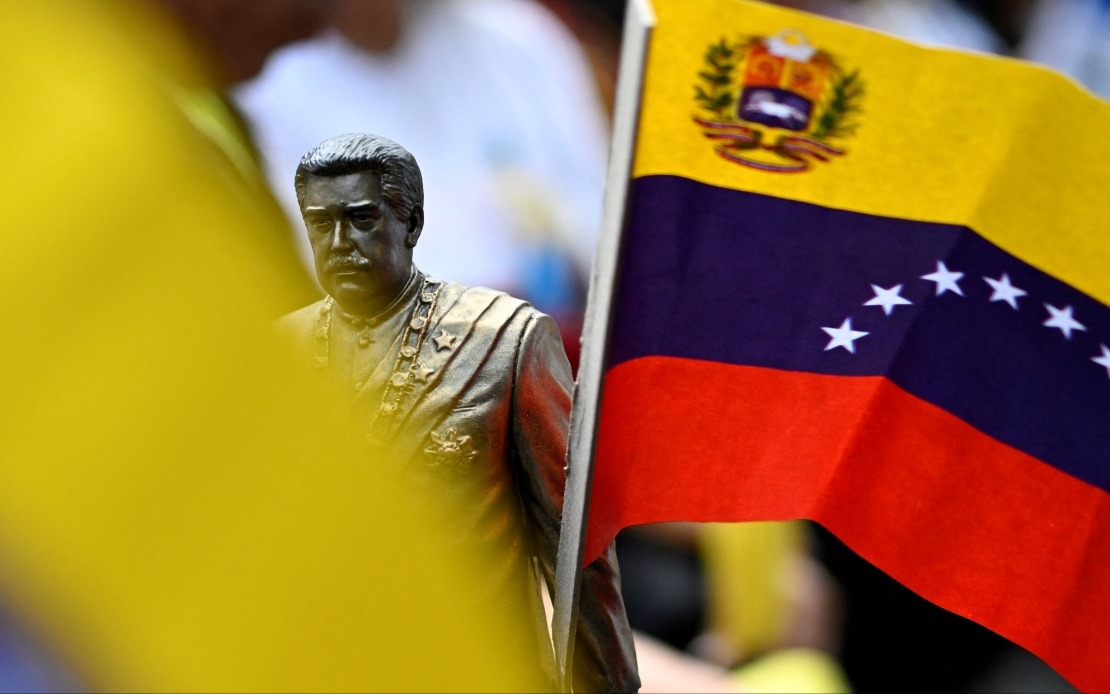
A federal judge in New York has determined that Venezuelan President Nicolas Maduro and his wife Cilia Flores will stand trial beginning June 1, 2027, on charges related to drug trafficking and firearms offences. The decision, announced by Judge Alvin Hellerstein during a brief court hearing on Wednesday, represents a significant milestone in a case that has stirred considerable controversy over its origins and legality. Both defendants, who maintain their innocence, appeared in the Manhattan courtroom for what amounted to a procedural session lasting only 15 minutes, during which legal representatives from both the prosecution and defence presented arguments that led to the judge's ruling on the trial timeline.
The proceedings come nearly seven months after a dramatic military operation in early January, when United States armed forces conducted what officials describe as a targeted operation that resulted in the seizure of Maduro and Flores from Venezuela and their subsequent transport to detention facilities in Brooklyn. This extraordinary rendition has become the focal point of intense international scrutiny, with numerous countries and analysts questioning the legality and precedent of such direct military action against the leader of a sovereign nation. The couple has remained incarcerated at the Metropolitan Detention Centre in Brooklyn since their arrival, where they have awaited judicial processing of the charges they face.
Maduro's legal team, led by attorney Barry Pollack, has already signalled its intention to pursue an aggressive defence strategy that centres on challenging the foundational validity of the indictment itself. Specifically, Pollack has indicated plans to file a motion asserting sovereign immunity protections, arguing that as the sitting head of state of Venezuela at the time of the alleged conduct, Maduro should be shielded from prosecution in foreign courts. Should this motion succeed, it could potentially eliminate the entire case without requiring the government to prove its allegations on the merits. This constitutional argument represents a potential avenue for dismissal that legal observers consider one of the most formidable obstacles the prosecution faces in moving toward trial.
For readers in Malaysia and across Southeast Asia, this case carries significant implications for understanding evolving norms around international law and state sovereignty. The situation raises fundamental questions about the limits of military power and whether established principles governing relations between nations remain operative in practice. Malaysia, as a nation that has consistently advocated for respect for national sovereignty and non-interference in internal affairs, has reason to watch this case closely as it may establish precedents affecting all developing nations.
Outside the Manhattan courthouse on Wednesday, a considerable gathering of protesters assembled to voice their opposition to what they characterised as an unlawful abduction and politically motivated prosecution. Demonstrators from various anti-war organisations and solidarity movements held signs and chanted slogans, drawing attention to what they described as a violation of international law. Allison Gunderson, a protester who travelled from Minneapolis to participate in the demonstration, articulated a widely shared concern among the assembled crowd, stating that the United States was prosecuting the democratically elected leader of another nation following what she termed an illegal kidnapping.
Tom Burke, representing the Anti-War Action Network's steering committee, elaborated on the protesters' core objection, asserting that the combination of the abduction, detention, and trial proceedings collectively violates established international legal frameworks. Burke employed forceful rhetoric to characterise the operation, describing it as tantamount to armed robbery perpetrated at the state level. His comments reflected broader anxieties among critics regarding what they perceive as a troubling erosion of respect for international law and institutional constraints on military power. Burke further suggested that these actions have damaged global perceptions of American credibility and trustworthiness, a concern that resonates particularly in regions like Southeast Asia where nations carefully balance relationships with major powers.
Sara Flounders, a political commentator and activist, used the courtroom proceeding as an occasion to underscore the passage of two hundred days since Maduro's seizure, drawing explicit connections between this case and what she characterised as a pattern of American military and political interventions globally. Flounders referenced operations and policies affecting Venezuela, Iran, and Cuba, suggesting these represent part of a broader pattern of extraterritorial assertion of American power. Her remarks captured a perspective held by many observers in the Global South who view such actions within the context of historical patterns of intervention and empire.
The legal framework surrounding the case remains contentious, with fundamental disagreements about jurisdiction and authority. The charges against Maduro include drug trafficking allegations, a category of offence that has often been employed by Western nations to justify interventions in Latin American countries during preceding decades. Critics have questioned whether the accusations genuinely reflect criminal conduct or whether they serve as a pretext for political regime change, a distinction of considerable importance given the geopolitical dimensions of American-Venezuelan relations and broader US policy toward Latin America.
For Malaysia and other ASEAN nations, the precedent established by this case warrants careful attention. The principles at stake—national sovereignty, immunity of heads of state, and the limits of extraterritorial law enforcement—directly affect the security and autonomy of all nations. Should courts validate prosecutions of foreign leaders seized through military force without international authorisation, the implications would extend far beyond the Venezuelan context, potentially affecting any nation whose leaders might face claims of criminal conduct in foreign jurisdictions.
The postponement of trial proceedings until June 2027 provides both prosecution and defence with substantial time to develop their cases and pursue legal strategies. However, it also extends the period during which Maduro and Flores remain detained, raising humanitarian concerns about the conditions and duration of their incarceration. The extended timeline reflects the complexity of the legal questions involved and the jurisdictional challenges that permeate this unprecedented case.
Observers from Southeast Asia and developing nations generally have expressed concern that successful prosecution in these circumstances could establish a dangerous precedent permitting military seizure of foreign leaders followed by trial in American courts. This prospect troubles many nations that lack the military capacity to resist such operations, creating asymmetrical vulnerabilities that depart from established international norms. As the case progresses toward trial, stakeholders worldwide will continue scrutinising whether international legal principles can constrain even the world's most powerful military force.

