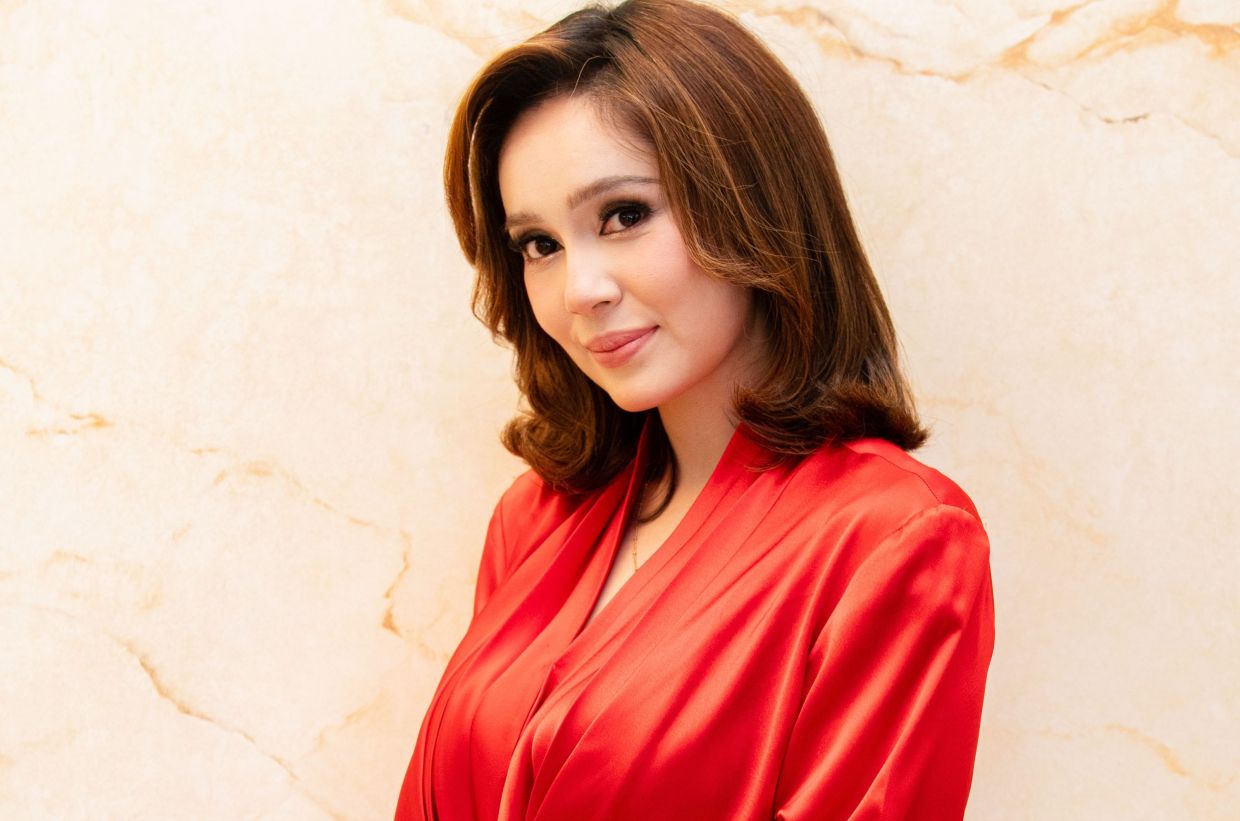
Actress Uqasha Senrose has addressed working alongside her co-star Aliff Aziz on an upcoming television series, navigating the question of separating personal judgment from professional collaboration. The inquiry follows Aliff's highly publicized marital crisis in March 2024, when he became embroiled in a khalwat incident that ultimately precipitated his divorce from Malaysian singer and actress Bella Astillah, the mother of his two children. Despite the controversy surrounding her colleague, Uqasha has maintained that such matters remain outside her purview during filming and that her focus has remained entirely on the craft.
Uqasha's measured response reflects a philosophy of non-judgment grounded in personal humility. In explaining her stance, she acknowledged that everyone carries moral imperfections and that she herself has stumbled in life, using this recognition as foundation for her approach to interpersonal workplace dynamics. She stressed that throughout the production schedule, Aliff demonstrated consistent professionalism, arriving at set prepared and fulfilling his acting responsibilities without incident. From her perspective, maintaining a supportive stance toward a colleague's livelihood and opportunity constitutes an ethical position, regardless of extraprofessional circumstances.
The timing of this collaboration arrives at a particularly significant juncture in Uqasha's own personal evolution. The actress herself has recently navigated the dissolution of her marriage to actor Kamal Adli, having initiated divorce proceedings in October 2025 and finalizing the separation in January 2026. Their union produced one daughter, whom both parents continue to support. During those legal proceedings, Uqasha raised allegations of domestic violence, assertions that Kamal subsequently disputed. This recent upheaval positions her empathetic outlook toward her colleague's struggles within a context of hard-won understanding.
The project bringing these two actors together is a 12-episode series examining the dynamics of polygamous marriage through three principal characters. Aliff portrays Adli, while Uqasha embodies Azura, and actress Elisya Sandha rounds out the central triangle as Nikita. The narrative deliberately explores moral ambiguity, rejecting simplistic characterizations of goodness and villainy in favor of nuanced human complexity. This thematic choice presented Uqasha with a particular artistic challenge: maintaining emotional authenticity while preventing autobiographical pain from contaminating her portrayal.
Uqasha was conscientious about preserving professional boundaries between her lived experience and her character's journey. She determined early that importing her own emotional turbulence into the role would compromise her ability to render Azura as a fully realized, independent character rather than a mere projection of the actress's circumstances. Azura operates according to her own narrative logic and motivational framework, distinct from Uqasha's biography. This disciplined compartmentalization enabled the actress to approach the performance with the interpretive flexibility essential to serious acting.
Yet despite this separation, the physical and emotional demands of the role occasionally overwhelmed her defenses. The character of Azura traverses an extraordinarily painful trajectory, encompassing moments when she believes redemption has arrived only to face fresh tribulation. Several sequences required Uqasha to access profound vulnerability, including a scene involving physical violence in which her character is struck and forcibly moved. The cumulative weight of portraying such suffering, sustained across filming weeks, occasionally penetrated the professional shield she had erected, allowing her to genuinely experience Azura's anguish rather than merely simulating it.
What distinguishes the series in Uqasha's assessment is its refusal of moral clarity. Characters initially presenting as sympathetic may harbor unkindness beneath their comportment, whilst those whose actions read as harsh might possess legitimate motivations explaining their conduct. This thematic sophistication appealed to her and informed her interpretive choices, enabling her to construct a character embodying contradiction and complexity rather than conforming to archetypal victim or villain templates.
Beyond her professional commitments, Uqasha has deliberately recalibrated her personal priorities toward her own flourishing and that of her daughter. The cumulative lessons extracted from periods of difficulty have catalyzed maturation and resilience. Motherhood has fundamentally reoriented her sense of responsibility, instilling recognition that her choices and wellbeing bear direct consequence for another life entirely dependent upon her. This parental consciousness shapes her contemporary approach to career decisions, relationship dynamics, and self-care practices.
For Malaysian audiences observing this narrative, Uqasha's stance holds particular relevance. In a media landscape where public figures face intense scrutiny regarding their personal conduct, her modeling of professional courtesy coupled with personal boundaries offers an alternative to the polarization that often characterizes public discourse. Her willingness to continue working with Aliff suggests a pragmatic understanding that professional spheres can remain functional despite personal controversy, provided all participants maintain appropriate deportment and commitment to their craft. This distinction between private judgment and public collaboration represents a mature navigation of contemporary celebrity culture.
Uqasha's journey from her own recent marital difficulties to her current focus on motherhood and career advancement demonstrates personal growth informed by adversity. Rather than allowing past experiences to embitter her or render her judgmental toward others' misfortunes, she has instead developed a more encompassing worldview acknowledging universal human fallibility. Her approach to working with Aliff thus exemplifies this evolved perspective, suggesting that compassion and professionalism need not constitute naiveté but rather represent conscious choices to build functional collaborations despite extraprofessional complications.

