Universiti Pendidikan Sultan Idris (UPSI) is actively pursuing plans to establish a private specialist hospital in Tanjong Malim as part of a broader strategic initiative to strengthen the institution's healthcare infrastructure and support the emergence of a comprehensive knowledge city ecosystem in the region. The ambitious proposal reflects the university's recognition of evolving needs as both UPSI and the surrounding township continue their trajectory as premier educational and residential hubs.
Prof Datuk Dr Md Amin Md Taff, the university's vice-chancellor, unveiled the initiative while highlighting the growing pressures on existing health services. The proposed facility would specifically address the escalating healthcare demands of UPSI's international student cohort and staff members, populations that have expanded significantly in recent years. By establishing on-campus or nearby medical capacity, the institution aims to ensure that these communities have ready access to quality specialist care without needing to travel considerable distances to urban centres.
The project sits within UPSI's larger strategic framework for institutional development, one that explicitly acknowledges the necessity of building comprehensive support infrastructure to remain competitive and attractive to global academic talent. Rather than proceeding unilaterally, the university is engaged in detailed exploratory work to identify suitable private healthcare operators willing to establish or partner on a specialist facility at or near the campus. This collaborative approach reflects pragmatic recognition that private sector expertise and operational efficiency may be better suited to managing a modern hospital than direct university administration.
Central to UPSI's deliberations is identifying an appropriate business model that aligns with both the university's educational mission and the financial sustainability required for long-term operations. Officials are examining various partnership structures, concession arrangements, and operational frameworks that would permit private hospitals or specialist medical providers to function effectively within or adjacent to the campus environment. Such arrangements are increasingly common at Malaysian universities seeking to diversify their service offerings while leveraging private sector capabilities.
The initiative resonates with broader trends in Malaysian higher education, where universities have begun recognizing healthcare provision as both a fundamental student support service and a potential revenue stream. International students frequently cite available healthcare as a decisive factor when selecting destinations, and gaps in medical provision can deter applications from overseas candidates. For UPSI, which has invested heavily in building its international profile, ensuring comprehensive healthcare accessibility represents a competitive necessity.
Beyond the immediate hospital proposal, UPSI is contemplating an equally ambitious companion initiative: the development of retirement facilities in Tanjong Malim that would enable former university staff to maintain meaningful connections with the institution and campus community during their post-career years. This retirement resort concept addresses a demographic reality facing many Malaysian universities—how to sustain relationships with retired academics and administrators while providing them with secure, purposeful living environments in settings they know well. Such facilities also generate economic activity within university towns and can become distinctive features of campus ecosystems.
These complementary initiatives—specialist healthcare and retirement living—together suggest a holistic vision for Tanjong Malim as an integrated educational township offering services across the lifespan. Rather than viewing the university campus as purely an academic precinct, UPSI's leadership appears committed to cultivating an environment where students, working staff, and retirees can all find their needs met through purpose-built facilities. This integrated approach to campus development aligns with international best practices seen at leading universities globally.
The timing of these announcements reflects UPSI's confidence in the region's trajectory and its own institutional maturity. Perak has increasingly positioned itself as an education hub, and Tanjong Malim benefits from relative proximity to the Klang Valley while maintaining distinct identity and lower operational costs. The university's willingness to invest in healthcare and residential infrastructure signals faith that Tanjong Malim will continue attracting students and professionals, justifying the capital expenditure required for such facilities.
For Malaysian healthcare provision more broadly, UPSI's initiative contributes to the gradual decentralization of specialist medical services away from Kuala Lumpur and Selangor. While the facility would primarily serve UPSI's community, its establishment in Perak could have beneficial spillover effects for the wider region. Specialist hospitals attract medical professionals, support research collaborations between healthcare providers and academic institutions, and can stimulate economic development in surrounding areas through employment and supply chain effects.
The project also touches on an important policy dimension: the role of universities in advancing social infrastructure in their home states. By partnering with private operators to establish healthcare facilities, UPSI positions itself as a development anchor contributing meaningfully to Perak's socioeconomic trajectory. This model—whereby universities leverage their land, reputation, and purchasing power to attract complementary services—increasingly features in state-level economic development strategies across Malaysia.
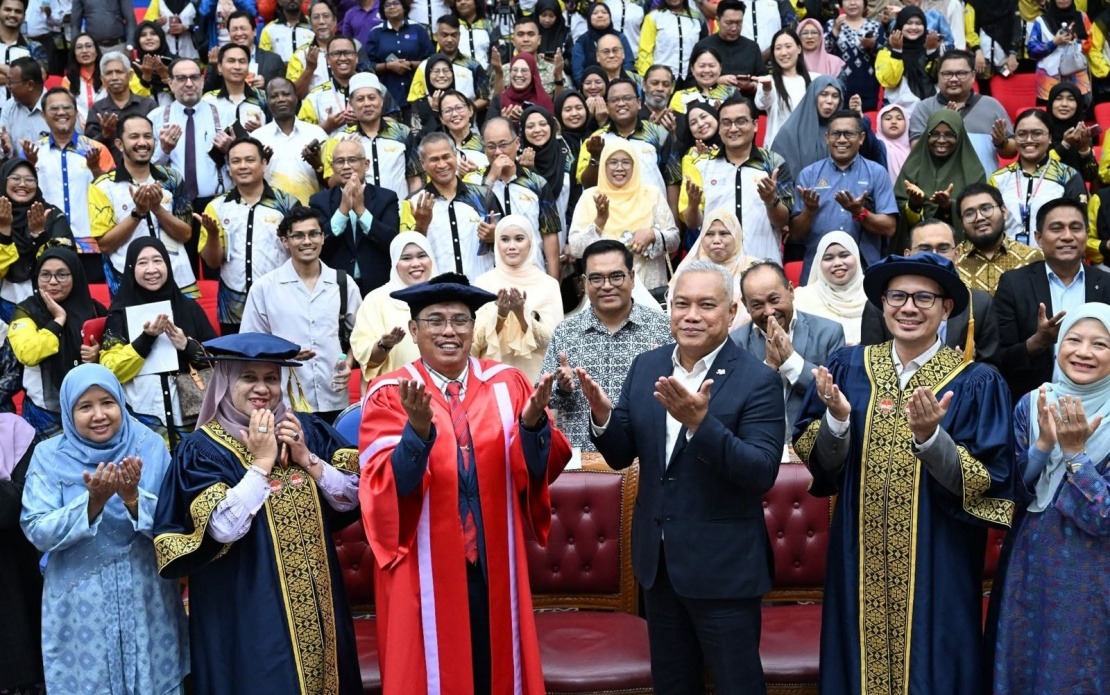
Prof Datuk Dr Md Amin's remarks came during a ceremony honouring Prof Dr Abdul Talib Mohamed Hashim, Dean of the Faculty of Human Development, whose more than two decades of service at UPSI earned recognition for substantial contributions to the institution's academic and administrative development. Such occasions frequently serve as platforms for university leadership to articulate broader institutional vision, and the timing suggests confidence that UPSI's hospital and retirement facility ambitions form part of a coherent, long-term strategic narrative.

