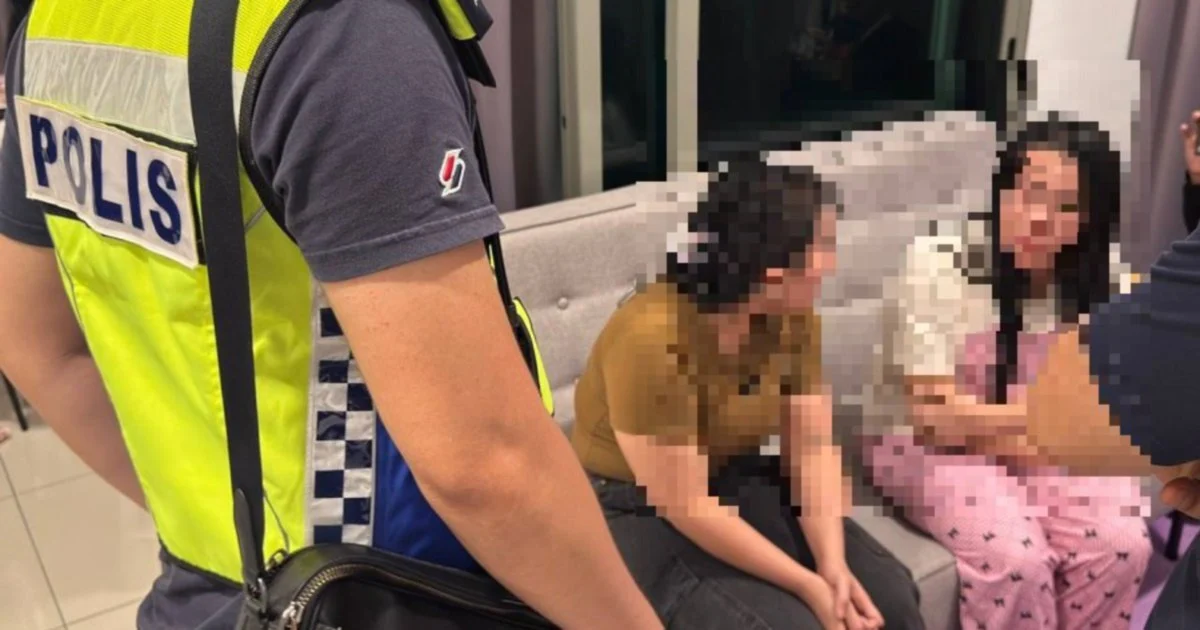
A university student's attempt to generate supplementary income during her academic break took an unexpected turn yesterday when Cyberjaya authorities executed a coordinated police operation against an apartment unit suspected of functioning as an illegal brothel. The incident underscores the mounting economic pressures facing Malaysian tertiary students and the lengths some are willing to go to bridge financial shortfalls during extended breaks from their studies.
The operation, conducted by Cyberjaya police, resulted in the apprehension of the student at the residential unit in question. Officers had been investigating the premises following intelligence reports suggesting that commercial sexual services were being offered from the location. The timing of the raid—during a period when university schedules typically grant students extended leave—points to a concerning pattern whereby financial desperation during such breaks pushes vulnerable young people toward illicit income-generating activities.
Police operations targeting suspected vice dens have intensified across Malaysia's urban centres in recent years, particularly within high-density residential areas such as Cyberjaya, the purpose-built administrative hub located in Selangor. The precinct, which houses numerous government offices and corporate headquarters, has increasingly become subject to enforcement scrutiny as authorities grapple with underground economies operating within residential complexes.
The circumstances surrounding this particular case—a student resorting to sex work to supplement her finances—reflect broader socioeconomic realities affecting Malaysia's higher education population. Tertiary fees, accommodation costs, and living expenses remain prohibitively expensive for many families, particularly those in the lower to middle-income brackets. The semester break, rather than providing relief, often becomes a period of acute financial anxiety when part-time employment opportunities dry up alongside the academic calendar.
University administrators and social welfare organisations have repeatedly flagged the correlation between financial hardship and students' involvement in high-risk activities. The psychological and social toll of such incidents extends beyond the individual arrested, affecting families and raising questions about institutional support mechanisms available to struggling students. Educational institutions across the country have expanded bursary schemes and interest-free loan programmes, yet accessibility and adequacy remain contentious issues.
The legal ramifications for students implicated in prostitution-related offences carry serious consequences under Malaysian law. Such convictions can jeopardise academic standing, professional licensing prospects, and long-term employment opportunities across numerous sectors that conduct stringent background checks. The stigma attached to such convictions often proves more damaging than the immediate legal penalties, effectively closing doors to conventional career pathways for years to come.
Cyberjaya police have indicated that investigations into the operation continue, with authorities examining whether the apartment functioned as an organised vice network or represented an isolated incident. The distinction carries significance, as organised structures typically involve multiple stakeholders—proprietors, facilitators, and protection networks—while isolated cases may reflect individual desperation. Preliminary information suggests this investigation falls somewhere along that spectrum, though formal charges have not yet been detailed.
The arrest highlights the enforcement challenges facing Malaysian police, who must balance vice suppression with victim protection protocols. Growing recognition of trafficking and coercion within commercial sexual exploitation has prompted law enforcement agencies to develop more nuanced investigative approaches. However, implementation remains inconsistent across jurisdictions, with variation in how officers distinguish between voluntary participation and exploitation.
Consumer demand for commercial sexual services remains persistently robust throughout Malaysia's urban landscape, sustaining a thriving underground economy despite legal prohibitions. This mismatch between legislation and social reality creates recurring supply-side crises, as those entering the market to meet demand face escalating legal risks. Students, economic migrants, and others in financially precarious circumstances form the typical supply pool, explaining their overrepresentation among those arrested during police operations.
Policymakers, educators, and social services bodies increasingly recognise that enforcement-only strategies prove insufficient without complementary investment in student financial support infrastructure. Countries that have combined regulated labour protections with robust educational financing mechanisms have demonstrated greater success in reducing student involvement in informal and illegal income-generating activities. Malaysia's approach remains predominantly enforcement-focused, leaving systemic vulnerabilities unaddressed.
The implications of this particular case ripple beyond criminal justice systems into questions about institutional accountability and student welfare. Universities face mounting pressure to demonstrate comprehensive support frameworks that address not merely academic needs but also the material circumstances determining whether students can sustain their studies without resorting to dangerous alternatives. Semester breaks should represent genuine respite periods, not crisis points forcing impossible choices.
Cyberjaya authorities have indicated they are enhancing surveillance protocols around residential complexes suspected of harbouring vice operations. Such expansion reflects legitimate law enforcement priorities but simultaneously underscores the absence of preventative approaches addressing root causes. Until Malaysian society seriously confronts why university students face such acute financial desperation that sex work becomes a viable option, arrest statistics will likely continue accumulating while underlying problems persist unresolved.

