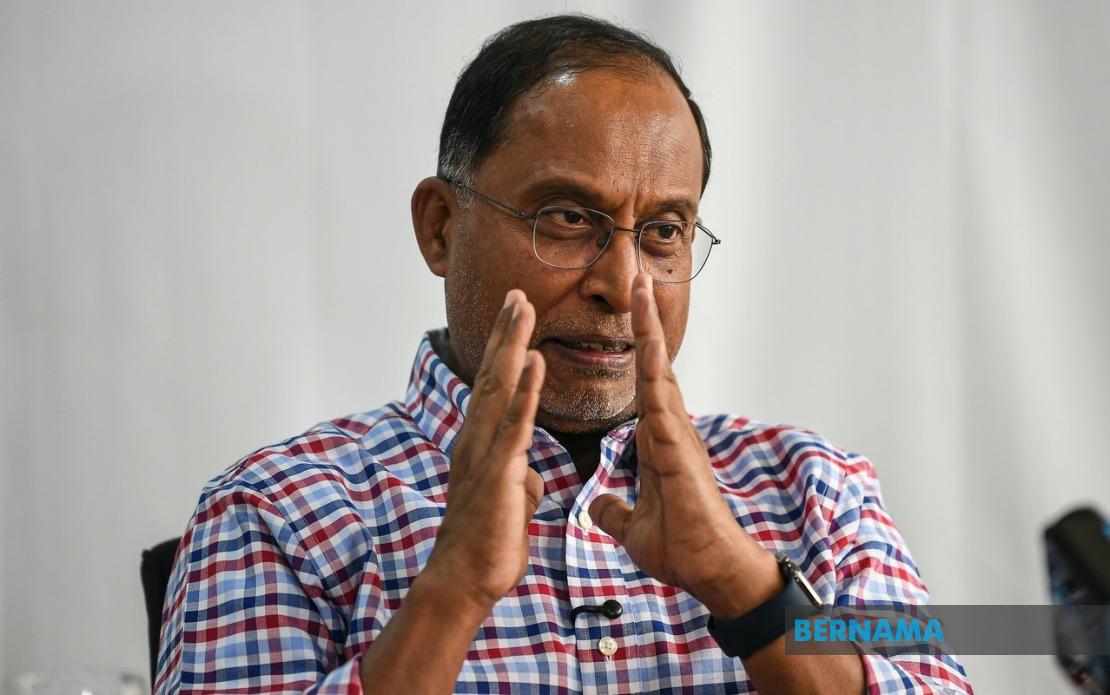
The question of how students gain admission to Malaysia's public universities has become contentious, with claims circulating that between 30,000 and 60,000 young people may have secured places through irregular means rather than formal merit-based processes. Higher Education Minister Datuk Seri Dr Zambry Abd Kadir has issued a forceful response to these allegations, characterising them as potentially damaging to the entire framework of Malaysia's higher education sector at a time when public faith in institutional systems faces broader pressures across the region.
The core concern articulated by the minister centres on the reputational and systemic damage that such unsubstantiated claims can inflict. Beyond the immediate question of whether particular individuals secured university places improperly, the allegations create a broader narrative suggesting that the entire admission machinery operates with compromised integrity. This perception, whether rooted in fact or not, carries serious consequences for prospective students and their families who are currently navigating the application process. When confidence erodes in a system's fairness, it fundamentally undermines the legitimacy of outcomes for all participants, including those who genuinely earned their places through merit.
Databry has been explicit that the admission mechanisms governing Malaysia's public universities rest on transparent procedures anchored to merit and clearly defined eligibility standards. The ministry's position is that these systems were deliberately designed to ensure objective assessment and equal treatment of applicants. Yet the persistence of allegations suggests that a perception gap exists between how the ministry understands the system to function and how significant segments of the public believe it actually operates. This disconnect itself warrants serious attention, as it points to potential communication failures or, more troublingly, to genuine vulnerabilities in implementation or oversight that have gone unaddressed.
Central to the minister's response is a demand for evidentiary substance. He has challenged those advancing these claims to provide concrete facts, detailed data, and coherent methodology supporting their assertions. This burden-of-proof argument carries logical force: accusations affecting the credibility of dozens of institutions and thousands of individuals ought to rest on more than anecdotal concern or generalised suspicion. The minister has framed this as a matter of basic intellectual honesty, arguing that legitimate academic and policy discourse must be grounded in verifiable information rather than speculation presented as fact.
Yet the very fact that several public universities have felt compelled to lodge police reports over these allegations suggests the claims carry sufficient currency to warrant formal investigation. This institutional response indicates that the allegations, whether ultimately substantiated or not, have achieved sufficient prominence and perceived seriousness to demand official attention. The decision to involve law enforcement rather than simply dismissing the claims outright reveals that university leadership views the matter as potentially more than mere rumour, though it remains unclear what specific evidence or incidents prompted the police referrals.
The minister has sought to position the ministry as defender of both institutional integrity and legitimate public discourse. He emphasises that constructive criticism remains welcome and that the government retains openness to identifying genuine problems within the higher education sector. Simultaneously, however, he draws a distinction between criticism backed by evidence and claims presented as accusations without substantiation. This balancing act reflects a broader tension between transparency and accountability on one hand, and protecting institutional reputation and public confidence on the other—a tension that becomes particularly acute when allegations strike at the legitimacy of fundamental processes like admissions.
The invocation of freedom of speech principles in this context deserves careful examination. The minister has argued that while citizens possess the right to express views, this right does not extend to making unfounded accusations without consequence. By characterising unsupported claims as a form of speech that carries responsibility and potential legal consequences, the ministry signals that it will not tolerate what it views as defamatory allegations. Yet this position also raises questions about how Malaysia balances open discourse with institutional protection—questions of particular relevance for Southeast Asian societies grappling with similar challenges around accountability and transparency in public institutions.
For Malaysian students and families, the practical implications of these allegations and the official response extend beyond the immediate question of admission fairness. The controversy reflects broader anxieties about meritocracy and equal opportunity in a competitive educational landscape where university places remain relatively scarce and highly sought after. If public universities are perceived as compromised, students may increasingly channel resources toward private institutions or overseas education, with cascading effects for national human capital development and social mobility. This concern is particularly acute in Malaysia's multilethnic context, where education access carries deep social and political significance across different communities.
The ministry's implicit argument—that those making serious allegations bear responsibility for substantiating them—aligns with standard principles of accountability and evidence-based policymaking. However, the framing also raises a challenge: how should institutional accountability operate when investigating such claims requires access to internal data and processes typically controlled by the institutions themselves? Public universities, though government-funded, maintain significant operational autonomy. If admitted applicants or their families suspect admission impropriety, they may struggle to obtain the information needed to build a credible case, creating an asymmetry in investigative capacity that could leave legitimate concerns unaddressed.
Moving forward, this controversy may prompt meaningful institutional reform regardless of whether the specific allegations prove accurate. The heightened public scrutiny on admission processes could drive universities toward greater transparency in how they select students, the weightings assigned to different criteria, and the mechanisms for reviewing controversial decisions. Such reforms need not reflect any assumption of current wrongdoing; rather, they serve to rebuild confidence and demonstrate genuine commitment to merit-based selection. For Southeast Asian higher education systems more broadly, this moment offers an opportunity to examine admission practices and consider whether existing transparency measures genuinely serve public understanding or merely create the appearance of openness.
Ultimately, the substantiation of these allegations matters profoundly, but so does the broader institutional response. Whether investigations confirm widespread impropriety, identify isolated incidents, or find no evidence of systematic problems, Malaysian universities must emerge from this episode with strengthened systems and demonstrated commitment to transparent, merit-based selection. Public trust in educational institutions represents a foundational element of social cohesion and national development, particularly in diverse societies where questions of fairness carry heightened significance. The Higher Education Ministry's challenge to accusers to provide evidence will likely intensify scrutiny on all parties to this dispute, ultimately demanding accountability and transparency from institutions as well as from critics.