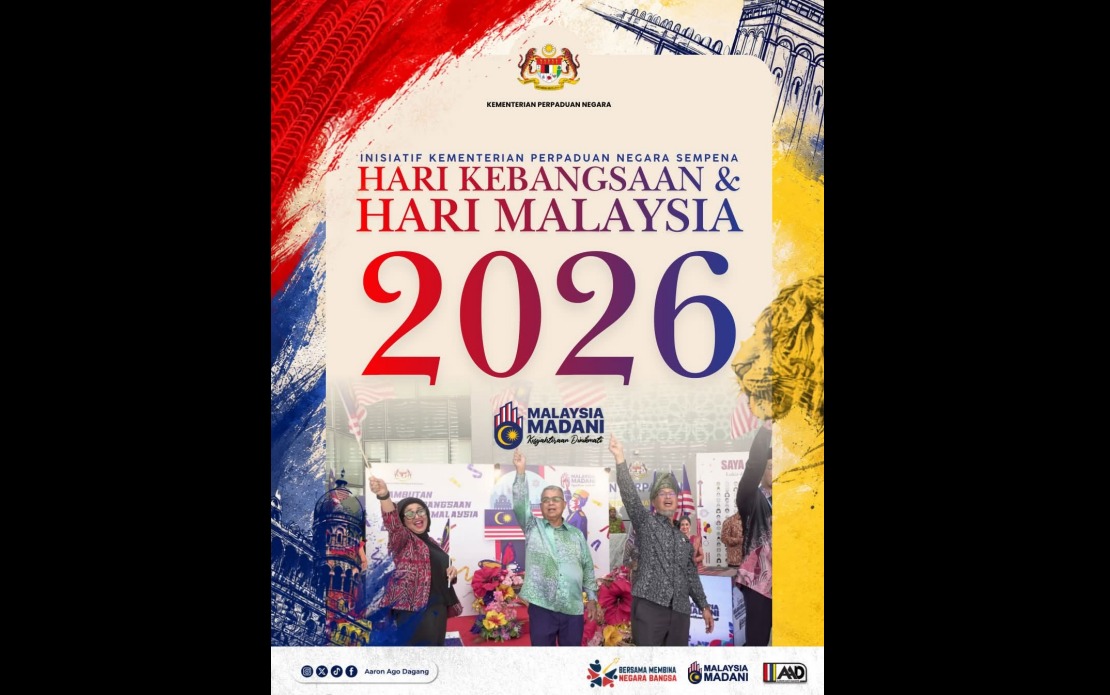
The National Unity Ministry (KPN) has unveiled an ambitious slate of 11 programmes designed to deepen Malaysians' connection to their nation during the 2026 National Day and Malaysia Day commemorations. According to Minister Datuk Aaron Ago Dagang, these initiatives represent a coordinated effort to cultivate patriotism, reinforce the nation-building narrative, and celebrate Malaysia's multicultural heritage during celebrations marking the country's independence milestones.
The ministerial portfolio has structured the planned activities around several thematic pillars that collectively address different dimensions of national identity. The 2026 National Unity Integration Movement will serve as the centrepiece, functioning as an overarching framework within which the subsidiary programmes will operate. Alongside this, the ministry intends to roll out Malaysia's Merdeka Children Celebration, specifically targeting younger demographics to embed nationalist sentiments from an early age. These youth-focused initiatives reflect a strategic recognition that building lasting national cohesion requires intervention across age groups and educational backgrounds.
Educational and commemorative dimensions feature prominently in the ministry's calendar. An Exhibition on Independence will trace Malaysia's historical trajectory, presenting the country's journey from colonial rule to self-governance and contemporary nationhood. Complementing this historical focus, the ministry plans a dedicated programme honouring Tun Abdul Razak, the nation's second Prime Minister, whose administration consolidated Malaysia's early years and shaped foundational nation-building policies. This biographical emphasis underscores how individual leadership legacies become intertwined with collective national narratives.
Cultural and sporting celebrations round out the portfolio, reflecting the ministry's conviction that patriotism can be fostered through diverse engagement mechanisms beyond purely formal or educational channels. The Pesta Bola Merdeka Exhibition will highlight Malaysian sporting heritage and achievement, leveraging the unifying power of sports. The Night at the Museum initiative offers an unconventional, experiential approach to heritage appreciation, likely designed to make institutional collections more accessible and engaging for general audiences. Meanwhile, the Rukun Negara Oratory Competition addresses the constitutional and philosophical underpinnings of Malaysian statehood by foregrounding the five principles that anchor the nation's foundational compact.
Minister Ago Dagang framed these initiatives within the broader context of nation-building aspirations, emphasising that their collective purpose extends beyond ceremonial commemoration. Rather, the programmes aim to construct a robust psychological and cultural foundation for national identity—a particularly salient objective in a multiethnic, multireligious federation where unity cannot be taken as inevitable or automatic. The minister stressed that KPN's commitment centres on strengthening unity while explicitly affirming Malaysia's diversity across ethnic, religious, cultural and geographic dimensions. This formulation acknowledges a fundamental tension within Malaysia's national project: the simultaneous need to forge unity without effacing the legitimate distinctiveness of constituent communities.
For Malaysian readers and policymakers, these initiatives carry implications extending well beyond the 2026 calendar year. They reflect governmental prioritisation of patriotic education and national cohesion at a moment when Malaysia confronts evolving pressures around communal identity and belonging. The spread and variety of activities suggest recognition that singular, top-down approaches to patriotism prove insufficient; instead, the ministry appears committed to reaching different audiences through multiple modalities spanning competitive oratory, sporting exhibition, museum-based learning and children's cultural events.
The temporal positioning of these programmes merits attention. By concentrating initiatives around the 2026 National Day and Malaysia Day occasions, the ministry capitalises on existing public attention cycles and commemorative momentum. These dual celebrations—marking both national independence and the formation of Malaysia as a federation—provide natural platforms for reaffirming the nation's constitutional and historical foundations. Coordinating multiple initiatives around these moments amplifies their cumulative impact compared to dispersed, year-round programming.
From a regional perspective, Malaysia's emphasis on structured patriotism education and national identity programmes reflects trends visible across Southeast Asia, where governments invest significantly in nation-building infrastructure. Unlike some neighbours that employ more restrictive approaches to national narratives, Malaysia's emphasis on embracing diversity whilst strengthening unity demonstrates a particular model of inclusive patriotism. Whether the 2026 initiatives successfully navigate the delicate balance between promoting national cohesion and respecting communal particularities will offer important lessons for other heterogeneous nations grappling with identity questions.
The ministry indicated that additional details regarding implementation, venue locations, dates and participation mechanisms will be communicated through its official social media channels. This decentralisation of information dissemination reflects contemporary communication patterns, though it also places onus on citizens to actively seek programme details rather than receiving them through traditional institutional announcements. The ministry's strategy appears predicated on digital-native engagement, recognising that younger audiences particularly consume information through social media platforms.
Success in executing these 11 initiatives will depend on several factors beyond mere announcement and logistical implementation. Public participation rates, media coverage, and the degree to which participants genuinely absorb intended messages about national unity and patriotic commitment will ultimately determine the programmes' effectiveness. The ministry faces the perennial challenge of converting ceremonial participation into substantive attitudinal shifts—transforming attendance at a museum exhibition or speech competition into deepened national identification and cross-communal solidarity.
Looking ahead, the 2026 programme calendar positions the National Unity Ministry as a central institutional actor in Malaysia's ongoing nation-building project. As the country advances through this decade, initiatives like these serve as visible markers of governmental commitment to strengthening the social bonds that hold the federation together. Whether these specific programmes prove transformative or remain primarily commemorative will depend on implementation quality, public reception, and the broader political and social context within which they unfold.

