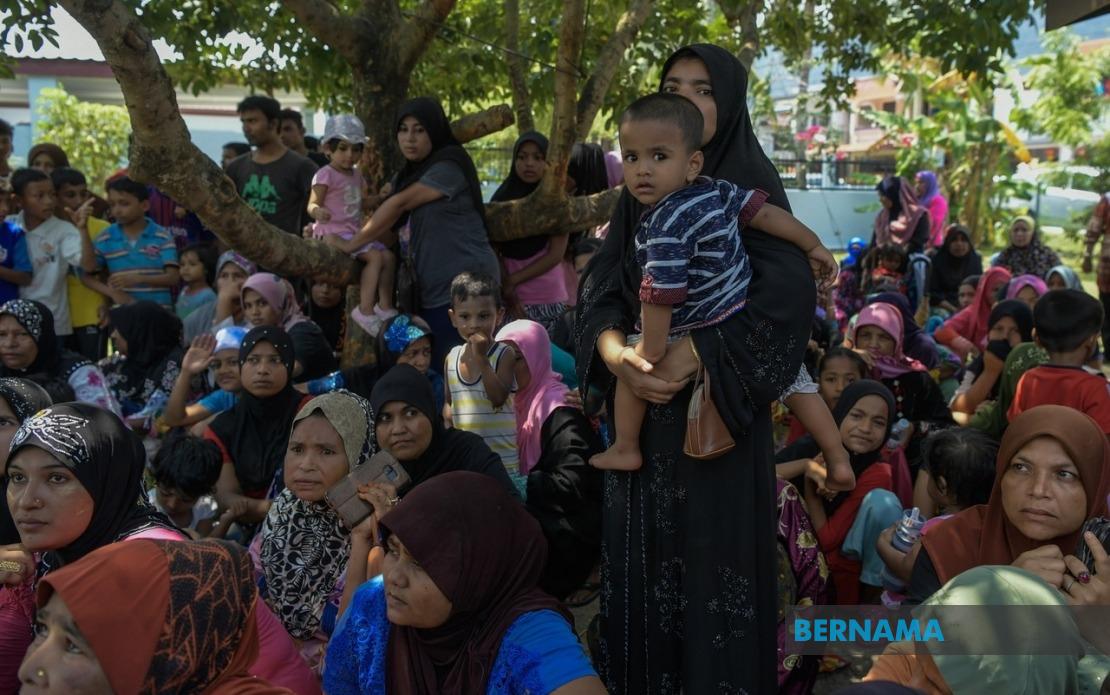
The Malaysian government moved to dispel misconceptions about refugee documentation on July 13, with Economy Minister Datuk Akmal Nasrullah Mohd Nasir emphasising that possession of a United Nations High Commissioner for Refugees card carries no legal exemptions under the nation's judicial framework. Speaking during a Global Supply Crisis Briefing, Akmal Nasrullah underscored that the UNHCR identification is merely a registration document, not proof of citizenship, and that individuals holding such cards remain fully subject to Malaysian criminal and civil law.
The clarification comes as the government intensifies efforts to address public concerns surrounding refugee management, particularly regarding documentation controls, human trafficking networks, and community safety. Akmal Nasrullah indicated that the issue was brought before the National Economic Action Council during a meeting chaired by Prime Minister Datuk Seri Anwar Ibrahim at Parliament, reflecting the administration's priority in tackling these interconnected challenges affecting border integrity and domestic security.
Understanding the distinction between UNHCR documentation and citizenship is crucial for Malaysian stakeholders. The UNHCR card serves primarily as a means of identification for individuals seeking asylum or refugee status pending adjudication. However, in Malaysia's legal context, such documentation does not confer any exemption from ordinary criminal procedure, tax obligations, or regulatory compliance. Anyone carrying out unlawful activities—whether refugee or resident—faces the same investigative processes and legal consequences as any other individual within Malaysian jurisdiction.
The Home Ministry, through its Immigration Department, is rolling out the Refugee Registration Document Programme, commonly referred to by its acronym DPP. This initiative incorporates biometric registration systems, comprehensive screening procedures, and enhanced enforcement mechanisms designed to establish greater clarity over refugee populations within the country. The programme reflects a strategic shift toward data-driven administration of refugee affairs, enabling authorities to maintain accurate records and identify individuals who may pose security or public safety risks.
To support these enforcement operations, the government has allocated RM1.2 billion across multiple agencies for border control and security infrastructure projects. This substantial investment signals the administration's commitment to modernising frontier management capabilities and reducing vulnerabilities that criminal networks might exploit. The funding encompasses technology systems, personnel training, and operational equipment necessary to detect and intercept trafficking activity, document fraud, and unauthorised border crossings.
Parallel to documentary initiatives, integrated operations targeting smuggling rings and human trafficking syndicates are being accelerated. These enforcement actions will combine traditional investigative methods with data analytics and monitoring technology to identify emerging risks and support targeted interventions. The emphasis on technological solutions reflects recognition that trafficking networks operate across borders and jurisdictions, requiring sophisticated surveillance and coordination mechanisms to disrupt effectively.
The expansion of the Malaysian Border Control and Protection Agency represents another structural element in this enforcement architecture. Streamlining operations within this agency is expected to eliminate duplicative procedures and enhance coordination between frontier posts, immigration checkpoints, and interior enforcement divisions. A more efficient border apparatus should reduce processing delays while maintaining security standards, balancing the legitimate movement of goods and persons with protective imperatives.
For Malaysia, managing refugee populations presents a distinct set of pressures absent in many developed nations. The country hosts one of the largest refugee communities in the Asia-Pacific region, creating both humanitarian and administrative challenges. Unlike nations with formal resettlement commitments, Malaysia maintains a policy that refugees remain temporary visitors pending relocation to third countries. This legal status, combined with geographic proximity to conflict zones and trafficking routes, necessitates continuous vigilance and regulatory updating.
Southeast Asian countries increasingly recognise that refugee management cannot operate in isolation from broader security frameworks. Transnational criminal networks exploit refugee communities, recruiting vulnerable individuals or using refugee populations as cover for trafficking operations. By clarifying that UNHCR documentation provides no legal shield, Malaysian authorities are signalling that they will not tolerate exploitation of refugees or use of refugee status as a basis for criminal immunity. This stance protects both refugee communities and the general public.
The government's multi-agency approach indicates that refugee management is transitioning from a purely humanitarian concern toward integrated security policy. The involvement of the National Economic Action Council, traditionally focused on economic matters, suggests recognition that uncontrolled refugee movements carry economic consequences through informal labour markets, strain on social services, and security costs. This holistic perspective aligns with emerging Southeast Asian policy paradigms that treat migration as intersecting with economic development, public health, and security objectives.
For Malaysian citizens and businesses, the clarification offers reassurance that refugee documentation will not create legal ambiguities or enforcement complications. Workers and employers can proceed with confidence that regulatory compliance expectations apply uniformly across all categories of persons within Malaysian territory. This consistency supports the formal economy's functioning and prevents creation of parallel systems where certain populations operate beyond legal accountability.

