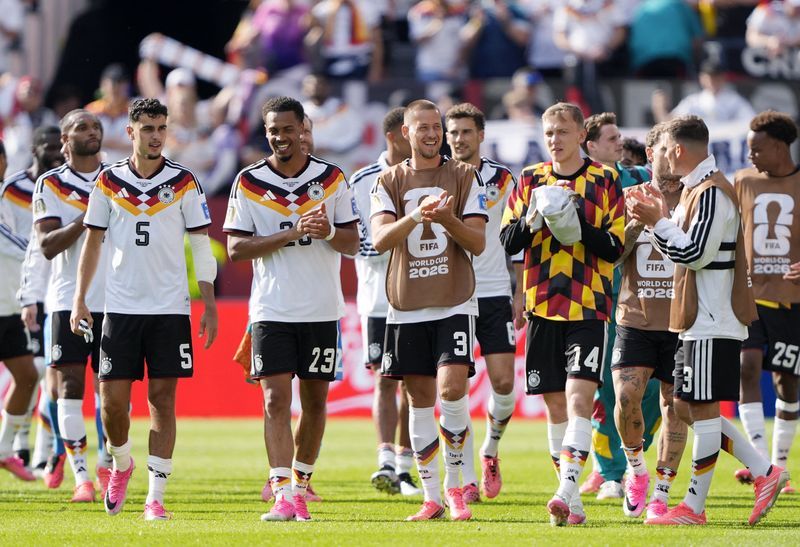
Germany secured their passage to the World Cup knockout rounds for the first time since winning the tournament in 2014, overcoming a determined Ivory Coast side 2-1 in Toronto on Saturday through a pair of substitute strikes from Deniz Undav. The comeback victory at BMO Field demonstrated both the attacking prowess and resilience that defines Julian Nagelsmann's squad, qualities that will prove essential as they progress deeper into the competition.
The match began as a frustrating affair for the Germans, who dominated possession and created numerous opportunities without being able to convert them into goals. Two clear strikes were ruled out by the referee in the opening half—first when midfielder Aleksandar Pavlovic rose to meet a short corner in the 25th minute but was adjudged to have fouled goalkeeper Yahia Fofana in the process, and later when attacking midfielder Jamal Musiala was deemed to have committed a foul during the build-up to what would have been Germany's opening goal. The decisions visibly exasperated the German contingent, particularly the substantial community of over 100,000 people of German descent living in Toronto who filled the stadium with vocal support.
Ivory Coast capitalized on Germany's frustration by taking the lead through midfielder Franck Kessie, who converted a rebound in the first half after Amad Diallo's initial shot had been parried. The goal came after defender Yan Diomande surged down the left flank and delivered a dangerous cross, showcasing the West African side's tendency toward direct, dynamic attacking play that posed intermittent threats throughout the encounter. Notably, Ivory Coast have now extended their tournament-leading streak to seven consecutive matches with at least one goal—a historical record for the nation at the global stage.
With the halftime interval approaching, Germany had recorded eight attempts on goal but had nothing to show for their territorial dominance and intricate passing sequences. The contrast between their controlled build-up play and the clinical finishing of their opponents highlighted a recurring challenge that has occasionally plagued the squad. However, rather than abandon their approach, Nagelsmann's team intensified their pressure during the second half, introducing fresh legs and maintaining their passing-based strategy.
The introduction of Undav proved transformative. The versatile striker, operating from the bench, equalized in the 68th minute with a controlled volleyed finish that demonstrated precise technical execution. Nine minutes later, he completed his brace when he received possession on the turn, swiveled sharply, and fired a shot past Fofana that the goalkeeper had no realistic opportunity to save. Undav's contribution extended an impressive recent run of form—he has now scored nine goals across his last eight matches, a striking rate that underscores his growing importance to the national team's attacking structure.
Ivory Coast mounted a late push to find an equalizer and keep their knockout hopes alive. Winger Simon Adingra created an opening in the final stages but was unable to properly execute his chance in the penalty area, failing to get a clear shot away. Germany responded with their own counter-attack, and defender Nathaniel Brown saw his low effort blocked by Fofana, ultimately preserving the visitors' advantage.
The result leaves Germany atop Group E with six points from two matches and guaranteed passage to the knockout stage, technically the final 32 teams. Ivory Coast, by contrast, remain on three points after two fixtures, meaning they must produce a victory in their final group game to harbor any realistic chance of progressing. The West Africans' remaining challenge comes against Curacao in Philadelphia, while Germany will conclude their group campaign against Ecuador in New Jersey on Thursday.
The match exemplified the unpredictable nature of international football, where momentum, tactical adjustments, and individual moments of quality can transform the narrative within the space of 45 minutes. Germany's ability to absorb early disappointment and respond with clinical efficiency will be essential as they navigate increasingly difficult opponents in the knockout rounds. For Malaysian football enthusiasts and Southeast Asian observers tracking the tournament, the victory reinforces Germany's status as genuine contenders, though their performance also highlights that even heavyweight nations must continually adapt and demonstrate composure under pressure to succeed at the highest level.
The contrast in finishing quality ultimately decided the encounter. While both teams created legitimate chances and demonstrated attacking intent, Germany's eventual clinical execution—particularly through Undav's composed finishes—proved the decisive factor. Ecuador and Curacao's later encounter on Saturday evening will help clarify the final group standings, but Germany's progression is now mathematically assured.

