The women's singles draw at the US Open presents an unusual situation as the tournament begins on Sunday: the two highest-seeded players both carry significant question marks about their ability to contend for the title. Aryna Sabalenka, the top seed, has endured a disappointing second half of the season that threatens to derail her bid for an unprecedented third consecutive US Open victory, while number two Elena Rybakina's recent leg injury in Cincinnati has created genuine uncertainty about whether she can perform at her highest level during the fortnight ahead. This combination of circumstances has effectively lifted the ceiling for other contenders, most notably past winners Coco Gauff and Iga Swiatek, both of whom arrive in New York with considerably more compelling recent form and confidence.
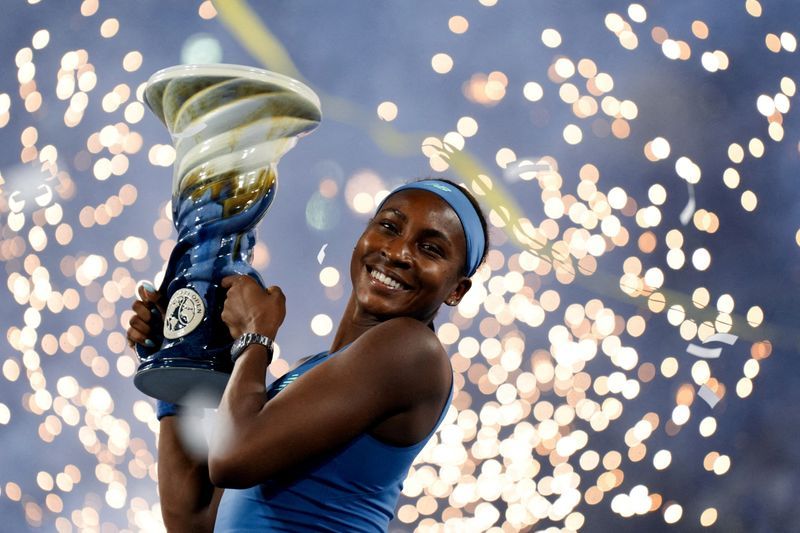
Gauff, seeded fourth, has engineered a remarkable turnaround in recent weeks, particularly with her serve, which had long been considered a vulnerability in her game. The 2023 champion's path through the North American hard court season has been strikingly impressive, reaching the semi-finals in Toronto before capturing her first title of the year with a commanding performance in Cincinnati just days before the US Open began. Her victory in Ohio will inject considerable self-belief heading into Flushing Meadows, where she has consistently benefited from the passionate American crowd that treats her as one of its own. Analyst and former world number four Mary Joe Fernandez echoed widespread sentiment when she observed that Gauff currently appears to be playing the most compelling tennis among the leading contenders, suggesting she must be considered among the tournament favourites despite her fourth ranking.
For American tennis more broadly, Gauff's form arrives at a particularly opportune moment. Her fellow American Jessica Pegula, ranked third in the world, will also carry expectations on her shoulders, as the US women's contingent has failed to reach even a single Grand Slam final across the first three major tournaments of the year—an outcome that has disappointed the American tennis establishment and its supporters. Should either Gauff or Pegula capture the title, it would represent a significant statement of intent about women's tennis in the United States during this transitional period.
Swiatek's narrative is equally compelling, though it has followed a markedly different trajectory throughout 2024. The Polish champion, with six major titles to her name, endured a turbulent season punctuated by criticism from observers back home regarding her inconsistency and apparent loss of direction. However, she dramatically silenced her doubters by winning the Toronto title earlier this month, claiming her first significant victory of the season at precisely the moment when form needed to peak. Her path to that triumph included a notable victory over Rybakina, further underlining her current momentum. Now ranked eighth, Swiatek has repeatedly struggled to advance beyond the quarter-final stage at the year's major championships, meaning the US Open represents a genuine opportunity to demonstrate that her recent resurgence signals a genuine return to peak performance rather than merely a temporary respite.
Swiatek herself has been characteristically candid about her journey throughout the campaign, acknowledging to reporters following her Toronto success that the season had proven "bumpy" and admitting that she had occasionally allowed impatience to guide her expectations when her actual game may not have been ready to deliver immediately. This level of self-awareness and willingness to accept the need for gradual improvement suggests a maturity in her approach that could prove beneficial when facing the pressure situations that inevitably arise during a Grand Slam fortnight.
In stark contrast, Sabalenka's downward trajectory has been particularly pronounced. Following her successful completion of the Australian summer—the Sunshine Double that included the Australian Open—she has conspicuously failed to reach a single Grand Slam final. Her struggles have become increasingly evident in the biggest moments, with ESPN's Fernandez noting that Sabalenka has faltered when crucial points have arrived and has surrendered significant leads in several important tournaments. Should Sabalenka somehow find a way to victory despite these challenges, she would become only the third woman in the Open Era to achieve three consecutive US Open titles, joining an extraordinarily exclusive club that has remained unchanged since Serena Williams last accomplished the feat between 2012 and 2014. Her path to a historic achievement has grown considerably more treacherous.
Yet the challenge facing the favourites extends well beyond just the traditional top seeds. The field itself has become considerably more competitive than in recent years, with several emerging talents and unexpected breakthrough performers capable of disrupting any favourite's plans. Russia's Mirra Andreeva, barely out of her teenage years, has already claimed her maiden Grand Slam title at Roland Garros this year, signalling that she possesses the mental fortitude and technical skills necessary to perform under major championship pressure. Similarly, Czech player Linda Noskova has captured the tennis world's attention with her unexpected Wimbledon title victory just last month, demonstrating that the women's game continues to produce talented competitors capable of reaching the sport's highest peaks when circumstances align favourably.
The Philippines' Alexandra Eala has perhaps most surprised observers with her recent trajectory, defeating no less a figure than four-time major champion Naomi Osaka en route to winning the WTA 500 title in Washington DC this month, establishing herself as a serious threat to any player in the draw. Osaka herself, the US Open champion in 2018 and 2020, should not be discounted despite her recent struggles and extended maternity leave during 2023. The Japanese star has demonstrated encouraging signs of recaptured form through her semi-final appearance last year and her subsequent reach to the Bad Homburg final in June, suggesting that her championship pedigree at this particular venue remains relevant.
The New York crowd's traditional affection for Osaka represents an additional intangible factor that could prove significant over the course of a two-week tournament, particularly if she finds herself in pressure situations where the crowd's energy could provide the psychological lift necessary to overcome higher-ranked opponents. Such factors, while impossible to quantify precisely, have historically played meaningful roles in determining which players ultimately emerge as champions from Flushing Meadows.
According to veteran ESPN commentator Patrick McEnroe, while the tournament cannot reasonably be characterized as entirely wide open, somewhere between six and eight different players genuinely possess the capability to claim the title when the final matches conclude. This assessment underscores how the combination of Sabalenka's poor form, Rybakina's injury concerns, and the emergence of multiple talented challengers has fundamentally altered the championship narrative compared to recent years when the outcome might have appeared more predictable. For Malaysian and Southeast Asian tennis enthusiasts, the tournament promises compelling drama precisely because so many different storylines and potential outcomes remain plausible as the first serve approaches on Sunday.

